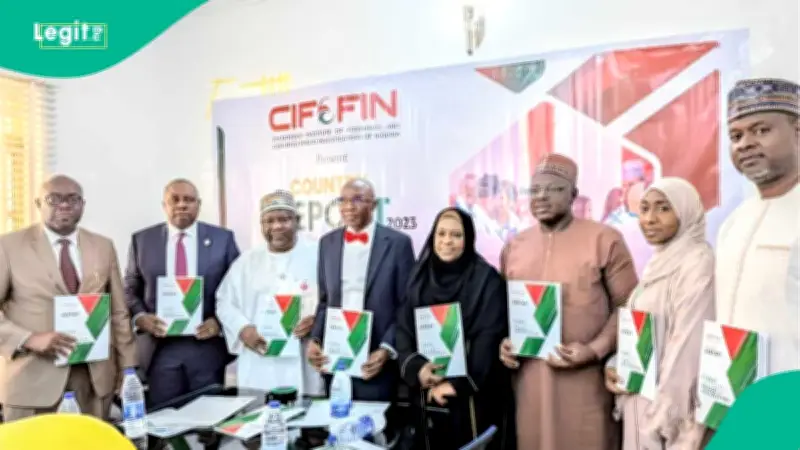
The Chartered Institute of Forensics and Certified Fraud Investigators of Nigeria (CIFCFIN) has raised concerns over the Institute of Chartered Accountants of Nigeria (ICAN) new forensic accounting programme, warning that overlapping professional titles risk creating confusion, diluting standards, and undermining Nigeria's fight against financial crime. CIFCFIN is calling for legal clarity and institutional respect to protect the integrity of forensic certification and safeguard public trust.
Background of the Dispute
On June 23, 2026, CIFCFIN released a public notice titled “Protecting the integrity of forensic accounting certification in Nigeria.” The statement, signed by Registrar and Chief Executive Officer Dr. Isa Salifu Egah, addressed growing concerns about professional titles in the forensic accounting field. According to the notice, recent advertisements by ICAN promoting a training programme that leads to the designation “Certified Forensic Accountant of Nigeria (CFAN)” have caused unease within the profession.
CIFCFIN’s Clarification
CIFCFIN clarified: “The concern is neither about discouraging professional education nor about denying any institution the right to train its members in relevant areas of accounting, audit, compliance, fraud risk management, or forensic accounting. Continuous learning and interdisciplinary collaboration are essential to strengthening Nigeria’s response to financial crime.” The Institute explained that the issue lies in statutory mandate, professional identity, and protecting the public from confusion.
CIFCFIN’s Statutory Mandate
CIFCFIN was established under the Chartered Institute of Forensics and Certified Fraud Investigators of Nigeria (Establishment) Act, 2022. The Act created a specialised professional body responsible for training, regulating, supervising, certifying, and advancing forensic and fraud-investigation practice in Nigeria. The Institute’s mandate includes professionalisation of forensics and fraud investigation, covering education, certification, standards, ethics, competence, and regulation. This makes the use of the designation “Certified Forensic Accountant of Nigeria” by another body a matter of legal and professional concern.
Risks of Overlapping Professional Titles
CIFCFIN cautioned that overlapping professional titles could have serious consequences. The Institute explained that such duplication might cause public confusion about who is legally recognised to practise as a forensic specialist, while also creating uncertainty for employers, courts, regulators, and law-enforcement agencies when engaging professionals. Beyond this, CIFCFIN warned that it could dilute standards in a multidisciplinary field that demands expertise in accounting, law, investigation, evidence, and digital forensics. It could also spark disputes over certification and professional recognition, ultimately eroding confidence in Nigeria’s institutional framework for combating fraud, corruption, money laundering, and other financial crimes.
Call for Clarification and Collaboration
The notice emphasised that the statement was not an attack on ICAN, acknowledging its important role in accountancy education. However, CIFCFIN stressed that specialist statutory mandates must be respected: “Accordingly, the relevant questions we need to urgently clarify: i) whether ICAN is authorised by law to award or confer the designation Certified Forensic Accountant of Nigeria (CFAN); ii) whether the designation conflicts with, duplicates, or encroaches upon the statutory certification and regulatory mandate of CIFCFIN; iii) whether persons awarded the designation are subject to the statutory standards, ethics, disciplinary processes, and professional regulation applicable to forensic and fraud-investigation practitioners in Nigeria; and iv) what safeguards are in place to prevent the public, employers, courts, regulators, and international partners from being misled.” The notice urged Nigerians to seek clarity on the legal status and statutory recognition of any forensic-accounting certification before enrolling or employing practitioners.