The Climate Equity Project has issued a stark warning about the escalating climate crisis across Nigeria, particularly in the southwestern states of Oyo, Osun, and Ondo. During a recent validation session in Ibadan, project organizers revealed alarming data showing worsening climate impacts that demand immediate government intervention.
Government Engagement and Data Validation
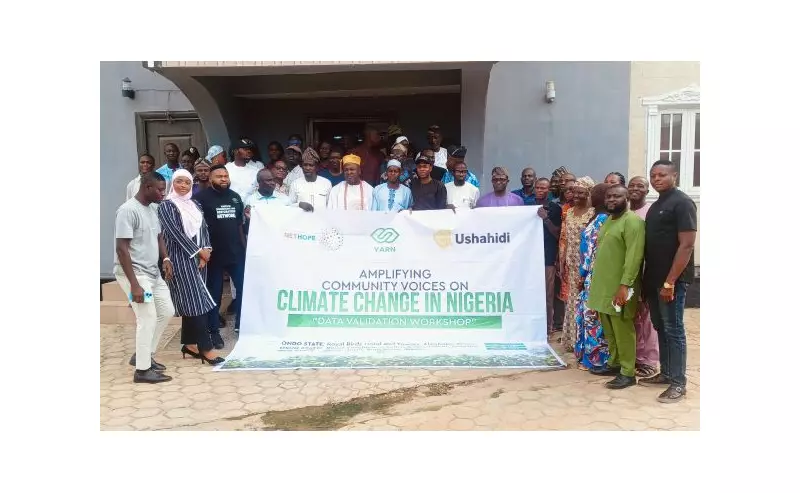
At the Climate Equity Validation Session held in Ibadan, representatives from civil society organizations, government agencies, and community groups gathered to review critical findings from the ongoing project. The initiative, implemented by NETHOPE, the Youth in Agro-ecology and Restoration Network (YARN), and Ushahidi, aims to amplify the voices of communities most affected by climate disruptions.
Ms. Rhoda Omenya, Implementation Manager for Ushahidi, expressed optimism about government participation in the session. "I'm very glad that we had some government representatives in the session, which means they agreed with the data outputs," she stated. "Once the final report is compiled, we hope to present it to them for use in strengthening their adaptation and mitigation strategies."
Omenya emphasized the potential for this data to influence climate action policy not only in the three focus states but potentially at the national level, marking a significant step toward evidence-based climate planning.
Revealing Stark Realities of Rural Neglect
Mr. Seyi Olawuyi, representing YARN, painted a concerning picture of the situation on the ground. The collected data exposes severe neglect in rural and riverine areas, where residents face multiple climate-related challenges with minimal government support.
"We realised that government hands do not reach many of these areas," Olawuyi revealed. "People complained bitterly about excessive rainfall and the lack of functional drainage systems. We are urging government to do more by providing proper drainage and strengthening infrastructure."
The project findings indicate that communities across Oyo, Osun, and Ondo states are experiencing:
- Worsening flooding incidents
- Excessive rainfall patterns
- Non-functional drainage systems
- Limited government presence and support
Olawuyi stressed that addressing these challenges requires coordinated effort. "None of us can do it alone. There should be synergy among all stakeholders so we can provide sustainable solutions," he added, calling for stronger collaboration between CSOs, government agencies, and community leaders.
Connecting Global Climate Talks to Local Action
Mrs. Aminat Adebayo, Climate Intersections Project Coordinator at NETHOPE, highlighted the importance of integrating grassroots perspectives into climate policy discussions. She noted that while communities may not use the term "climate change," they clearly understand the shifting weather patterns affecting their lives.
"Nigeria is clearly vulnerable to the impacts of climate change," Adebayo stated. "People know they are being affected, farmers know, communities know. They may not call it climate change, but they understand that rainfall patterns have shifted and weather conditions are no longer stable."
Drawing parallels with similar projects in Uganda, Adebayo warned that extreme weather events could trigger secondary crises, including gender-based violence—an emerging concern for communities already struggling with displacement and livelihood loss.
Adebayo particularly lamented the significant gap between global climate discussions and local implementation. "There's a huge disconnect between what is discussed at global platforms and how it is translated into local action. Government involvement is still limited, especially in enforcing policies that address these challenges," she observed.
She emphasized the crucial need for consistent collaboration between government bodies, CSOs, and community-based organizations. "People are aware and ready to make changes, but the support system must work. Government must liaise more with CSOs and community-based organisations that engage directly with the people," Adebayo concluded.
The final report from the Climate Equity Project is expected to serve as a vital planning tool for climate adaptation and mitigation activities in Oyo, Osun, and Ondo States, while also contributing to broader national climate-action frameworks.