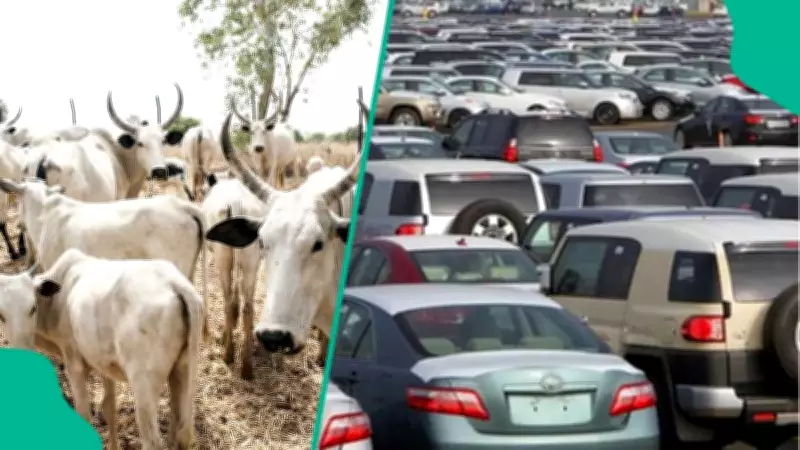
Cattle Prices Surge in Lagos: Cows Now More Expensive Than Cars, Butchers Lament
The Lagos State Butchers Association has raised alarm over the dramatic surge in cattle prices, which have escalated to as high as N2.5 million per head, a significant increase from approximately N1.7 million in 2025. This sharp rise is placing immense pressure on both butchers and consumers across the state, with many traders struggling to remain in business.
Price Comparison Reveals Startling Reality
Alhaji Bamidele Kazeem, the association's patron, highlighted the severity of the situation during an interview with the News Agency of Nigeria in Lagos. He revealed that cows previously selling for around N1.7 million last year now command prices between N2.3 million and N2.4 million, with some instances reaching N2.5 million. To put this into perspective, Kazeem noted that a car he purchased in 2020 for N2.1 million is now cheaper than a single cow.
"The car I bought in 2020 for N2.1 million is now cheaper than the price of a cow. That shows how costly cows have become," Kazeem stated. He added that cattle priced around N1 million have virtually disappeared from the market, making current conditions far worse than those experienced in the previous year.
Key Factors Driving the Price Increase
Kazeem identified three primary factors contributing to the price surge:
- Insecurity: Ongoing security challenges in various parts of Nigeria have disrupted the movement of livestock, significantly reducing supply to Lagos markets.
- Transportation Costs: Recent increases in fuel prices have driven up transportation expenses, particularly for cattle transported from northern Nigeria, which remains the main supply source for Lagos.
- Local Production Delays: The state's planned feedlot and ranching initiatives have faced delays, preventing local production from meeting demand and maintaining dependence on northern suppliers.
Call for Government Intervention
The butchers association is urgently calling on the government to accelerate the implementation of local ranching projects, specifically highlighting the Eko Ranching project in Gbodu, Epe. Kazeem emphasized that such initiatives could boost local cattle production, reduce transportation costs, create employment opportunities for youth, and ultimately help stabilize meat prices in Lagos.
"We need the government to fast-track these ranching projects. This is crucial for boosting supply, cutting costs, and making meat affordable again," Kazeem urged.
Impact on Butchers and Consumers
The price surge has created serious strain across the supply chain. Butchers are finding it increasingly difficult to purchase cattle at viable prices, while consumers face higher costs for meat products. This situation exacerbates existing economic pressures and food inflation concerns in the region.
In a related development, the story of Kosisochukwu Nwakonuche, a 24-year-old female butcher based in Nnewi, Anambra State, highlights the personal challenges within the industry. She entered the butchery business through her father, who founded the trade in their family, and now hopes to expand the business while pursuing educational goals.
The current cattle price crisis underscores broader issues in Nigeria's agricultural and security sectors, with immediate action needed to prevent further market destabilization and ensure food security for Lagos residents.