
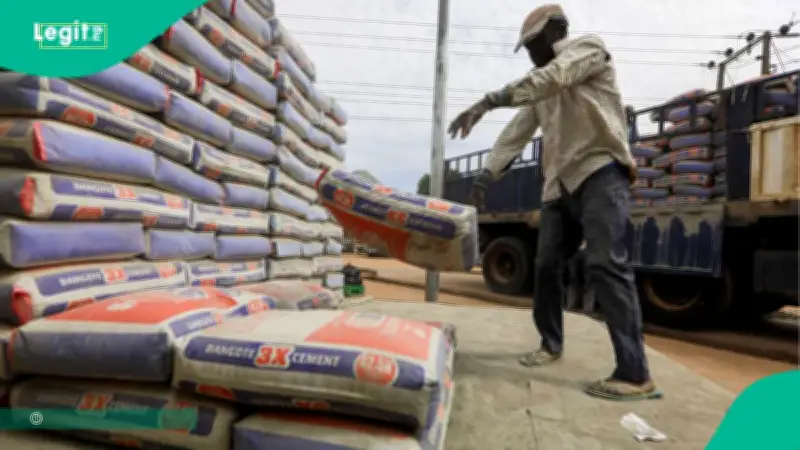
Emmanuel Ikazoboh, Chairman of Dangote Cement Plc, has broken the company's silence on persistently high cement prices across Nigeria, attributing the trend to rising energy costs and foreign exchange volatility. Speaking during the 17th Annual General Meeting (AGM) of Dangote Cement Plc in Lagos, Ikazoboh explained that energy constitutes about 60% of cement production costs, and its pricing in US dollars exposes manufacturers to exchange rate fluctuations that drive up expenses.
Energy Costs and FX Volatility Drive Production Expenses
According to Ikazoboh, cement manufacturers rely heavily on gas, coal, and diesel to power operations. Gas, a key energy source, is sold in US dollars, and its price continues to increase. The continued depreciation of the naira against the US dollar has significantly raised production costs, making it difficult for manufacturers to maintain lower prices.
"To produce a bag of cement, we need energy, which constitutes about 60 per cent of the production cost. To generate that energy, we use gas, coal or diesel," Ikazoboh said. "Gas is sold to us in US dollars, and its price continues to increase. We all know the impact of the exchange rate between the dollar and the naira. As a result, the cost of generating energy keeps rising."
Current Cement Prices Across Nigeria
Checks across major markets indicate that the retail price of a 50kg bag of cement currently ranges between ₦9,500 and ₦13,000, depending on brand, location, and dealer. Dangote Cement is sold for between ₦10,000 and ₦12,500 per bag in many parts of the country. BUA Cement and Lafarge Cement generally retail between ₦8,500 and ₦10,500, though prices differ across states due to transportation costs, dealer margins, and proximity to manufacturing plants. In remote locations, consumers may pay even higher prices due to increased logistics and distribution expenses.
Impact on Homeowners and Developers
The sustained rise in cement prices has continued to affect homeowners, contractors, and real estate developers, many of whom have expressed concern over the increasing cost of construction. Industry observers note that beyond energy expenses, factors such as inflation, transportation costs, exchange rate volatility, and supply chain challenges have all contributed to higher retail prices nationwide, according to a report by The New Telegraph.
Despite expectations that increased local production would help stabilise prices, manufacturers say macroeconomic pressures continue to weigh heavily on operating costs. For now, cement buyers across Nigeria are expected to continue paying between ₦9,500 and ₦13,000 per 50kg bag unless there is a significant improvement in exchange rate stability, energy costs, and broader economic conditions.
Broader Context: BUA Chairman on Cement Pricing Crisis
Billionaire businessman Abdul Samad Rabiu, Chairman of BUA Group, has also highlighted the forces behind high cement prices, pointing to foreign exchange pressures, escalating energy costs, and increasing transportation fees. Rabiu warned that these factors are pushing the industry towards a pricing crisis that threatens government efforts to alleviate the nation's housing deficit.




