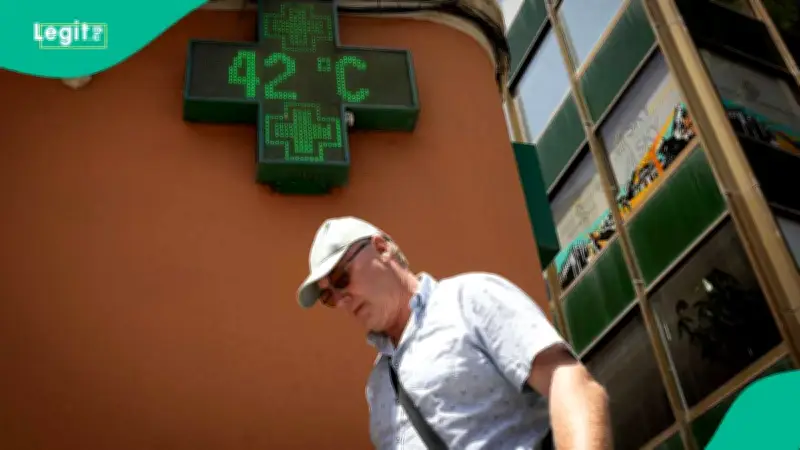
A severe heatwave swept across Europe on Saturday, June 27, 2026, with temperatures exceeding 40°C (104°F) in multiple countries, shattering records and leading to dozens of deaths. Scientists attributed the extreme conditions to climate change, stating that such intense night-time heat is now 100 times more likely than two decades ago.
Record-Breaking Temperatures Across Europe
In Germany, a preliminary record of 41.5°C was recorded in Moeckern-Drewitz, Saxony-Anhalt, surpassing the 41.3°C mark set just a day earlier near Saarbruecken. Denmark reported 37°C north of Aarhus, the highest since records began in 1874. The Czech Republic measured 40.9°C north of Prague, while Slovakia's capital Bratislava experienced its hottest night on record. Switzerland set a new June record, and France and Britain had already broken records earlier in the week.
According to Reuters, scientists stressed that such extremes would have been “virtually impossible without man-made climate change,” noting that night-time temperatures are now 100 times more likely than two decades ago.
Health Crisis and Public Warnings
“This heat isn’t pleasant summer weather. It’s a health crisis,” said German lawmaker Katrin Goering-Eckardt on X. Authorities across Germany issued extreme heat warnings, urging people to save water. Police in Berlin deployed water cannons to spray crowds seeking relief. In France, dozens of deaths have been linked to the heatwave. Italy’s health ministry issued red alerts in 18 cities, including Milan, Rome, and Venice.
Impact on Rivers, Power Plants, and Farming
The heatwave strained Europe’s waterways. Hungary’s Paks nuclear plant reduced output due to rising temperatures in the River Danube. Switzerland’s Beznau nuclear station temporarily shut down reactors because of the River Aare. Italy’s River Po saw seawater advance inland, threatening farming and ecosystems. Ecologists warned that Europe’s glaciers face severe risks, with Alpine night-time temperatures staying above 25°C in Bolzano, a June record.
Transport and Event Disruptions
Infrastructure struggled under the extreme heat. German rail operator Deutsche Bahn allowed free cancellations for long-distance travel. National Express suspended trains in North Rhine-Westphalia. Roads near Hamburg buckled, splitting asphalt. Pride marches in Lausanne and Milan adjusted schedules and added water stations. Frankfurt’s Ironman European Championship shortened its cycling and running courses.
Omega Block Weather Pattern
The Omega block phenomenon is driving this prolonged heatwave. This weather system traps hot air over regions for extended periods, with cooler air circulating on its edges. Heavy thunderstorms are forecast to bring some relief on Sunday, but the damage has already been felt across cultural landmarks, farming, and hospitals struggling to cope.