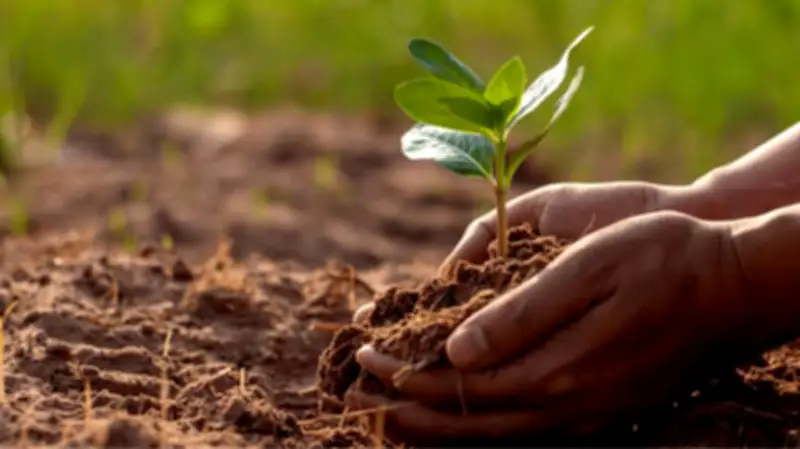
Fresh concerns have emerged over the declining health and fertility of soil in West Africa, a region where agriculture remains the backbone of livelihoods. Reports indicate that up to 65 percent of productive land in Africa is degraded, while 45 percent of the continent's land area is affected by desertification. Nutrient depletion, unsustainable farming practices, climate variability, and limited access to appropriate soil fertility solutions have created a cycle of declining productivity, environmental degradation, and increasing vulnerability to climate shocks.
Fertilizer use remains low and inefficient
This challenge has been compounded by the limited and inefficient use of fertilizers. While large-scale improvements in soil health are difficult to achieve without fertilizers, their effectiveness depends on healthy soils and appropriate application. The Regional Hub for Fertiliser and Soil Health, in a report marking its second anniversary, noted that these trends have implications far beyond agricultural productivity, affecting food security, rural livelihoods, ecosystem health, and the region's ability to build resilience in the face of climate change.
The hub is a collaborative initiative bringing together leading research, development, and private-sector partners to deliver science-driven solutions for sustainable agriculture. It is hosted by the International Institute of Tropical Agriculture (IITA) and supported by organizations including the International Fertiliser Development Centre (IFDC), OCP Africa, the African Plant Nutrition Institute (APNI), University Mohammed VI Polytechnic (UM6P), Accelerating the Impacts of CGIAR Climate Research for Africa (AICCRA), and the International Soil Reference and Information Centre (ISRIC).
Sub-Saharan Africa lags in fertilizer application
The body noted that in Sub-Saharan Africa, average fertilizer use remains approximately 22 kg/ha compared to a global average of 146 kg/ha. Where fertilizers are used, they often do not match the specific needs of soils and crops and may be applied without adequate advisory support, reducing efficiency and long-term impact.
As the Regional Hub for Fertiliser and Soil Health marks its second anniversary, this moment offers an opportunity to reflect on the critical role of soil health in shaping a more productive, resilient, and climate-smart future for West Africa and the Sahel. Climate-Smart Agriculture (CSA), as defined by the Food and Agriculture Organisation (FAO), is built on three interconnected objectives: sustainably increasing agricultural productivity and incomes, adapting and building resilience to climate change, and reducing or removing greenhouse gas emissions where possible. Simply put, Climate-Smart Agriculture refers to farming practices that help farmers adapt to climate change, sustain agricultural productivity, and protect natural resources for future generations.
Integrated practices for sustainable farming
Rather than focusing on a single intervention, CSA integrates practices such as balanced and efficient fertilizer use, organic soil amendments, agroforestry systems, crop rotation and diversification, and water conservation and soil moisture management. At its core, CSA is about aligning agriculture with ecological systems rather than working against them. In regions where soils have been continuously depleted over time, this shift is critical.
The body noted that the impacts of climate change and soil degradation are deeply interconnected. Across West Africa and the Sahel, nutrient mining, erosion, desertification, erratic rainfall patterns, and low fertilizer use efficiency have weakened soil systems and reduced their capacity to support sustainable agricultural production. As soils lose organic matter and essential nutrients, they become less productive, less resilient, and more vulnerable to climate-related shocks.
Soil as a carbon reservoir
Yet, soil is more than a medium for plant growth. It is one of the world's largest natural carbon reservoirs and a critical component of climate resilience. When managed properly, soils can store carbon for long periods, improve water retention during droughts, reduce runoff and erosion during floods, and support higher and more stable yields.
The body emphasized that soil carbon matters for the future, as soil carbon sequestration is increasingly recognized as a key nature-based solution because it delivers multiple benefits simultaneously. Scientific assessments suggest that agricultural soils hold significant potential for additional carbon storage if managed sustainably, making them central to global climate strategies. However, this potential is not automatic; it depends on how land is managed today.
Hub's mandate and targets for 2033
The hub stressed that one of its mandates is to advise on carbon accumulation and sequestration potential for specific soils, agroecologies, and farming systems in support of climate change mitigation opportunities. By 2033, at least 1.5 million hectares of land will be under improved soil health—characterized by increased soil organic carbon, available phosphorus and potassium, reduced soil acidity and salinization, and reduced erosion—and at least 1.5 million farmers will have adapted their agriculture to climate change hazards.
Over the past two years, the focus has been on strengthening systems that support efficient fertilizer use through the 4Rs of Nutrient Stewardship (Right source, Right rate, Right time, Right place); integrated Soil Fertility Management (ISFM), which combines sustainable agronomic practices with the targeted and efficient use of inorganic and organic fertilizers; soil health restoration; climate-smart agricultural practices; and evidence-based policy and coordination.