Experts in agriculture and environmental sectors have called on all levels of government in Nigeria to enforce the anti-tree felling law. They also urged development partners and private sector actors to strengthen support for regenerative agriculture as part of urgent efforts to protect the environment and secure the future of coming generations.
World Earth Day Event
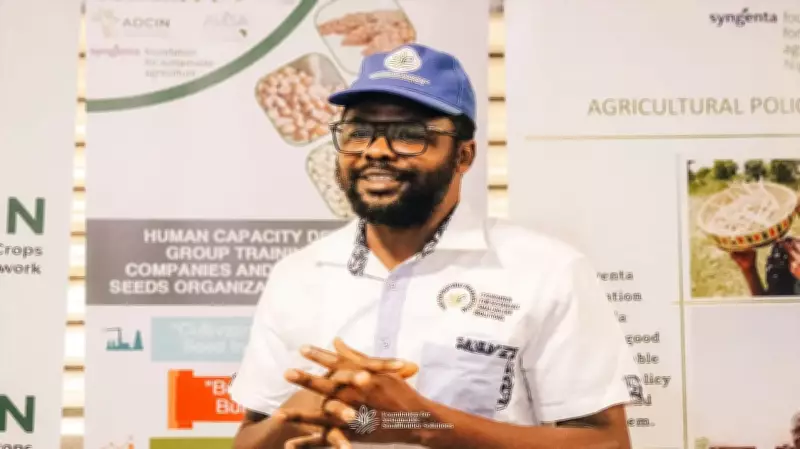
The experts made the call during a World Earth Day event on Monday hosted by FSSS (Foundation for Sustainable Soil Solutions). The event was themed “Entrenching Resilience through Regenerative Agriculture: A Case Study of the ESTRRA Project.” It brought together experts and development practitioners to discuss practical pathways to address climate change, deforestation, degraded soils, and declining agricultural productivity among smallholder farmers in Nigeria.
Call for Enforcement
A senior Agronomist at FSSS, Dr Reuben Solomon, emphasized the urgent need to restore degraded land and enforce environmental regulations. He stated, “Regenerative agriculture is a holistic land management technique that helps heal the soil, enhance biodiversity, and sequester carbon to combat climate change.” He noted that regenerative agriculture improves soil fertility, increases biodiversity, enhances water retention, and strengthens resilience against climate shocks. He warned that indiscriminate tree felling and unsustainable farming practices are accelerating land degradation and desertification in Northern Nigeria. He urged the government to implement and enforce laws against tree felling while investing in policies that encourage land restoration and sustainable agriculture.
Government Commitment Needed
Also speaking, a technical lead at FSSS, Timothy Azakere, and his counterpart Philip Ortese, Monitoring, Evaluation, Accountability and Learning (MEAL) Manager at FSSS, stressed the need for improved government commitment to environmental regulations. Azakere explained how the ESTRRA Project is driving the adoption of regenerative agriculture practices among smallholder farmers. According to him, “Many people don’t know that the soil is a living thing. So, all the processes that are employed to keep the soil alive while producing food are the things we are doing.” He explained that the project promotes practical interventions such as fruit forests, mixed farming systems, cover cropping, composting and organic manure use, reduced tillage, mulching, crop rotation, and water retention structures such as earth bunds. “The same thing is happening to our soils. The soil in the North is mostly, if not completely dead, or almost dead. That is why it is very urgent and very important for us to do what we are doing to bring life back into the soil,” he added.
Barriers and Solutions
Azakere identified key barriers to the adoption of regenerative agriculture among farmers, including low awareness, resistance to change, labor intensity, limited access to finance and inputs, and delayed returns on investment. “To address these challenges, FSSS is leveraging its Farmers’ Hub model as a community-based service delivery and learning platform where farmers can access training, demonstration plots, quality inputs, aggregation services, and extension support,” he said. He added that the project is intentionally engaging women and youth as critical drivers of adoption by creating opportunities in nursery establishment, fruit forest development, agribusiness services, and climate-smart farming enterprises, strengthening long-term sustainability and economic resilience in farming communities.
The ESTRRA Project
The event spotlighted the ESTRRA Project—Empowerment of Smallholders to Thrive and Build Climate Resilience through Regenerative Agriculture—a three-year initiative being implemented by FSSS with funding support from the Heineken Africa Foundation. The project is designed to directly reach 14,000 smallholder farmers and over 75,000 indirect beneficiaries across seven Local Government Areas in Northern Bauchi State: Gamawa, Giade, Katagum, Ja'amare, Zaki, Itas-Gadau, and Shira. It focuses on climate-smart agriculture, regenerative land restoration, and market-driven approaches. A key component is the restoration of 29,000 hectares of degraded land through earth bund construction, fruit forests, and support delivered through the Farmers’ Hub model.