
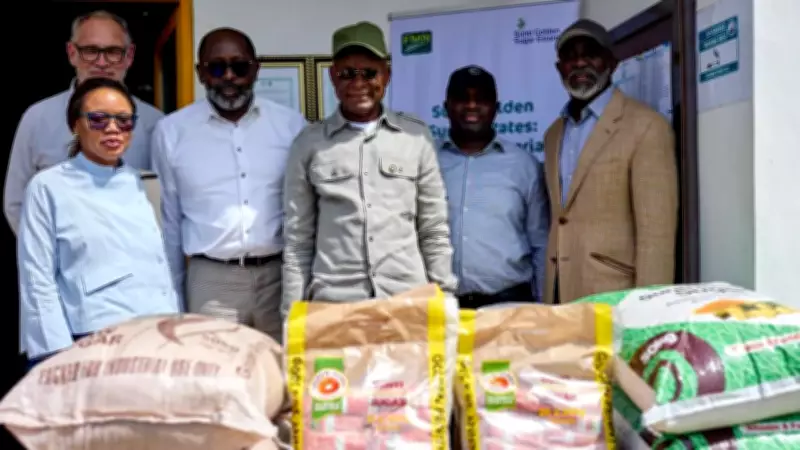
FMN Hosts Minister at Sunti Estate as Nigeria Intensifies Local Sugar Production Efforts
Flour Mills of Nigeria Plc (FMN) welcomed the Minister of State for Industry, Trade and Investment, Senator John Owan Enoh, to the Sunti Golden Sugar Estate in Niger State on Monday. This visit underscores the ongoing collaboration between the Nigerian government and private sector stakeholders to advance local sugar production under the National Sugar Master Plan.
Strategic Visit to Support Industrial Development
The tour of the estate, operated by Golden Sugar Company, is part of a broader initiative to reduce Nigeria's reliance on sugar imports through enhanced local cultivation and processing. Located in Mokwa, the Sunti Golden Sugar Estate spans over 20,000 hectares, with a significant portion currently under cultivation. The facility features a sugar processing plant capable of handling hundreds of thousands of tonnes of sugarcane each season, with plans for future expansion.
During the visit, Minister Enoh praised the project as a prime example of how policy and private investment can converge to drive industrial growth. He emphasized that the estate integrates farming and processing operations, directly linking agricultural production to manufacturing.
Minister Highlights Employment and Value Chain Benefits
"Going round the facility, you can see clearly that this is a functioning industry with all the key elements in place: employment, production, and value creation," stated Enoh. "At peak periods, the estate engages up to 4,500 workers, which speaks directly to government’s priority of creating gainful employment. It is impressive to witness the full value chain, from farm to factory, demonstrating Nigeria’s capacity for industrial production and self-sufficiency."
He added that the government will continue monitoring to ensure the objectives of the Backward Integration Programme are met. While progress has been made, Nigeria has not yet achieved full sufficiency in sugar production. The key challenge remains expanding the land under sugarcane cultivation, but there is clear commitment from operators to scale up, which will maximize processing capacities and move the country closer to meeting its sugar demand.
National Sugar Master Plan and Private Sector Role
The National Sugar Master Plan, designed to encourage backward integration in the sector, requires operators to invest in local production as a condition for continued participation in sugar refining. Industry players like FMN have developed estates to build domestic capacity. Officials noted that the project supports employment, particularly during peak production periods, and contributes to infrastructure and social services in surrounding communities.
Training Facility Inauguration and Future Investments
The visit also included the inauguration of a training facility at the estate, aimed at building technical skills among workers and community members. This centre is intended to support operational standards and improve productivity across the value chain.
Group Chief Executive Officer of FMN, Boye Olusanya, affirmed the company's commitment to investing in its backward integration programme, aligning with government objectives on food production and industrial growth. "Sunti Golden Sugar Estate is a testament to FMN’s unyielding commitment to sustainably feeding and enriching the lives of millions of Nigerians, every day; a commitment the group has kept for over six decades," said Olusanya. He highlighted that these achievements are fostered by strong public-private partnerships, providing a mutually beneficial growth environment for sustainable development.
Broader Context and Economic Impact
Nigeria remains one of Africa's largest sugar consumers, with a significant portion of demand still met through imports. The push for local production is part of wider efforts to conserve foreign exchange and develop agro-industrial capacity. Projects like the Sunti Golden Sugar Estate are expected to play a crucial role in this transition, supporting food security and economic resilience.




