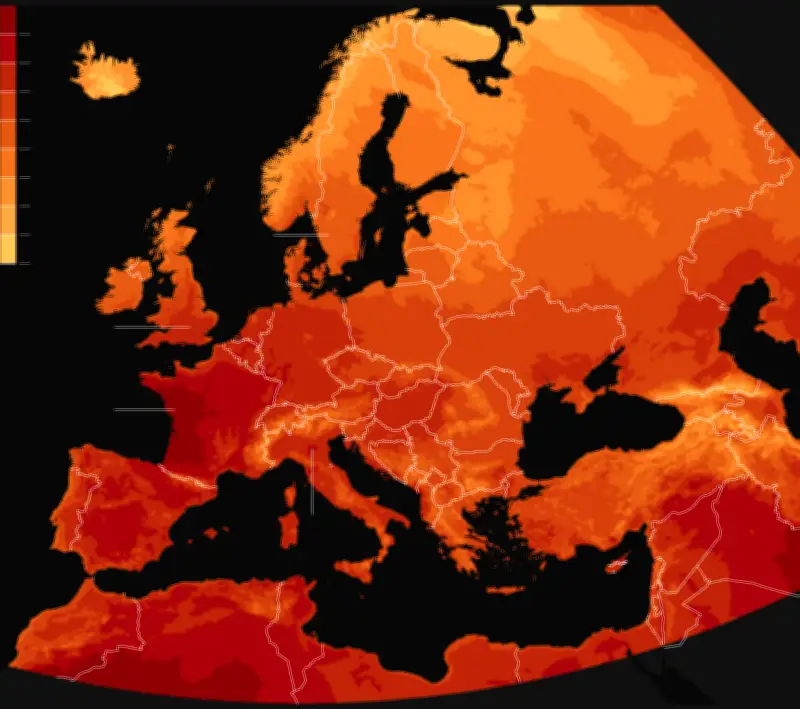
Germany Sets New All-Time Temperature Record
Germany has recorded its highest temperature ever as an intense heatwave sweeping across Europe pushed eastward, triggering health alerts and travel disruption. Preliminary data from Germany's national weather service showed temperatures climbed to 41.5°C (106.7°F) in the eastern town of Drewitz on Saturday, surpassing the previous national record of 41.3°C set just a day earlier near Saarbrücken. The record is subject to official verification, but marks an unprecedented heat event for the country.
Heatwave Spreads Across Europe
Record-breaking temperatures were also recorded in Denmark, Switzerland, and the Czech Republic as the heatwave swept eastward into Poland, Hungary, Romania, and Moldova. Millions of people across the region remain under red and amber heat alerts as authorities warn of dangerous conditions. The heatwave has already had deadly consequences elsewhere in Europe.
Deadly Consequences and Health Impact
France has reported multiple heat-related deaths, and hospitals have seen a sharp rise in emergency admissions, while Italy remains on high alert as drought conditions worsen and water levels in the River Po fall to record lows. The French prime minister’s office said that although the heatwave was moving on, pressure on the healthcare system would persist and hospital admissions would stay high for several days.
Wildfires and Infrastructure Damage
Reports of wildfires in France are up compared with the same period last year as a result of the heatwave, officials say. Some public service providers, struggling with the prospect of damage to infrastructure, including buckling roads and train tracks, have sought to reduce traffic. Italy’s health ministry issued a red alert for the heatwave in 18 Italian cities, including Milan, Rome, Turin, Venice, Genoa, Florence, and Bologna, for Saturday and Sunday, with temperatures expected to climb as high as 39°C in some areas.
Public Urged to Use Water Moderately
André Berghegger, the chief executive of the German Association of Towns and Municipalities, urged the public to use water moderately. “We should rely on voluntary cooperation as long as possible; local authorities should only issue bans if that doesn’t work,” he told the Neue Osnabrücker Zeitung newspaper.