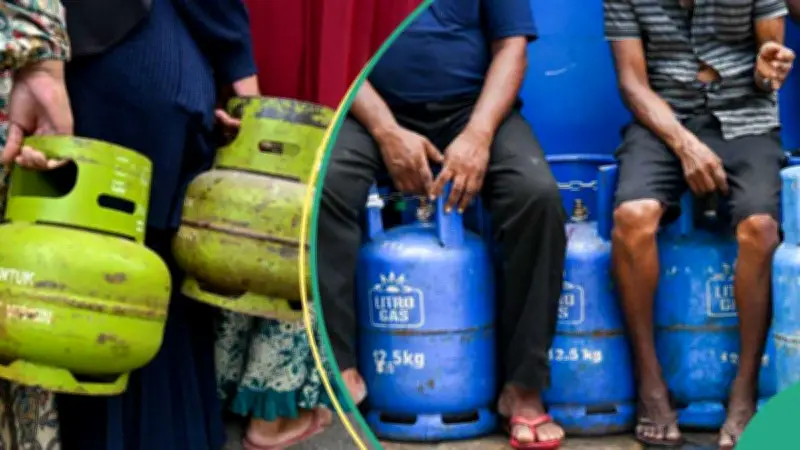
Nigeria is experiencing a severe shortage of cooking gas, also known as Liquefied Petroleum Gas (LPG), as the majority of its gas production is exported rather than supplied locally. This has led to a sharp increase in prices and a growing supply gap that is affecting households and businesses across the country.
Supply Gap Worsens as Demand Surges
Demand for LPG has risen to approximately 1.8 million metric tonnes in 2026, up from 1.5 million metric tonnes in 2023, representing a 20% increase. However, domestic supply is projected to range between 1.55 million and 1.65 million metric tonnes this year, leaving a significant shortfall. According to the Nigerian Upstream Petroleum Regulatory Commission (NUPRC), 62% of the country's gas output during the first two months of 2026 was exported, while only 38% was allocated to local consumption.
Industry experts argue that this export-driven supply pattern is no longer sustainable, given the rising domestic demand. They warn that the imbalance is worsening shortages and disrupting the domestic LPG market. Despite increased production capacity from major players such as NLNG, Dangote Refinery, Kwale Hydrocarbon, NPDC Ologbo, Pan Ocean, Seplat, PNG Gas, and Greenville, more investment is needed to meet growing demand.
Prices Soar by 335% Over a Decade
The shortage has contributed to a sharp increase in cooking gas prices. Data from the National Bureau of Statistics (NBS) shows that the average price of cooking gas surged by 335% over the last decade, climbing from N400 per kilogramme in 2016 to N2,000 per kilogramme in 2026. The price rose steadily over the years: N500 per kilogramme in 2017, N600 in 2018, N680 in 2019, N800 in 2020, N950 in 2021, N900 in 2022, N1,000 in 2023, N1,450 in 2024, N1,630 in 2025, and N1,200 in 2026.
Market observers attribute the sharp increase to persistent supply shortages, infrastructure limitations, and other market pressures affecting the domestic LPG sector. Analysts cautioned that unless the country accelerates investments in gas infrastructure and strengthens incentives for domestic supply, millions of Nigerians could continue to face cooking gas shortages despite the nation's vast energy resources.
Path to Self-Sufficiency
Nigeria has the potential to achieve near self-sufficiency in cooking gas supply but must expand gas-processing facilities, increase storage capacity, improve distribution infrastructure, and maintain policies that encourage LPG adoption. Industry stakeholders stressed that more investment is needed to bridge the supply gap and stabilize prices.
The shortage persists despite increased production capacity following the Dangote Refinery's entry into the domestic LPG market. However, experts note that while major producers and processors have boosted output, the export-oriented strategy must be rebalanced to prioritize local needs.