The Nigerian Content Development and Monitoring Board (NCDMB), Nigerian Upstream Petroleum Regulatory Commission (NUPRC), Nigerian Midstream and Downstream Petroleum Regulatory Authority (NMDPRA), Nigerian Petroleum Exchange (NIPEX), and the Oil Producers Trade Section (OPTS) have jointly developed a framework to harmonise the grading system for ranking in-country capacities and capabilities in the oil and gas industry.
Next Phase of Local Content Growth
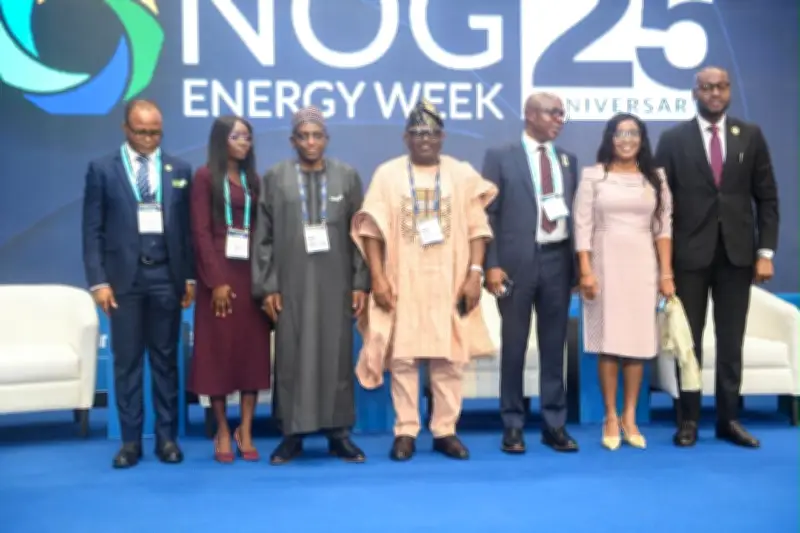
The Executive Secretary of NCDMB, Felix Omatsola Ogbe, disclosed this on Monday in Abuja at the 25th Edition of the Nigeria Oil and Gas (NOG) Week. He listed capacity expansion, industrialisation, manufacturing, sustainability, and global competitiveness as the chief focus of the next phase of local content growth, marking a strategic progression beyond preoccupation with indigenous participation and compliance.
The earlier phase, corresponding to the first 15 years of implementation of the Nigerian Oil and Gas Industry Content Development (NOGICD) Act, 2010, witnessed a phenomenal surge of indigenous participation from marginal levels of less than five per cent to 61 per cent. Nigerians now own and manage critical operational assets, providing services, executing projects, and contributing significantly across the oil and gas value chain.
Strategic Collaboration Required
In a keynote address, the NCDMB Executive Secretary, represented by the Director of the Capacity Building Directorate (CBD), Abayomi Bamidele, declared that Nigeria’s energy sector now has the capacity to support a vibrant manufacturing ecosystem. However, many local manufacturers face difficulties associated with limited market access, technology gaps, and financing constraints.
He pointed out that addressing the challenges “requires strategic collaboration among regulators, operators, service companies, financial institutions, and manufacturers,” and noted that within the regulatory and business environment of the Nigerian oil and gas industry, there is potential for robust collaboration on the back of the Presidential Directives on Local Content Compliance Requirements.
Harmonisation Road Map and Capacity Audit
Under the Harmonisation Road Map drawn up by the oil and gas industry regulatory agencies in concert with the OPTS, the next key action is to commence modification of their various certification portals in readiness for joint industry capacity audits of in-country manufacturers and service providers operating within the oil and gas industry.
The outcome of the audit will provide a detailed understanding of existing capabilities, eliminate intermediaries, improve contracting cycle timelines, and ensure direct patronage of established service providers for business sustainability and growth. The capacity audit would aid in identifying service providers able to support major capital projects such as the seven Deepwater Projects.
Five Classes of Service Providers
The industry, through the Harmonisation Framework, has adopted five classes of service providers, which recognises new entrants into the oil and gas industry that require support. According to Ogbe, “Class 4 and Class 5 of the Framework tagged ‘Emerging Players’ and ‘Essential Vendors’ [respectively] will form the foundation for a robust vendor development programme designed to support the evolution of such service providers into manufacturers and original equipment manufacturers.” He expects the joint industry capacity audit to commence within the third quarter.
“As we look ahead,” he stated, “I believe that the next phase of local content development should be guided by three strategic priorities.” The first is competence: continuous investment in human capital, technology transfer, innovation, and technical excellence to ensure Nigerian companies can deliver at global standards. The second is capacity expansion: “We must move deliberately towards manufacturing, industrialization, and the development of scalable productive assets.” The third is collaboration: industry operators, service companies, government agencies, financial institutions, OEMs, and research institutions must work together to build sustainable industrial ecosystems.
Recent Capacity Building Initiatives
On recent initiatives by the Board, the Executive Secretary highlighted the release of the Nigerian Content Equipment Certificate (NCEC) Application Guidance Notes to provide clarity on requirements to secure approval of applications, the Field Readiness Training Programme focusing on top-10 high-demand areas, the Nigerian Content Trainers Registration Certificate (NCTRC), the Back-to-the-Creek Initiative, and the Cradle-to-Career Academic Excellence Recognition and Advancement Programme.
The NOG Energy Week 2026 is dedicated to providing further clarity to oil and gas industry stakeholders on the provisions of the NOGICD Act and the Board’s processes.