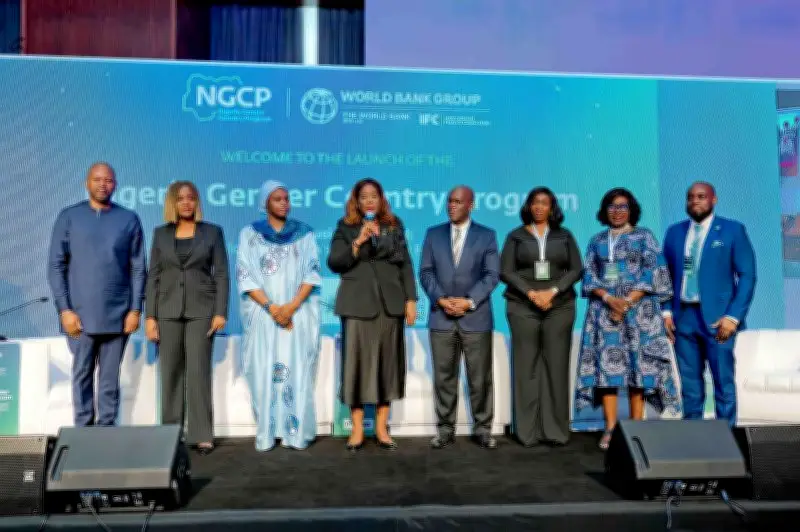
Nigeria's private sector has launched a groundbreaking Gender Country Program aimed at unlocking inclusive growth across the nation. The initiative, spearheaded by a coalition of leading businesses and development partners, seeks to address gender disparities in the workplace and promote women's economic empowerment as a driver for sustainable development.
Program Objectives and Scope
The Gender Country Program is designed to integrate gender equality into corporate strategies, supply chains, and community engagements. According to the program's framework, participating companies will commit to measurable targets for women's representation in leadership, equal pay, and access to finance for women-owned businesses. The initiative targets at least 30% increase in women in senior management roles within three years.
Private Sector Commitment
Speaking at the launch event, the Director General of the Nigerian Association of Chambers of Commerce, Industry, Mines and Agriculture (NACCIMA), stated: "This program represents a collective resolve to harness the full potential of our workforce. By empowering women, we are not only fostering fairness but also driving economic growth." The program has already secured commitments from over 50 major corporations operating in Nigeria.
Economic Impact
Research indicates that closing gender gaps in labor force participation could add up to $15 billion to Nigeria's GDP annually. The program aligns with the national development agenda and the United Nations Sustainable Development Goals, particularly Goal 5 on gender equality and Goal 8 on decent work and economic growth.
Implementation Strategy
The program will be implemented through a multi-stakeholder approach involving government agencies, financial institutions, and civil society. Key components include mentorship schemes, access to capital for women entrepreneurs, and policy advocacy for gender-responsive budgeting. A monitoring and evaluation framework will track progress and ensure accountability.
Challenges and Opportunities
Despite progress, women in Nigeria face significant barriers including limited access to education, healthcare, and financial services. The program aims to address these through targeted interventions. According to the World Bank, women-owned businesses in Nigeria often have lower productivity due to constrained access to credit and markets. The Gender Country Program will facilitate partnerships with microfinance banks and development finance institutions to bridge this gap.
Call to Action
The program organizers call on all private sector actors to join the initiative. With Nigeria's large and youthful population, inclusive growth is essential for long-term prosperity. The Gender Country Program offers a structured pathway for businesses to contribute to this vision while benefiting from a more diverse and innovative workforce.