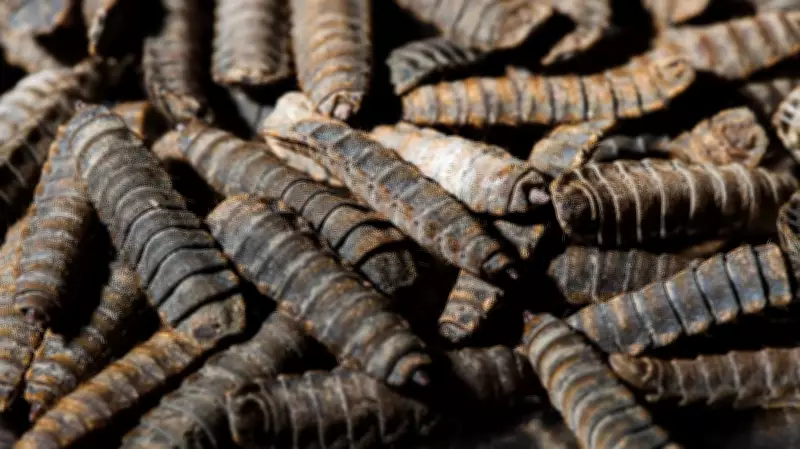
Stakeholders Urge Policy Reforms to Scale Black Soldier Fly Larvae for Livestock Feed in Nigeria
Key players in Nigeria's feed industry and the Black Soldier Fly Larvae sector have issued a strong call for immediate policy reforms, increased investment, and enhanced research coordination to fast-track the adoption of Black Soldier Fly Larvae as a viable alternative protein source for animal feed. This appeal was made during a National Roundtable on Black Soldier Fly Larvae Development in Nigeria, hosted at the International Livestock Research Institute in Ibadan, Oyo State.
Aligning Science, Enterprise, and Policy for Insect-Based Solutions
The event, themed "Aligning Science, Enterprise, and Policy to Scale Insect-based Feed Solutions," gathered a diverse group of policymakers, researchers, regulators, private investors, and BSFL farming entrepreneurs to develop strategies for integrating insect protein into Nigeria's agricultural framework. In his opening address, Dr. Tunde Amole, the Country Representative of ILRI, highlighted BSFL as a sustainable answer to Nigeria's escalating livestock feed crisis.
He explained that black soldier fly larvae can consume organic waste, such as market and kitchen refuse, and transform into high-protein feed within just 10 to 14 days. "It contains about 40 to 45 per cent protein, making it a viable alternative to some protein source feed ingredients in poultry, fish, and pig feed ration if produced sustainably," Amole stated. He pointed out that while feed manufacturers show growing interest, the primary challenge lies in supply rather than demand, emphasizing the need for commercial-scale production.
Amole also underscored Nigeria's competitive edge, noting its tropical climate and abundant organic waste, which enable year-round production without costly temperature control systems. However, he stressed the necessity for standardization to maintain consistent nutrient quality and safety across producers.
Addressing Fragmentation and Building a National Platform
Dr. Ijudai Jasada, a Senior Scaling and Innovation Expert from ILRI's headquarters in Nairobi, Kenya, identified fragmentation within the BSFL value chain as a significant barrier to scaling up. "We need a coordinated system that connects all actors and reduces inefficiencies," he asserted. Stakeholders unanimously agreed that ILRI should spearhead the establishment of a national platform for BSFL development.
Jasada revealed that plans are in motion to create a national coordination platform aimed at enhancing collaboration, attracting investment, and fostering long-term sector growth. The objective is to integrate insect-based feed into Nigeria's mainstream feed industry by 2030, while simultaneously generating employment opportunities for women and youth.
Regulatory and Operational Challenges Highlighted
On the capacity development front, Prof. Cordelia Ifeyinwa Ebenebe of Nnamdi Azikiwe University in Awka, Anambra State, acknowledged training initiatives by development partners but cautioned that Nigeria's regulatory framework for insect-based feed remains underdeveloped. She noted that standards are still evolving and are expected to align with benchmarks being developed by the African Organisation for Standardisation.
Similarly, Prof. Olugbenga Adeniran Ogunwole emphasized the importance of safety assurance and regulatory clarity, warning that policy gaps could impede large-scale adoption. He outlined key challenges, including variability in nutrient composition, digestibility issues related to chitin content, and relatively high production costs.
Industry operators echoed these concerns, with BSFL producer Mr. Kolawole Ogunleye citing difficulties in large-scale production due to limited access to equipment, financing, and infrastructure. "The process is labour-intensive, and most of the equipment is still imported," he explained.
Market Acceptance and International Insights
Mr. John Amole, Country Representative of New Generation Nutrition, described insect protein as a growing yet underutilized solution in Nigeria. He noted that while insect meal has been approved as a feed ingredient, it has not yet achieved widespread market acceptance. "There is interest, but the ecosystem is still developing, and there are no guaranteed off-takers," he added.
Sharing international perspectives, Ms. Talash Huijbers of InsectiPro in Kenya highlighted the success of circular economy models that convert organic waste into protein and fertilizer. "It reduces dependence on fishmeal while improving productivity and environmental sustainability," she said. Participants recognized Nigeria's vast organic waste as a major opportunity for scaling such models, which could also address environmental issues.
Additionally, stakeholders identified further applications of BSFL in pharmaceuticals, cosmetics, and biotechnology, particularly through derivatives like chitin and antimicrobial compounds, pointing to broader economic and health benefits beyond livestock feed.