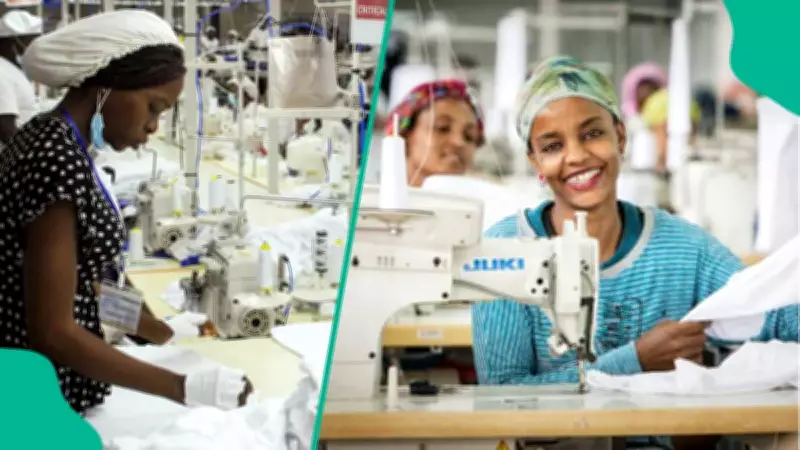
The federal government is intensifying efforts to revive Nigeria's struggling Cotton, Textile and Garment (CTG) industry, which has seen cotton production plummet by approximately 95 percent over the past two decades.
Cotton Production Decline
Speaking at the National CTG Value Chain Activation Pilot Milestone Event, the Minister of State for Industry, John Enoh, revealed that Nigeria's cotton output fell from nearly 200,000 metric tonnes in 2001 to around 10,000 metric tonnes in 2025. He described this decline as a significant setback to the nation's industrial growth, noting that the textile sector, once a major employer of hundreds of thousands of Nigerians, suffered years of neglect, poor coordination, and heavy reliance on imported raw materials.
Government Targets 1.5 Million Jobs
Enoh stated that the federal government is now committed to repositioning the CTG industry as a key driver of industrialization, employment, and economic diversification, with the potential to create approximately 1.5 million jobs. He highlighted that ongoing reforms and pilot programs are already yielding positive results and helping to rebuild confidence in the industry. The pilot initiative demonstrated that cotton can be grown, processed, and turned into finished garments within six to seven months.
The minister revealed that the program successfully produced 10,000 locally made T-shirts using Nigerian-grown cotton, showcasing the country's ability to manufacture quality garments competitively. He emphasized that the government is moving from policy discussions to practical implementation aimed at reducing Nigeria's dependence on imported clothing and reviving local manufacturing.
“What you have seen today is not just a proposal on paper. It is evidence that local production is already working,” Enoh stated.
The minister had earlier outlined a policy framework that will reduce reliance on imported clothing, generating up to $4 billion in annual revenue for the country.
Poor Coordination Identified as Major Challenge
The minister further explained that the pilot project exposed major weaknesses within the CTG value chain, especially the lack of proper coordination among cotton farmers, textile manufacturers, and garment producers. According to him, many previous interventions failed because they focused on separate parts of the industry instead of building a connected production system.
Enoh noted that the federal government plans to expand the initiative by improving market access, strengthening financing structures, and supporting smallholder cotton farmers nationwide. He also disclosed that the Bank of Agriculture has expressed readiness to provide funding support for cotton production, particularly for small-scale farmers.
Ogun Unveils Mega Garment Factory
Meanwhile, the Ogun state government unveiled a massive cotton garment factory projected to generate 250,000 jobs at full capacity. Governor Dapo Abiodun said he envisions the facility as a world-class textiles hub in Nigeria. The governor declared that when fully operational, the complex would employ hundreds of thousands of workers daily, redefining the employment landscape in the state and beyond.