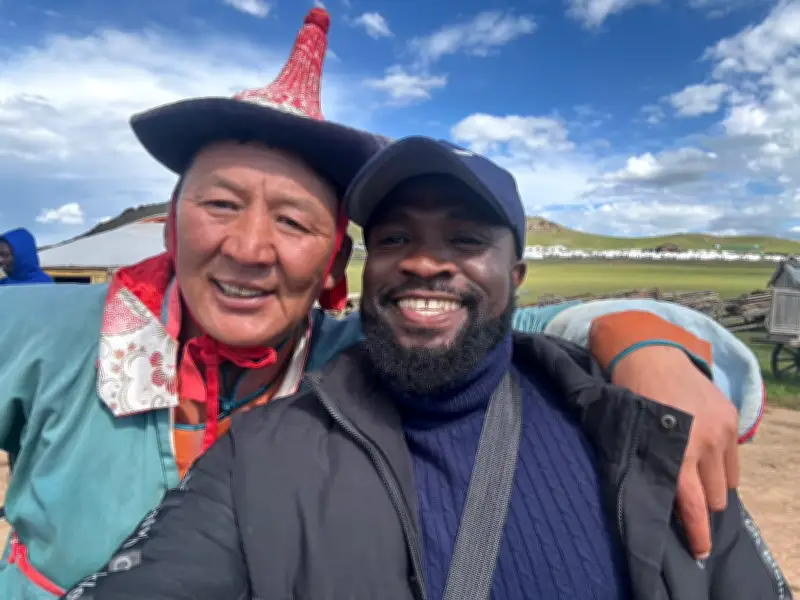
The United Nations Convention to Combat Desertification (UNCCD) media fellowship took a Nigerian journalist to Mongolia, where the Hustai National Park's community-based conservation model provides a practical framework for addressing land degradation and pastoral challenges, issues central to the upcoming COP17 negotiations. The visit, which included engagements with park rangers, pastoralists, and scientists, highlighted how value addition and alternative livelihoods can reduce pressure on rangelands, a lesson with direct relevance to Nigeria's farmer-herder conflicts.
Arriving in Ulaanbaatar: A Summer Surprise
Abdulkareem Mojeed, a journalist with Premium Times, was selected for the UNCCD media fellowship in Mongolia, fulfilling a long-held dream of visiting Asia. Before departure, a quick Google search described Ulaanbaatar, the host city of COP17, as the world's coldest capital. Expecting a snowy, frozen landscape, Mojeed was surprised to find it is currently summer in Mongolia. Mornings and evenings can be cold and breezy, with light rain arriving without warning, but the summer landscape offers a striking reminder of how closely Mongolians live with nature.
As part of the fellowship programme, the UNCCD, in collaboration with the Mongolian government, took the fellows to notable conservation and land-restoration sites. Over 48 hours, the group, including UNCCD officials, spent time at Hustai National Park, located about 96 kilometres west of Ulaanbaatar. This conservation model offers a practical lens for understanding issues expected to dominate high-level negotiations at COP17, which begins on Monday.
Hustai National Park: A Model of Conservation and Community
Hustai National Park is internationally recognised for the successful reintroduction of the Przewalski's horse, locally known as the Takhi, the world's last remaining truly wild horse species. However, the park hosts other vertebrates and invertebrates, including the Golden eagle, Steppe eagle, Himalayan vulture, Amur falcon, Upland buzzard, and Siberian sturgeon. The flora comprises mostly birch and aspen trees, with only 4 per cent (1,800 hectares) of the park covered by forest. According to the park manager, Hustai covers about 50,000 hectares.
The park demonstrates how biodiversity conservation, community engagement, sustainable pasture management, and eco-tourism can restore ecosystems while supporting local livelihoods. During the stay, the fellows camped in traditional gers, experiencing the environment of Mongolian pastoralists. The experience was designed to provide a practical understanding of land restoration and sustainable natural-resource management, closely aligned with the COP17 theme: “Restoring Land, Restoring Hope.”
The Challenge of Overgrazing and Land Degradation
Mongolia has nearly 80 million livestock—far more animals than people. The capital, Ulaanbaatar, is increasingly congested, while the countryside appears sparsely populated. Beneath this landscape lies a growing challenge: land degradation. Pastoralists told the fellows that increasingly extreme weather is affecting grasslands, and overgrazing is contributing to pasture degradation.
One explanation for the explosion in livestock numbers dates back to Mongolia's history under the Soviet Union. The nomads explained that authorities imposed minimum and maximum livestock limits for family units and confiscated animals when herds exceeded those limits. That system changed with the collapse of the Soviet Union and the emergence of a free-market economy. Livestock became a direct measure of household wealth and income, causing animal numbers to increase dramatically. More animals meant more income, but also greater pressure on the land, resulting in overgrazing and degradation across large areas of rangeland.
Community-Based Interventions and Alternative Livelihoods
Hustai's community-based interventions are particularly interesting. Rather than simply encouraging pastoralists to reduce their herds, the park is helping communities increase the value and quality of their animal products and by-products. The idea is simple: earn more from fewer animals rather than continually increasing herd sizes. Communities living around the park's buffer zones are also being introduced to alternative livelihood opportunities, including greenhouse farming and other agricultural practices. Tourism provides another source of income, with visitors coming to see the landscape, wildlife, and Mongolia's distinctive nomadic culture.
Unlike Nigeria, where competition over land and water between farmers and pastoralists has contributed to recurring conflicts, Mongolian herders told the fellows that they generally do not experience farmer-herder clashes. The explanation is partly geographical: the country's enormous landscape allows crop-farming settlements and pastoral communities to occupy different spaces, reducing competition over land. However, scientists are grappling with the degradation of more than 100 million hectares of rangeland and exploring ways to restore degraded ecosystems. At Hustai, researchers are working with endemic grass species to restore vegetation, improve plant biomass, and increase ground cover. The fellows saw scientists working on reseeding 24 grass species, many of which are dominant native plants. Annual precipitation in the protected area is only about 200 millimetres, making vegetation restoration a delicate task.
Lessons for Nigeria: Value Addition and the Future of Pastoralism
The resourcefulness of the pastoral communities struck Mojeed most. The nomads do not rely solely on meat; milk is transformed into a variety of products, including cheese, milk candies, and other dairy products. These products provide additional income and reduce dependence on increasing herd sizes alone. This offers a lesson for Nigeria, where conversations around pastoralism have largely focused on cattle numbers, grazing routes, farmer-herder conflicts, and the search for land. Mongolia offers another way of looking at pastoralism: how can pastoral communities earn more from the animals they already have while putting less pressure on the land? The answer may lie partly in value addition, better pasture management, alternative livelihoods, science, and stronger engagement with communities.
As a Nigerian journalist reporting from the Sahel and now from the Mongolian steppes, Mojeed finds the similarities striking. Different landscapes, cultures, and histories, but remarkably similar challenges. Climate change is altering weather patterns, extreme events are putting pressure on pastoral livelihoods, grasslands are degrading, and communities are being forced to adapt. Yet there is also hope. In Hustai, Mojeed saw a conservation model in which wildlife, pastoralists, scientists, and tourism are not necessarily competing interests. They can, with the right policies and incentives, become part of the same solution. Restoring land is not simply about planting trees or reseeding grass; it is about restoring the relationship between people, animals, and the land on which their survival depends. Mongolia's vast steppes are quietly teaching Nigeria and the rest of Africa that the future of pastoralism may not be about having more animals, but about creating more value from fewer animals while giving the land room to recover. From the Sahel to the Steppes, the stories may be different, but the search for survival, healthy soils, and hope is remarkably the same.