
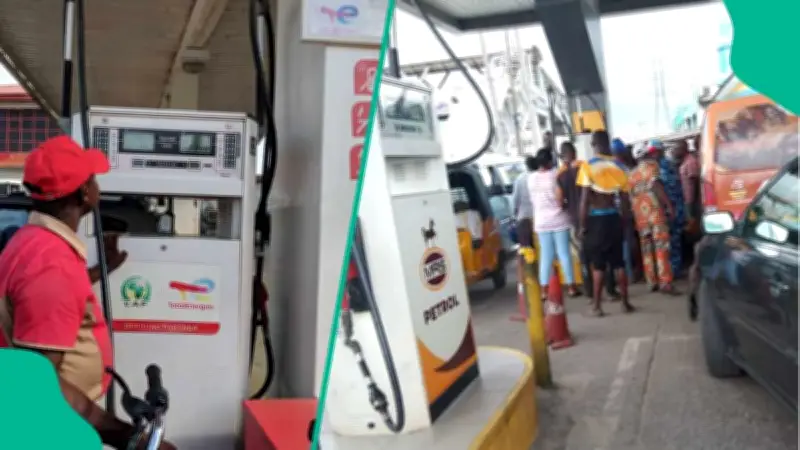
The average ex-depot price of petrol in Nigeria has climbed from approximately N1,120 to N1,200 per litre, raising concerns that motorists will soon face higher pump prices across the country. The increase follows Dangote Petroleum Refinery's decision to suspend petroleum product sales in naira and switch to US dollar transactions, a move that has created fresh uncertainty in the downstream oil market.
Depot Prices Rise as Marketers Brace for Retail Adjustments
A market survey across major fuel depots in Apapa, Lagos, revealed that several depots have adjusted their ex-depot prices upward. Data from petroleum trading platform Petroleumprice.ng showed that Pinnacle increased its loading price from N1,225 to N1,250 per litre, while Sobaz sold at N1,210 per litre. Sahara and Ardova were both offering petrol at N1,150 per litre.
Despite the rise at the depot level, many filling stations had not yet increased their pump prices as of Thursday. Most NNPC Retail outlets continued dispensing petrol at about N1,153 per litre. Industry marketers said the market was still adjusting to the refinery's new pricing arrangement, but projected that many retail outlets would likely revise their pump prices upward by Friday, July 17, 2026, to reflect the higher landing costs.
The survey also found that several MRS filling stations, one of Dangote Refinery's major retail partners, were not selling fuel during the afternoon, adding to concerns over temporary supply disruptions.
Marketers Warn of Disruption and Higher Costs
Petroleum marketers described the refinery's latest pricing decision as a major disruption to the downstream sector, arguing that it has introduced uncertainty into fuel supply and pricing. They noted that the suspension of naira-denominated sales has compelled marketers to reassess their procurement strategies, with many now anticipating increased operational costs that could ultimately be transferred to consumers.
PETROAN Warns of Inflation and Forex Pressure
The Petroleum Products Retail Outlets Owners Association of Nigeria (PETROAN) has criticised the move to price locally refined petroleum products in US dollars. Speaking on behalf of the association, its National Public Relations Officer, Dr. Joseph Obele, warned that denominating domestic fuel transactions in foreign currency would increase demand for scarce dollars, put additional pressure on Nigeria's foreign exchange market, and weaken the naira.
According to him, higher foreign exchange costs would inevitably translate into increased petrol prices, higher transportation costs, and more expensive goods and services, thereby worsening inflation across the country. Obele urged the Federal Government to strengthen and sustain the crude-for-naira arrangement to ensure local refineries receive adequate crude oil supplies. He also called on NNPC Limited to allocate more crude oil to domestic refineries to reduce reliance on imported crude and preserve naira-based petroleum transactions.




