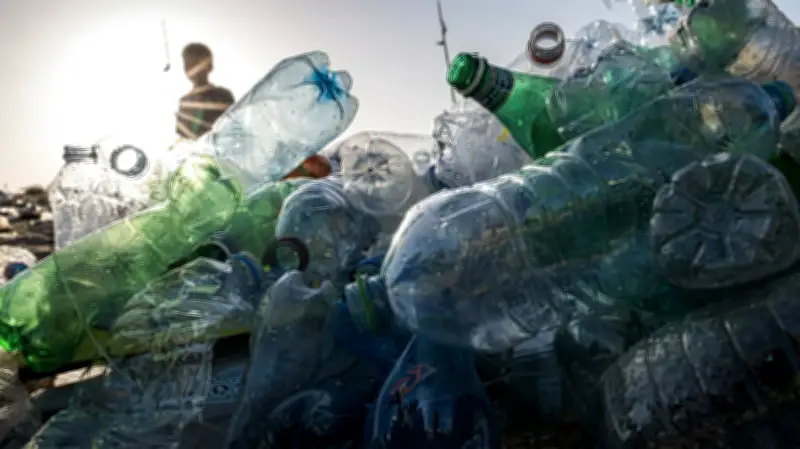
Policymakers and development stakeholders have expressed strong support for efforts to reposition plastic waste as a source of economic value in Nigeria. This endorsement aligns with a growing push to turn environmental challenges into opportunities for innovation, as young entrepreneurs in Abuja presented digital and technology-driven solutions to plastic pollution.
Youth-Led Innovations Take Center Stage
The appeal was made at the Top 10 Final Presentations of the Digital Peers International (DPI) and SGP Nigeria Innovation Challenge, where youth teams showcased prototypes focused on recycling systems, behavioural change, and circular economy models. The programme, themed “Deploying the Power of IT-Engaged Youths in Effective Plastic Use and Plastic Waste Management 2.0,” brought together government officials, innovation experts, and environmental stakeholders to assess youth-led approaches to plastic management.
Government Officials Call for Innovation Over Credentials
Speaking at the event, the Director of Special Duties at the Sheda Science and Technology Complex (SHESTCO) under the Federal Ministry of Innovation, Science and Technology, Dr. Edith Yohanna Ishidi, emphasised that youth involvement is critical to solving environmental problems sustainably. She urged participants to prioritise innovation over credentials, stressing that solutions must respond to real-life needs rather than academic achievement alone.
“It is not all about producing a fantastic CV. It is about solving problems, thinking outside the box and providing solutions,” she said. Dr. Ishidi also pointed to waste-to-energy solutions as a viable pathway in plastic management, but noted that high capital requirements make government support necessary for scaling. “Government must key in because a single individual cannot procure the facilities required for waste-to-energy processes,” she added.
Structured Mentorship Drives Idea Implementation
The project Chairman of DPI/SGP 2.0 and Managing Director of Pearls Learning Hub, Adeolu Odusote, explained that the initiative was designed to move participants from ideas to implementation through structured mentorship and continuous evaluation. He said 400 youths were grouped into 100 teams and taken through multiple stages of assessment to improve their solutions.
“We’ve brought 400 young people together and the idea is to make them learn about plastics and generate ideas that contribute to solving the challenges around plastic waste management,” he said. According to him, the process was deliberately iterative to strengthen the quality of outcomes. “Asking them to go back, look at the project, and improve on it is part of the process,” he noted. He added that results would be unveiled at a closing ceremony, stressing that sustained engagement was more important than immediate financial reward. “If you give the money today, many of them will not come back,” he said.
Regulatory Perspective: Plastic Waste as Economic Resource
From a regulatory perspective, the Director of Waste Management at the Nasarawa State Waste Management and Sanitation Authority (NASWAMSA), Ishaq Abubakar-Ibrahim, described plastic waste as an underutilised economic resource with significant potential. “There is nothing like plastic waste, because plastic waste is money,” he declared. He called for stronger collaboration between government agencies and private investors to expand recycling infrastructure and unlock value in the sector. “As a government agency, private investors are partners in progress,” he said.
Innovative Projects: Gamification and Community Development
One of the innovators, Team Lead of E-Cycle, Miss Vivian Maduekwe, presented a gamified platform designed to reshape how children aged six to 12 perceive plastic waste. She explained that the project uses interactive learning tools to promote early behavioural change and environmental awareness. “What we are working on is we want people to see plastic not as waste anymore, but as an opportunity for education and dignity for the female child and environmental health,” she said. Through game-based learning, children are exposed to real-world recycling practices in an engaging format. “We are utilising a game platform where they can connect to the real world and change their perspective about plastic,” she elaborated. She, however, noted that limited technical expertise, particularly in artificial intelligence and game development, posed implementation challenges. “We are not game developers, so we had to undergo training in technology and artificial intelligence,” she admitted.
Another participant, Abduljib Yusuf, Team Lead of Nature’s Heart Foundation, said his Plastic RRI initiative is focused on using plastic waste as a tool for education, inclusion, and community development. “We want people to see plastic not as waste anymore, but as an opportunity for education, dignity for the female child, and a cleaner environment,” he stated. He added that the project also seeks to improve access to menstrual hygiene support and learning materials for vulnerable children, with plans for expansion if funding is secured.