
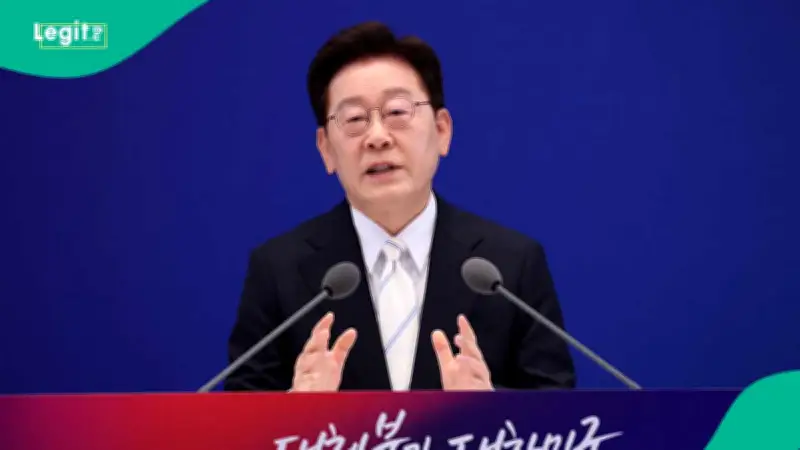
South Korea has announced a sweeping investment programme worth at least $880bn (£666bn) to strengthen its chip manufacturing and artificial intelligence industries. The plan, revealed by President Lee Jae-myung on June 29, is part of the country's ambitious Three Mega Projects aimed at reshaping its technology landscape.
Investment in chip manufacturing beyond Seoul
According to the BBC, the government intends to build new semiconductor hubs outside Seoul, where most advanced factories are currently located. This move is designed to revitalise rural economies and reduce the concentration of industries in the capital. President Lee described the initiative as a matter of “survival” for South Korea, noting the decline in rural areas due to industrial centralisation.
Artificial intelligence infrastructure
Lee emphasised the importance of securing AI capabilities quickly, stating: "We must secure the core elements of AI faster than any other country. Semiconductors, physical AI, and AI data centres are the triple axis for a great leap forward." The plan includes building AI data centres and robotics technology hubs, ensuring South Korea remains competitive against regional rivals such as Taiwan, China and Japan, who are also investing heavily in similar projects.
The announcement was made alongside leaders of Samsung and SK Hynix, the country's largest chipmakers. Both companies have benefited from the surge in demand for AI infrastructure, with SK Hynix's market valuation surpassing $1tn in May, driven by the boom in AI data centres.
Global AI spending context
South Korea's plan comes as US tech giants including Google, Amazon and Meta announced $650bn of spending on AI this year. The global race for AI dominance has created a shortage of semiconductors, pushing up prices and forcing companies like Apple and Microsoft to raise device costs.
While the investment surge highlights the importance of AI, some investors have expressed concerns about the sustainability of such massive spending. Recent market fluctuations have seen certain tech shares slide, reflecting unease about whether the AI boom can maintain its momentum.
Economic backdrop
Legit.ng earlier reported that South Korea's economy unexpectedly contracted 0.1 percent in the first three months of this year, the country's central bank said Thursday, as the Asian export giant reels from months of political chaos and heightened trade tensions. US President Donald Trump's threatened 25 percent "reciprocal" tariffs on export-dependent South Korea have rattled Asia's fourth-largest economy, sending Seoul-listed shares tumbling and pushing the currency to its weakest level since 2009. The country is also still emerging from a political crisis triggered by former president Yoon Suk Yeol's December attempt to suspend civilian rule, which culminated in his impeachment and removal from office this month.




