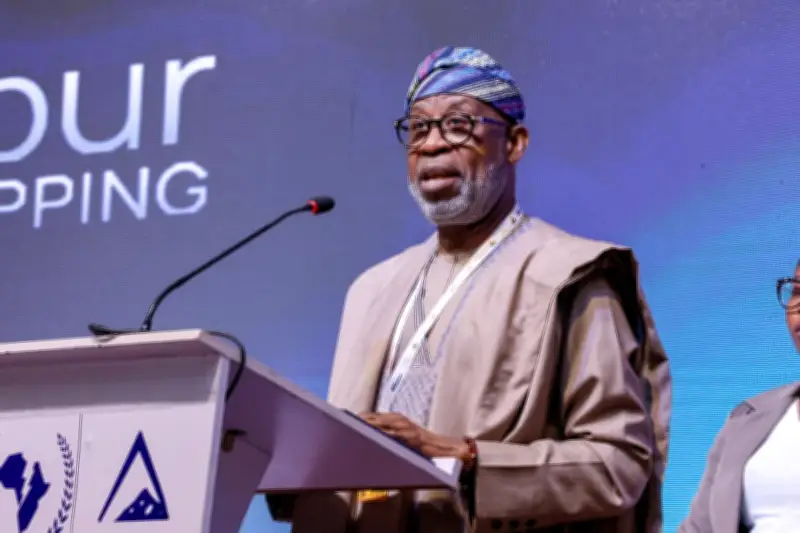
President Bola Ahmed Tinubu has declared that Nigeria and Africa must prioritise value addition in mineral resources, moving beyond being mere suppliers of raw materials to building industries, creating jobs, and achieving sustainable growth. He made this call while declaring open the 5th African Natural Resources and Energy Investment Summit (AFNIS 2026) at the State House Conference Centre in Abuja.
Africa's resources for Africa's prosperity
Speaking under the theme “One Africa, One Resource Vision,” Tinubu emphasised that Africa’s vast mineral and energy resources should become instruments of sovereignty and prosperity rather than symbols of dependence. He stressed the need for African countries to collaborate in processing minerals, developing energy infrastructure, and strengthening regional value chains.
“The era where Africa merely supplies raw materials while others capture the value must end. We must process, manufacture, power our industries and build our own value chains,” the President said. He noted that the ongoing global energy transition places Africa at the centre of the future economy, adding that there can be no successful energy transition without Africa’s critical minerals.
Nigeria's reforms and investment readiness
Tinubu highlighted that Nigeria’s reforms under the Renewed Hope Agenda aim to build a diversified and investment-ready economy driven by production, industrial growth, and job creation. He called for stronger intra-African collaboration, where resources from one African country support industries in another through integrated value chains and cross-border infrastructure.
Addressing investors, the President assured that Africa remains open for business but now seeks partnerships that promote local jobs, technology transfer, environmental sustainability, and long-term value creation. “We welcome capital that builds and not capital that merely takes,” he stated.
Just and equitable energy transition
Tinubu also stressed that Africa’s energy transition must be practical and equitable, noting that millions of Africans still lack access to electricity needed for agriculture, healthcare, education, and industrial development. “A just transition must protect the planet while preserving human dignity and the right to development,” he added.
Minister outlines mining sector reforms
Earlier, the Minister of Solid Minerals Development, Dr. Dele Alake, said AFNIS has evolved into a strategic platform where policy, investment, and industrial development converge to advance Africa’s resource ambitions. He noted that under the Renewed Hope Agenda, Nigeria is repositioning the mining sector from low-value extraction to value addition, transparency, and industrial competitiveness.
Alake disclosed that the government had revoked 924 dormant mineral titles to eliminate speculation and ensure only serious investors retain mining licences. Applicants for mining leases are now required to submit value-addition plans to discourage raw mineral exports and encourage local processing.
Investments and revenue growth
The Minister said reforms are already yielding results, citing investments in lithium processing facilities and iron ore projects. These include a $600 million lithium processing plant, a $200 million lithium refinery near Abuja, the $50 million ASBA lithium plant in the FCT, the $600 million Avatar lithium processing project in Nasarawa State, and a $1 billion iron ore-to-steel project in Kogi State.
Revenue from the solid minerals sector increased from about N6 billion at the inception of the current administration to over N38 billion in 2024 and about N68.1 billion in 2025, according to Alake. He also highlighted the role of the Africa Minerals Strategy Group (AMSG) in promoting beneficiation and continental cooperation.
Steel sector investments and policy reforms
The Minister of Steel Development, Prince Shuaibu Audu, said the Federal Government has intensified efforts to reposition Nigeria’s steel industry through strategic investments and policy reforms. He announced a $400 million investment by Inner Galaxy Group for a new steel plant in Ewekoro, Ogun State, and revealed plans for a proposed $1 billion partnership with India’s Rashmi Metaliks covering mining and critical minerals processing.
Audu disclosed that the Nigeria Metallurgical Industry Bill has passed second reading in the House of Representatives. He reiterated the government’s commitment to protecting investors and improving the ease of doing business, noting opportunities in iron ore mining, steel rolling mills, fabrication industries, and logistics infrastructure.
Incentives available to investors include tax holidays, customs duty exemptions, and capital allowances, while Executive Order No. 5 will stimulate demand for locally produced steel. Audu added that Nigeria is ready to collaborate with other African countries under the African Continental Free Trade Area (AfCFTA) to strengthen regional value chains.
Call for research and collaboration
The Steel Minister also called for research partnerships to unlock the over one billion tonnes of iron ore deposits in Agbaja, Kogi State, to accelerate industrial growth and create jobs across the country. Stakeholders at the summit emphasised that Africa’s mineral wealth must be leveraged to build industries, create employment opportunities, and secure long-term prosperity for the continent.