World Environment Day: How Abuses, Poor Regulations Fuel Health Crisis, Economic Losses
As countries mark World Environment Day, stakeholders have highlighted Nigeria's worsening environmental challenges and their severe health and economic consequences. Pollution, gas flaring, poor waste disposal, deforestation, and weak enforcement of environmental laws continue to devastate communities nationwide.
Experts warned that decades of environmental neglect are worsening diseases, flooding, food insecurity, and the loss of livelihoods, while costing the country billions of naira in economic losses each year. Environmentalists, public health experts, and urban planners described the crisis as largely self-inflicted, blaming years of policy inconsistency, weak institutions, and regulatory compromise for deepening ecological destruction.
The observations were made in commemoration of World Environment Day, a yearly reminder of humanity's collective duty to ensure the planet survives ongoing climate change. Through campaigns, events, and initiatives, World Environment Day inspires individuals and communities to take action, fostering urgency and addressing environmental challenges to build a sustainable future. The global theme for World Environment Day 2026, as per the United Nations Environment Programme (UNEP), is Climate Action, focused on urgent signals the Earth is sending and humanity's response. The official campaign message is 'Now for Climate'.
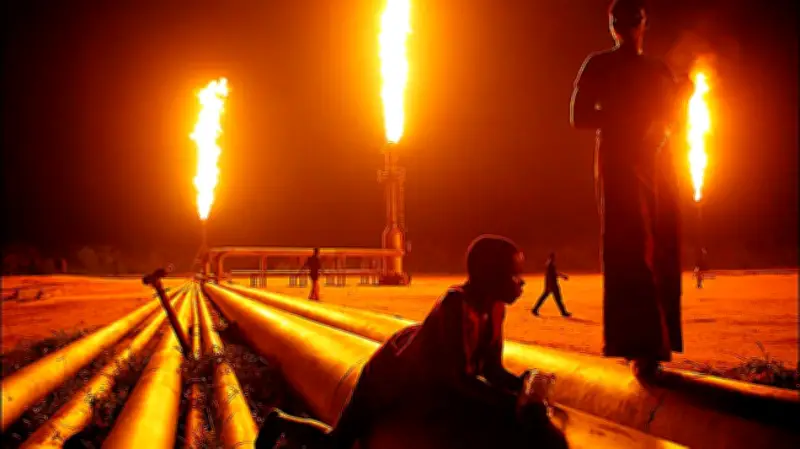
In several parts of Nigeria, polluted oil-producing communities in the Niger Delta, overflowing dumpsites in Lagos, advancing desertification in northern Nigeria, and other environmental abuses are contributing to rising disease burdens, food insecurity, flooding, and declining productivity. A recent environmental assessment estimated that Nigeria lost about $56.75 billion to gas flaring between 2002 and 2024, with cumulative greenhouse gas emissions exceeding 714 million tonnes of carbon dioxide equivalent. Satellite data from the World Bank showed that Nigeria flared about 5.3 billion cubic metres of gas in 2022 across 174 flare sites.
Despite being one of Africa's largest gas producers, Nigeria remains among the world's leading gas-flaring nations, wasting billions of cubic metres of natural gas each year, which experts say could generate electricity, support industries, and create jobs. Earlier reports estimated that Nigeria loses about $18.2 million daily to gas flaring due to wasted gas resources and missed commercial opportunities. According to the World Bank Global Gas Flaring Tracker, the country has consistently ranked among the top gas-flaring nations for more than a decade.
Communities in the Niger Delta have repeatedly complained about respiratory illnesses, acid rain, polluted water, and declining agricultural yields linked to decades of oil pollution and gas flaring. Public health experts warned that environmental pollution is worsening respiratory diseases, cancer risks, and water-borne infections. According to the World Health Organisation (WHO), Nigeria recorded one of the world's highest mortality rates linked to air pollution, with an estimated 175 deaths per 100,000 people associated with household and ambient air pollution.
In Lagos, a World Bank study estimated that ambient air pollution caused about 11,200 premature deaths in 2018, while the economic cost of pollution-related illnesses and deaths was valued at approximately $2.1 billion, representing about 2.1 per cent of the state's Gross Domestic Product (GDP). The situation is compounded by mounting waste management challenges in major cities. Lagos generates more than 13,000 tonnes of solid waste daily, with significant volumes ending up at dumpsites such as Olusosun, Solous, and Ewu-Elepe. Lagos also recorded particulate pollution levels of about 68 micrograms per cubic metre, far above the WHO-recommended limit of 10 micrograms per cubic metre, exposing millions of residents to dangerous air quality conditions.
The World Bank estimates that poor outdoor air quality contributes to more than 5.7 million deaths yearly worldwide, with economic costs approaching five per cent of global GDP. According to WHO estimates cited by the World Bank, around seven million people die annually from exposure to polluted air, leading to strokes, heart disease, lung cancer, and respiratory infections. The global economic burden of air pollution was estimated at $5.7 trillion in 2016, equivalent to about 4.8 per cent of global GDP. The World Bank also noted that pollution-related diseases are responsible for productivity losses equivalent to about two per cent of GDP yearly, while healthcare costs linked to pollution account for up to seven per cent of health spending in heavily polluted middle-income countries.
Environmental studies showed that dumpsites emit methane and other toxic gases from decomposing waste and open burning activities, contributing to poor air quality and climate risks. Experts noted that methane is more than 20 times more potent than carbon dioxide in trapping atmospheric heat. Residents living around the dumpsites frequently complain of asthma, chronic cough, skin infections, and water contamination caused by leachate from unmanaged refuse. Repeated fire outbreaks at the Olusosun dumpsite have also heightened concerns about toxic smoke exposure and public safety.
Available data indicate that Nigeria loses between 350,000 and 400,000 hectares of forest yearly, placing the country among nations with the highest deforestation rates globally. Conservation experts estimate that Nigeria has already lost more than 80 per cent of its original forest cover due to illegal logging, urbanisation, agricultural expansion, and dependence on fuelwood. Environmentalists warned that shrinking forests are worsening desertification, flooding, erosion, and biodiversity loss across several regions. Although Nigeria has launched various afforestation and reforestation initiatives, including participation in the Great Green Wall project, experts said poor funding, weak enforcement, and illegal encroachment on forest reserves continue to undermine progress.
Urban planners also blamed indiscriminate development approvals and poor drainage infrastructure for worsening flooding in major cities. They said many wetlands and natural floodplains are being converted into residential and commercial developments without adequate environmental safeguards. They noted that ongoing efforts to convert Jabi Lake into residential housing contradict established planning laws and undermine global best practices in sustainable urban development. The lake serves as critical environmental infrastructure that supports flood control, regulates urban temperatures, preserves biodiversity, and provides recreational space for residents of the Federal Capital Territory. Annual flooding continues to destroy homes, roads, farms, and businesses across the country, while rising temperatures and changing rainfall patterns threaten food production and rural livelihoods. Small businesses and informal traders remain among the hardest hit, suffering repeated losses from floods, pollution, and poor sanitation conditions.
Environmental activist and Director of the Health of Mother Earth Foundation (HOMEF), Nnimmo Bassey, told The Guardian that environmental degradation has poisoned the foundations of life, including air, water, soil, and food systems. According to him, oil spills, gas flaring, toxic waste, deforestation, and pollution have increased respiratory illnesses, cancers, water-borne diseases, and food insecurity. 'Communities lose livelihoods as farmlands become barren, fisheries collapse, and ecosystems that support local economies are destroyed. The result is a cycle of poverty, ill health, displacement, and ecological injustice,' he said. Bassey identified major environmental violations as oil pollution, gas flaring, illegal mining, deforestation, wetland destruction, indiscriminate waste dumping, and industrial contamination of land and water. 'Enforcement remains weak because of regulatory capture, inadequate monitoring, corruption, political interference, and the prioritisation of profit over people and the environment,' he said. 'Laws exist, but without accountability and political will, they remain largely ineffective.' He urged the government to enforce environmental laws without compromise and invest in ecological restoration, public transport, renewable energy, and sustainable waste management systems. 'Private sector operators must adhere to the polluter-pays principle, clean up their impacts, and adopt environmentally responsible practices. Citizens should reduce waste, support recycling, protect local ecosystems, and actively demand environmental justice. Building resilience requires placing communities, not profits, at the centre of development decisions,' he added.
The Chief Executive Officer of the Rural Africa Water Development Project (RAWDP), Dr Joachim Ezeji, described environmental degradation as a major threat to public health in Nigeria. 'The threat is real and largely unmitigated. It has become a major driver of public health challenges and economic losses, particularly in regions affected by oil exploration, mining, and industrial activities. The loss of fisheries and farmlands has also undermined livelihoods, deepening poverty and social unrest,' he said. Ezeji stated that industrial activities in major urban centres such as Lagos and Kano states have resulted in significant air, water, and land pollution. 'Industrial emissions, vehicular exhaust, and poorly managed waste contribute to respiratory diseases, cardiovascular conditions, and other health problems. These health burdens increase healthcare costs, reduce labour productivity, and place additional strain on already limited public services,' he added. According to him, environmental degradation imposes substantial economic costs through healthcare expenditures, loss of livelihoods, reduced agricultural and fisheries production, lower worker productivity, and declining investor confidence. Ezeji urged the government to strengthen enforcement of environmental regulations, ensure compliance with Environmental Impact Assessments (EIAs), and impose stricter penalties for pollution and illegal waste disposal. He also advocated greater investment in modern waste management infrastructure, recycling facilities, and drainage systems. 'Governments should further promote renewable energy, sustainable transportation, and nature-based solutions such as afforestation, wetland restoration, and watershed protection,' he added.
The Chairman of the Governing Board of the West African Science Service Centre on Climate Change and Adapted Land Use (WASCAL), Prof. Chinedum Nwajiuba, lamented the widespread artisanal and unregulated mining activities across the country. 'It is disturbing to see people in both rural and urban Nigeria digging in search of minerals and simply abandoning the sites afterwards,' he said. Nwajiuba blamed weak enforcement on poor governance across sectors. 'In which sector can we point to patriotic and serious governance in Nigeria? So, it is not only environmental governance that is weak; the problem cuts across sectors,' he said. Nwajiuba, who is also Chairman of the Board of Directors of the Nigerian Environmental Study Team (NEST), stressed that Nigeria already has sufficient environmental laws and regulations, but implementation remains poor. 'If you recall that from the colonial era until recently our cities had green areas, parks, and gardens, many of which have now been taken over for private development, while everywhere is covered in concrete, you begin to understand the scale of the environmental challenge we face,' he added.