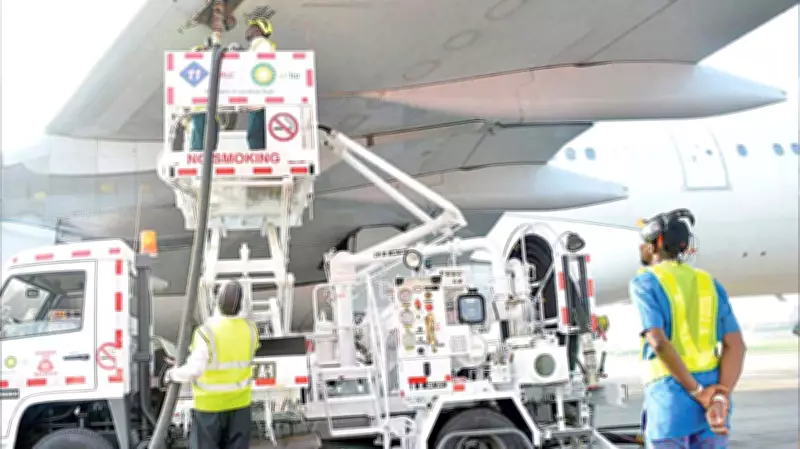
Experts in the aviation sector have defended the Federal Government's support for airlines to mitigate the aviation fuel crisis. The stakeholders, however, warned that unchecked market forces could cripple the air transport sector, which is critical to the economy.
Background of the Crisis
The local aviation industry has been in murky waters over the past two months following a sharp spike in aviation fuel prices. The airlines complained that the product surged by about 300 per cent from N900 to N3,300 per litre within two months. They therefore threatened to shut down operations if the government failed to intervene. Industry stakeholders described the increase as artificial, noting that global crude oil prices rose by only about 30 per cent over the same period, suggesting possible price gouging by local marketers.
Government Response
In response, the Federal Government convened an emergency meeting between airlines and fuel marketers while approving debt relief measures for domestic carriers in a bid to prevent a total collapse of the aviation sector.
Samuel Caulcrick's Perspective
The former Rector of Nigerian College of Aviation Technology (NCAT), Samuel Caulcrick, said that the notion of a completely free market was unrealistic in the aviation sector. He declared that even under market capitalism, the government still retained the constitutional authority to step in during crises, correct market failures, and safeguard national interests. Caulcrick explained that while supply and demand were critical to market operations, governments worldwide routinely deploy regulatory controls, price adjustments, and, in extreme cases, the nationalisation of key industries such as energy, transport, and aviation to protect the public interest. He insisted that governments are justified in intervening when private sector players engage in unethical practices, including excessive price hikes that threaten economic stability and essential services.
He said: “When private owners behave unethically, such as engaging in excessive price hikes (price gouging), governments can step in to impose maximum prices or seize assets. Amid the Middle East conflict, governments are implementing a mix of fiscal and regulatory measures, including, in some cases, contemplating state ownership to maintain energy stability. The conflict has caused significant disruptions, notably with the closure of the Strait of Hormuz, which historically transports 20 per cent of global oil, pushing Brent crude prices above $100 per barrel. This disruption has triggered widespread energy shocks, elevating fuel costs worldwide, which in turn fuels inflation and threatens economic growth in both developed and emerging markets.”
Caulcrick regretted that the impact of the crisis had been particularly severe in Nigeria, with airlines struggling to cope with surging operating costs. He stressed that the unfolding situation highlights a fundamental economic reality that markets, no matter how liberalised, are not entirely self-correcting, especially during periods of geopolitical instability. He declared that the aviation sector was too strategic to remain vulnerable, advocating a balance between market freedom and regulatory oversight.
Alex Nwuba's Analysis
Also, aviation analyst, Alex Nwuba, warned that the survival of airlines must take priority to prevent a total sector collapse. Nwuba, in an interview with The Guardian, described the situation as critical and cautioned that allowing airlines to fail would cripple the entire ecosystem. According to him, the collapse of airline operations would cut off revenue streams to aviation agencies, ground handlers and service providers, while also putting thousands of jobs at immediate risk, thereby further increasing unemployment rates in the country.
He added: “Once the Federal government went the way of debt concessions, it opened doors for every crab to crawl through. First, the airports warned of income losses, then concessionaires sought bailouts, and now ground handlers are threatening service suspension over N9 billion debt. While airlines face a jet fuel crisis and the sector's troubles did not start today, we cannot afford to kill the goose that lays the golden egg. No airlines means no agency receivables, no ground handling revenue and a sterile ecosystem where thousands lose jobs overnight.”
Nwuba, therefore, called on stakeholders to exercise restraint while a coordinated rescue plan was implemented by the government. He, however, suggested a time-bound emergency stabilisation package for airlines, like short-term, low-interest bridge loans and working-capital guarantees to address liquidity challenges and sustain operations, with strict conditions tied to safety, staff salaries and essential services. He further called for accountability measures, insisting that any airline accessing public support must submit a clear plan to restructure or settle outstanding debts owed to key industry players, including fuel suppliers, ground handlers and regulatory agencies. Such support, he maintained, must be independently verified and come with a firm expiration timeline to avoid becoming a permanent subsidy.
Besides, he proposed the introduction of parallel relief measures for ground handlers and concessionaires, including emergency liquidity support, rent deferrals and compensation mechanisms for verified investment losses. He also advocated a limited and carefully applied debt reduction framework of 30 per cent cut on certain operational debts, but warned that this must only be used as a last resort, which must include safeguards for workers, such as wage protection and severance guarantees. To ensure transparency, Nwuba recommended the creation of a neutral reconciliation platform to coordinate payments and concessions among stakeholders. This, he argued, should be backed by a clear timetable, public disclosure of outcomes and an independent audit at the end of the intervention period. He insisted that safety must remain paramount to everyone in the sector, warning that no financial relief should compromise maintenance standards, crew training or regulatory compliance.
ANAP's Criticism
Meanwhile, the General Secretary of the Association of Nigerian Aviation Professionals (ANAP), AbdulRasaq Saidu, criticised the recent 30 per cent debt relief granted to domestic airlines by President Bola Tinubu. Saidu, in an interview with aviation journalists in Lagos, accused the airlines of violating the Remittance Act. According to him, the carriers are not remitting the five per cent Ticket Sales Charge (TSC) collected from air passengers on behalf of the Nigeria Civil Aviation Authority (NCAA) appropriately. The ANAP General Secretary insisted it was criminal to retain the fund, having collected it from passengers, stressing that the union would not support any waiver for the airline or any other organisations in the sector.
He said: “Aviation workers will protest and resist any waiver of public funds to any airline. The five per cent of tickets sold by airlines should be remitted to the NCAA, but it is being held by the airlines in violation of an extant Act.”