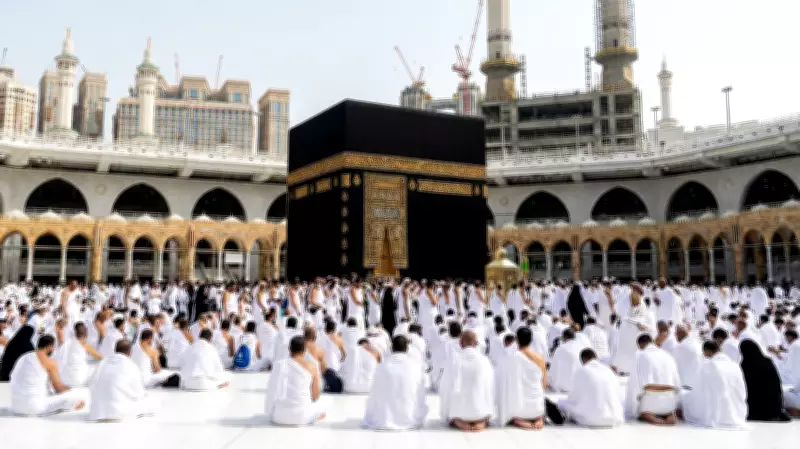
The Nigeria Civil Aviation Authority (NCAA) has voiced concern over the increasing number of passenger complaints against domestic airlines in the country. This development comes as aviation stakeholders call on the Federal Government to urgently address the rising cost of aviation fuel, warning that it could jeopardize the successful airlift of pilgrims for the 2026 Hajj.
NCAA Director Expresses Concern
Michael Achimugu, Director of Public Affairs and Consumer Protection at NCAA, in a post on his verified X handle, noted that while the sector faces challenges such as high jet fuel costs, bird strikes, and other factors, the regulatory authority receives the majority of complaints against just two airlines. He did not disclose the names of these airlines.
Achimugu insisted that operators must improve crisis management, emphasizing that airlines should provide timely and accurate information to passengers and ensure prompt refunds and compensation where applicable. He stated, "You cannot take money from passengers and refuse to refund. It gives us a bad image. Circumstances are as difficult for passengers as they are for operators, if not more so. When a disruption occurs, airline staff must be available to provide information and care. The behavior of running away, sometimes due to fear of being attacked by passengers, has to be adjusted."
The director warned that failure to address these issues could erode public confidence in Nigeria's aviation industry at a critical time when the sector is making notable progress. He commended the Federal Government for its continued support of industry stakeholders, noting that recent interventions have boosted airlines and strengthened other service providers, including local catering companies now patronized by international carriers. Achimugu added that such support places a responsibility on operators to uphold service standards and avoid situations that could cast the government and regulators in a negative light. He also highlighted that the NCAA has worked to bridge the gap between regulators, airlines, and passengers while ensuring greater awareness and compliance with aviation regulations.
Stakeholders Warn of Hajj Crisis
Bukalti Gamawa, President of the Concerned Aviation Stakeholders, appealed yesterday that the sharp increase in Jet A1 prices poses a serious threat to the planned airlift of thousands of Nigerian pilgrims to Saudi Arabia. He explained that the ongoing conflict involving the United States, Israel, and Iran has driven up global oil prices, affecting economies and businesses worldwide. In Nigeria, the aviation industry has recorded a more than 300% increase in aviation fuel prices, forcing some airlines to cut operations and others to warn they might suspend services.
The stakeholders urged immediate action to rescue the 2026 Hajj operation from what they described as "one of the toughest logistical and financial crises" in recent times, caused by rising aviation fuel costs. They stated, "Many of the airlines contracted for the 2026 Hajj operations are expected to lease aircraft to meet capacity demands. With the current fuel price increase on both legs, much of their projected profit margin has already been wiped out. In some cases, airlines may end up operating at break-even or even at a loss, effectively flying 'for free' after covering lease and operational expenses. If urgent action is not taken, some airlines may find it financially impossible to even commence operations from Nigeria or sustain return operations from Saudi Arabia."
The group's president noted that although federal and state governments no longer subsidize Hajj operations, stakeholders say urgent policy actions—such as price regulation, forex support, or special fuel arrangements—are needed to avert a crisis.