
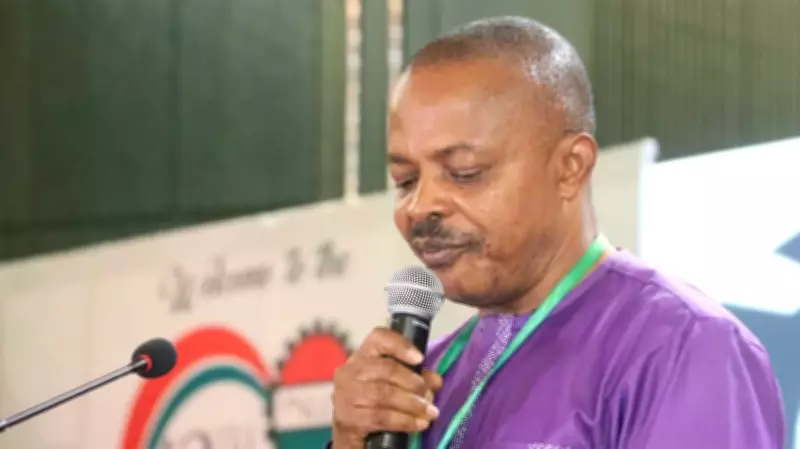
Organised labour has announced that the process of renegotiating the National Minimum Wage, which expires early next year, will commence by July 2026, aiming to avoid the painful delays experienced in the past. Meanwhile, the Lagos State Council of the Nigeria Labour Congress (NLC) has urged the state government to raise the minimum wage from N85,000 to N225,000, citing mounting economic pressure on workers and the rising cost of living in the state.
Labour Leaders Call for Immediate Wage Relief
The NLC, led by Joe Ajaero, and the Trade Union Congress of Nigeria (TUC), led by Festus Osifo, delivered a joint speech during the Workers' Day celebration over the weekend. They demanded that from July of this year, every worker be paid 100 per cent of their basic salary until the new national minimum wage is signed into law. This measure is intended to cushion the effect of the renewed crisis of survival facing Nigerian workers.
The labour leaders called on all workers to unite in demanding a truly living wage that reflects the harsh economic realities they face today. They noted that the pre-election period is already marked by anxiety, division, and uncertainty, and that Nigeria is at a crossroads, facing daunting challenges. The trade union movement, they argued, stands as one of the last enduring pillars of hope for the nation, urging workers to rise to the moment with courage and clarity, drawing strength from shared history and collective purpose.
“We hope that those entrusted with leadership will rise to this moment with the seriousness, humility, and commitment that the times demand,” they said.
Economic Concerns and National Debt
On the economic front, Ajaero and Osifo stated that with national debts rising to about N200 trillion, the country should redirect its economic strategy towards job creation, productive capacity, and inclusive growth. They warned that an economy that serves only the top one per cent while leaving the 99 per cent behind cannot be sustainable, as it breeds inequality, dependence, and instability.
Lagos Workers' Specific Demands
The demand on behalf of Lagos workers was made by the council's chairperson, Funmi Sessi, during the 2026 International Workers' Day celebration at Mobolaji Johnson Arena. Labour leaders said inflation has significantly weakened the value of wages, leaving many workers unable to meet essential needs such as food, housing, transportation, healthcare, and education.
According to the union, the present wage structure no longer shields workers from the realities of rising living costs. They argued that although the last wage increase was welcomed, its impact has been quickly eroded by inflation, making a fresh review necessary to sustain workers' welfare and maintain industrial harmony.
“Given the economic hardship and the high cost of living in Lagos, this amount is no longer sufficient,” the union stated, adding that a revised wage of N225,000 would better reflect present economic conditions.
The labour body also pointed to inflation, estimated at about 15.38 per cent, as a key driver of financial strain, noting that many workers were becoming increasingly vulnerable despite being employed full-time. It linked the situation to broader global economic pressures influencing fuel prices and overall living expenses.
The N85,000 minimum wage in Lagos was approved in October 2024 under Governor Babajide Sanwo-Olu and implemented in November of the same year as part of efforts to ease inflationary pressure. However, labour leaders maintain that persistent price increases have diminished its effectiveness.




