
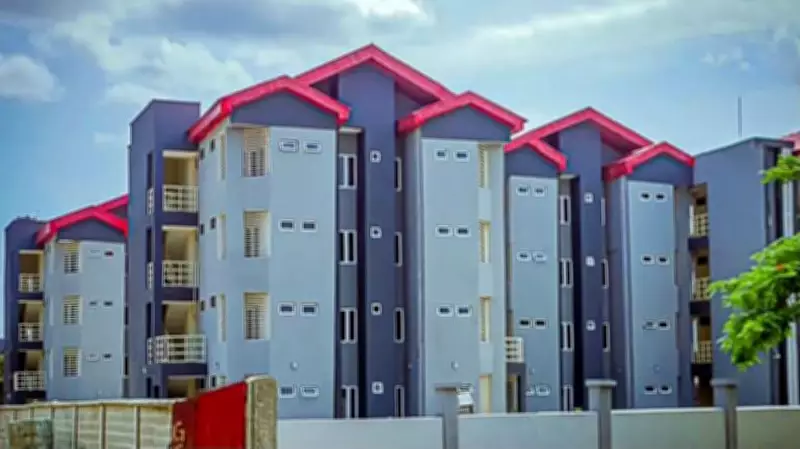
As enrolment continues to rise and economic conditions remain tight, Nigeria's student housing crisis has deepened, with soaring hostel costs reshaping access to and the quality of tertiary education in the country. However, to curb the trend, experts advocate coordinated interventions, including economic stability, stronger university-led investment in accommodation, and expanded private sector participation, Chinedum Uwaegbulam and Jessica Iloakasia report.
Rising Inflation and Demand Tighten Grip on Student Housing
Rising inflation and surging demand for accommodation are tightening their grip on Nigeria's student housing market, leaving millions of undergraduates struggling to secure affordable and decent shelter near their campuses. What was once a manageable challenge has evolved into a full-blown structural crisis, driven by a widening gap between student enrolment and available hostel spaces, as well as a sharp escalation in rental costs linked to broader macroeconomic pressures.
Across tertiary institutions nationwide, the story is increasingly consistent with rising admissions, stagnant housing supply, and an off-campus rental market that is both expensive and largely unregulated. The Guardian investigation across Nigeria's tertiary education system reveals a troubling imbalance. The country's university system hosts more than two million students, yet available bed spaces are estimated at just about 300,000. This leaves a deficit of roughly 1.7 million beds. In practical terms, more than 70 per cent of students are forced into private accommodation markets, where pricing is determined by demand rather than regulation.
Pressure in Major University Clusters
In major university clusters, the pressure is even more intense. At the University of Lagos (UNILAG), for instance, a student population of nearly 40,000 competes for fewer than 8,000 on-campus bed spaces. The result is a highly competitive allocation system, where securing a hostel space is almost as difficult as gaining admission. Students who fail to secure accommodation through the university's ballot system are pushed into surrounding neighbourhoods, where rents are volatile and increasingly unaffordable.
Within UNILAG, official hostel fees remain relatively structured. Bed spaces cost between N43,000 and N80,000 per academic session in standard hostels, while upgraded facilities range between N250,000 and N500,000. However, these regulated spaces are extremely limited and often oversubscribed. Scarcity has created a parallel informal market where bed spaces are resold at inflated rates, sometimes reaching about N250,000, even within supposedly regulated environments.
Beyond campus gates, conditions worsen significantly. Private and purpose-built hostels, initially designed to ease pressure, are now out of reach for many students. A single room can cost as much as N950,000 per session, while shared accommodation goes for around N710,000 per bed space in some developments.
Off-Campus Markets Under Extreme Pressure
The situation is not unique to Lagos. In Abuja, more than 20,000 students are competing for fewer than 4,000 available hostel spaces in some clusters, creating a demand ratio of roughly five-to-one. This imbalance fuels rent inflation, overcrowding, and informal conversions of residential buildings into student lodges.
In Owerri, Ibadan, Ile-Ife, Nsukka, and Zaria, occupancy levels in both public and private hostels often exceed 90 per cent throughout the academic year. In such conditions, turnover is minimal and landlords maintain strong pricing power. The economic logic is straightforward: high demand ensures near-full occupancy, while limited supply gives property owners the ability to increase rents with little resistance.
Developers in these markets reportedly enjoy occupancy rates of 85–95 per cent and yields ranging from 16–26 per cent, significantly higher than many other real estate segments. While attractive to investors, this profitability does not translate into affordability for students.
Inflation as Key Driver of Rent Escalation
Nigeria's broader inflation environment has intensified the housing crisis. Inflation climbed to 15.38 per cent in March 2026, reversing earlier moderation, driven by rising food, transport, and accommodation costs. Earlier spikes above 34 per cent in 2024 significantly eroded household incomes while increasing the cost of construction materials such as cement, steel, and fittings.
Developers and landlords, faced with rising input costs, have increasingly passed these expenses to tenants. Across major cities, rents have surged by 40–80 per cent within short periods. For students, many of whom depend on fixed parental funding, the impact is immediate and severe. Accommodation that previously cost around N200,000 now goes for between N450,000 and N500,000 in several university towns. In some high-demand locations, rents have doubled from about N700,000 to over N1.4 million within a short time frame.
Human Impact Across Campuses
The human impact of these figures is visible across campuses. Mofe, a student at Obafemi Awolowo University, Ile-Ife, said rent for a room increased from N35,000 in 2021 to between N100,000 and N150,000 in 2025. Self-contained apartments now cost between N250,000 and N400,000. According to him, landlords often attribute the increases to rising maintenance and construction costs.
At Enugu State University of Science and Technology (ESUT), Florence recalled that a lodge that cost N120,000 in 2021 now goes for about N500,000. "As food prices rise, rent follows suit," she said, noting that students increasingly share rooms or opt for overcrowded but cheaper alternatives.
In the University of Port Harcourt, Esther described a worsening situation where self-contained apartments now range between N600,000 and N1 million. "Some students can barely afford food, let alone new rent prices," she said.
At Ekiti State University (EKSU), David said his rent increased from N150,000 in 2022 to N250,000. He added that many students still prefer off-campus accommodation due to proximity to services and perceived convenience, despite rising costs.
Economic Dynamics Behind the Crisis
Housing experts said the crisis is being driven by a reinforcing cycle between inflation and demand. On one hand, severe shortages of accommodation allow landlords to increase rents without fear of vacancy. On the other hand, inflation justifies higher pricing as construction, maintenance, and financing costs rise. The result is a rental market where prices consistently outpace incomes, leaving students with minimal bargaining power.
Despite the shortage, investment in purpose-built student accommodation remains limited. Developers tend to prioritise higher-end residential projects that offer quicker returns and lower risk exposure. However, the student housing segment that does exist is highly profitable. Operators report occupancy rates of 85–95 per cent year-round, with returns ranging between 16 and 26 per cent. This underscores that while student housing is commercially viable, it is not being developed at scale in the affordable segment.
Developers Cite Inflation, Financing Barriers
A private developer at Chukwuemeka Odumegwu Ojukwu University and Chief Executive Officer of Spiffy Mandera Properties, Mr Uchenna Onochie, said rising rents are largely driven by inflation and escalating construction costs. He explained that developers must recover expenses linked to land acquisition, materials, and financing, all of which have increased significantly.
Onochie argued that government intervention through subsidised land allocation could reduce development costs and, ultimately, rental prices. He also identified difficulties in securing property titles, particularly Certificates of Occupancy (C of O), as a major constraint. Without proper documentation, developers struggle to access bank financing, forcing them to rely on expensive private capital that is reflected in rent. "Better access to land and faster titling would reduce financial pressure and help stabilise pricing," he said.
Structural Gaps in University Housing Policy
Director of the UNILAG Centre for Housing and Sustainable Development, Prof. Timothy Nubi, said in a typical university of 45,000 students, only about 9,000 bed spaces may be available, forcing most students into private accommodation. He noted that while private investors have stepped in, their focus on profit has pushed rents beyond the reach of many students.
The consequences, he said, include overcrowding, informal settlements, and in extreme cases, students sleeping in classrooms or open spaces. He recalled that similar conditions existed in the 1980s, when overcrowded halls were colloquially referred to as "mortuaries." Nubi stressed that university expansion without corresponding investment in housing continues to deepen the crisis, affecting both students and academic environments.
"Each year, thousands more students enter a system already under strain. The impact extends beyond students, affecting lecturers and the broader learning environment. Without deliberate intervention, the outlook is troubling. With Nigeria's population rising rapidly and Lagos projected to reach 40 million, the pressure on housing will only intensify," Nubi added.
Professor of Real Estate and Asset Valuation at Nnamdi Azikiwe University, Awka, Joseph Onyejiaka, said rising hostel rents in areas such as Ifite are accelerating faster than in previous years due to inflation, insecurity-driven migration, and rising construction costs. He noted that insecurity in parts of northern Nigeria has increased student inflows to southern institutions, intensifying demand pressures.
Onyejiaka also pointed to a growing preference among landlords for short-term rentals, which offer higher returns than long-term student leases. "These arrangements bring faster, higher profits than standard student leases, which further cuts the supply of affordable, long-term hostel spaces."
Onyejiaka said reducing inflation to single digits would lower construction costs and encourage new hostel development, helping to stabilise rents. He also advocated stronger government involvement through funding for on-campus hostels and partnerships with the private sector, including Corporate Social Responsibility (CSR)-driven housing investments. "Government action is also crucial, like more funding for on-campus hostels would create competition and force private off-campus landlords to reduce prices. Universities could also direct their Internally Generated Revenue (IGR) into large-scale student housing projects," Onyejiaka said.




