
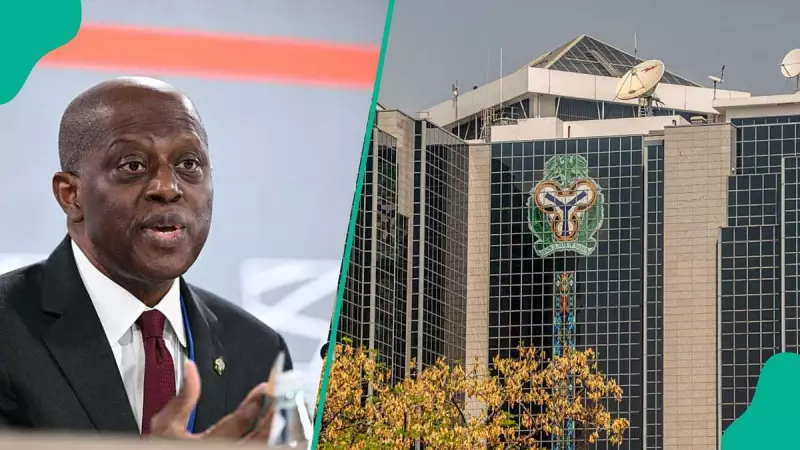
The Nigerian banking sector is grappling with significantly tighter liquidity conditions following aggressive monetary operations by the Central Bank of Nigeria (CBN). Last week, the apex bank withdrew an estimated N3.7 trillion from the financial system through large-scale sales of Nigerian Treasury Bills (NTBs) and Open Market Operation (OMO) bills, according to market data reported by The Sun.
Massive Withdrawals Outweigh Inflows
The CBN's substantial intervention involved selling approximately N1.1 trillion in Nigerian Treasury Bills alongside an additional N2.6 trillion in OMO bills. This massive withdrawal occurred despite a N2.2 trillion repayment from the primary market that would typically bolster system liquidity. Instead of improving, the banking system's liquidity shortfall expanded dramatically to N2.5 trillion, up from N1.8 trillion recorded the previous Friday.
Market analysts explained that repayment inflows were quickly absorbed as banks subscribed to new NTB and OMO issuances, leading to immediate debits that further tightened financial conditions. The situation represents a significant challenge for financial institutions already navigating complex economic headwinds.
OMO Bills as Key Liquidity Management Tool
OMO bills remain one of the CBN's primary instruments for managing system liquidity, accessible mainly to banks and foreign investors. By offering relatively attractive yields, the central bank encourages financial institutions to return excess funds, thereby reducing cash available for lending, trading activities, and foreign exchange demand.
The liquidity pressures intensified further through significant placements at the Standing Deposit Facility (SDF), where banks deposited N10.1 trillion during the week. With SDF rates remaining competitive, financial institutions preferred parking funds with the CBN rather than lending in the interbank or secondary markets, creating additional tightening despite overall inflow increases.
Interbank Rates Reflect Market Strain
Money market rates clearly reflected the growing strain, with the open buy-back rate closing flat at 22.5% while the overnight lending rate rose by 10 basis points to 22.8%. These rates remain close to the upper limit of the policy corridor, indicating sustained pressure in the financial system.
At the treasury-bill primary auction, the CBN offered N1.2 trillion across 91-day, 182-day, and 364-day tenors but ultimately sold N1.1 trillion, signaling a cautious issuance approach. Investor demand proved strongest for the 364-day bill, driven by expectations that yields may peak later in the year.
Secondary Market Pressures and Investor Behavior
Secondary-market trading showed similar pressure patterns, with average treasury-bill yields rising by 15 basis points during the week. Analysts attributed this movement to selloffs at the short end of the curve, while sustained demand for longer-dated bills helped limit yield increases.
Stop rates presented a mixed picture, with yields on shorter tenors edging higher while the one-year bill cleared lower. This pattern reflects investor preference for locking in longer-term returns amid uncertain market conditions.
Analysts Predict Continued Tight Conditions
Financial analysts expect the tight liquidity environment to persist in the near term, noting that the continued scale of withdrawals suggests the CBN is unlikely to ease its monetary stance soon. In its weekly market note, Afrinvest Research observed that investors remain focused on longer-term instruments offering attractive yields while maintaining caution at the short end of the market.
The firm added that although inflows are expected from monthly FAAC allocations and an N63.1 billion federal government coupon payment, current market conditions are likely to continue with mild bearish sentiment in the secondary market. This outlook suggests Nigerian banks will need to navigate challenging liquidity conditions for the foreseeable future.
Regulatory Context and Banking Sector Implications
The CBN's liquidity management operations occur alongside other regulatory developments, including the recent granting of national operating licences to several fintech companies and microfinance banks. While these approvals enable expanded service delivery nationwide, the banking sector must simultaneously contend with the immediate liquidity pressures created by the central bank's monetary operations.
As Nigerian financial institutions adjust to these tighter conditions, market participants will closely monitor how the evolving liquidity landscape affects lending capacity, investment decisions, and overall financial stability in Africa's largest economy.




