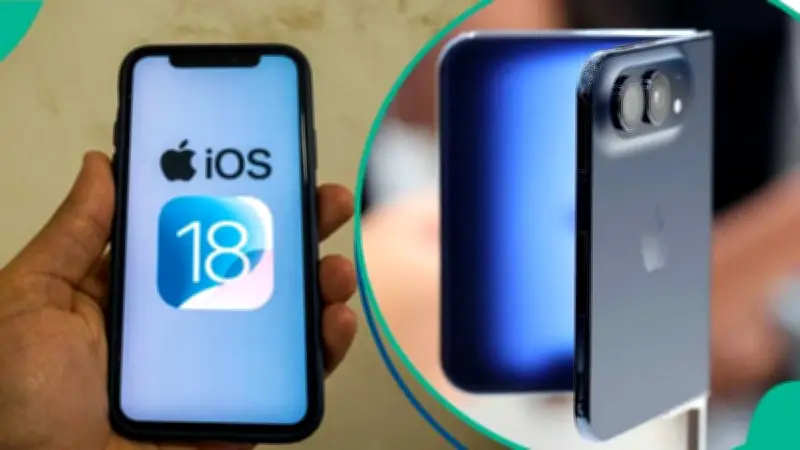
Apple's entry into the foldable smartphone market with the iPhone Duo has intensified competition in one of the fastest-growing segments of the premium phone industry. Launched in September 2026 with a starting price of $1,999, the iPhone Duo brings Apple's premium design, powerful processor, and tightly integrated software to the book-style foldable category. However, consumers willing to look beyond Apple have several compelling alternatives, some offering larger batteries, faster charging, more versatile cameras, or substantially lower prices.
Samsung Galaxy Z Fold 8: A Mature Foldable with Productivity Tools
Samsung has years of experience refining foldable smartphones, and the Galaxy Z Fold 8 reflects that maturity. Starting at about $1,649 for 256GB storage, it undercuts the iPhone Duo while delivering a 7.8-inch 120Hz inner display and a practical 5.5-inch cover screen. At about 201 grams, it is also considerably lighter than the 254-gram iPhone Duo.
The Fold 8 packs a 4,800mAh battery with 45W wired and 20W wireless charging, alongside Qualcomm's Snapdragon 8 Elite Gen 5 for Galaxy processor. Another major attraction is Samsung DeX, which allows users to connect the phone to a compatible external display for a desktop-style productivity experience. This makes it ideal for buyers seeking a mature foldable experience with strong productivity features.

Xiaomi 18 Fold and Huawei Pura X Max: Camera and Battery Powerhouses
For consumers focused heavily on specifications, Xiaomi's 18 Fold presents an aggressive alternative. Its camera system combines a 200MP main sensor, a 50MP periscope telephoto camera with 3.5x optical zoom, and a 50MP ultrawide camera, offering more focal-length flexibility than the iPhone Duo's dual-camera configuration. Xiaomi also packs a massive 6,000mAh battery into the device, accompanied by 67W wired and 50W wireless charging. Despite that capacity, the handset weighs about 219 grams, and prices generally fall between $1,400 and $1,600.
Huawei's Pura X Max stands out particularly for photography. Its 50MP main camera features a variable aperture ranging from f/1.4 to f/4.0, joined by a 50MP periscope telephoto camera offering 3.5x optical zoom and a 12.5MP ultrawide. The device also offers a 7.7-inch inner display and a 5,300mAh battery, supported by 66W wired and 50W wireless charging. However, availability remains its biggest drawback: buyers outside China may need to import the handset, while the absence of Google Mobile Services could be a significant limitation for users dependent on Google's ecosystem.
OPPO Find N6 and Honor Magic V6: Display, Charging, and Portability
OPPO's Find N6 makes a strong case for consumers who place display quality and charging speed near the top of their priorities. The device combines a premium foldable display with a relatively slim body weighing around 215 grams, according to a report by MemeBurn. Its camera system features a 50MP main sensor, while OPPO's imaging technology provides another attraction for photography-focused buyers. The Find N6 particularly stands out with 80W wired charging, considerably faster than many competing premium foldables. Its ColorOS interface also provides extensive customisation, although users moving from iOS or Samsung's One UI may need time to adjust. With prices estimated around $1,500 to $1,700 depending on the market, it remains below the iPhone Duo's starting price.
Honor is increasingly competing on one of foldable smartphones' biggest weaknesses: thickness. The Magic V6 maintains a remarkably slim profile when folded, making it feel closer to a conventional flagship smartphone. It combines that design with an approximately 5,000mAh battery, a capable camera system, and MagicOS based on Android. Its biggest advantage, however, could be price. Depending on the market, the Magic V6 costs approximately $1,300 to $1,500, potentially saving buyers between $500 and $700 compared with Apple's $1,999 starting price. That makes Honor particularly attractive to consumers interested in trying a book-style foldable without making an almost $2,000 commitment.

Apple's Ecosystem Remains Its Biggest Weapon
Specifications alone do not tell the entire story. For long-time Apple customers, features and services such as iCloud, AirDrop, Apple Watch integration, and the wider Apple ecosystem could make moving to Android inconvenient, regardless of hardware differences. For buyers who are not tied to either ecosystem, however, the calculation is different. Samsung offers a greater foldable experience and productivity tools, Xiaomi pushes battery and camera hardware, Huawei focuses heavily on photography, OPPO emphasises display and charging technology, while Honor competes aggressively on portability and price. Apple has finally joined the foldable battle, but in 2026, consumers no longer have to pay the highest price to get a premium folding smartphone.