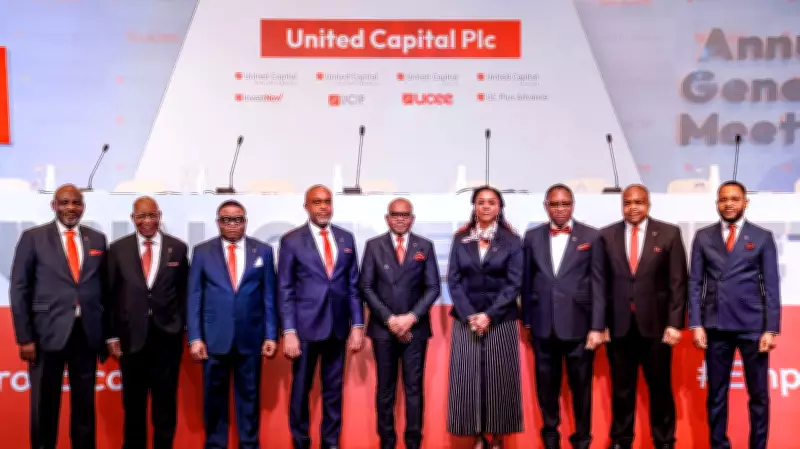
United Capital Group has successfully recapitalised all its Securities and Exchange Commission (SEC) regulated subsidiaries, meeting the Commission’s revised minimum capital requirements more than 14 months before the June 30, 2027, deadline. The group stated in Abuja that the early compliance aligns with the stricter framework introduced by Nigeria’s Securities and Exchange Commission under its Circular No. 26-1, issued pursuant to the Investments and Securities Act 2025.
Revised Capital Thresholds
The revised regime is intended to significantly raise capital thresholds for capital market operators to strengthen market resilience, enhance investor protection, and better reflect evolving risk exposures. Under the new guidelines, full-scope fund and portfolio managers must now maintain a minimum capital base of ₦5 billion, up sharply from ₦150 million. Trustees are required to hold ₦2 billion, compared to ₦300 million previously, while issuing houses providing underwriting services must meet a ₦7 billion threshold, a steep rise from ₦200 million.
Subsidiaries Compliant
United Capital confirmed that its five regulated subsidiaries, including United Capital Investment Banking, United Capital Asset Management, United Capital Trustees, United Capital Securities, and United Capital Wealth Management, have each independently met or exceeded the applicable capital requirements. The Board disclosed that the recapitalisation was achieved internally, without recourse to external capital raising.
CEO's Statement
Group Chief Executive Officer, Peter Ashade, described the milestone as more than a regulatory obligation. He said the decision to strengthen capital ahead of the deadline reflects the Group’s long-term strategic ambition and commitment to operating at the highest standards within Nigeria’s capital market.
Industry Context
Industry analysts note that the early compliance places United Capital among a limited number of institutions that have fully aligned with the new framework, at a time when many operators are still preparing for the 2027 deadline. The revised thresholds represent increases of between 10 and 33 times previous minimums, making compliance a significant undertaking for most firms.
Operational Impact
Beyond regulatory alignment, the stronger capital base is expected to expand the operational capacity of the Group’s subsidiaries. For instance, its asset management arm can now manage significantly larger investment portfolios, including collective investment schemes and alternative funds with net asset values exceeding ₦20 billion, alongside increased exposure to foreign assets.
Financial Performance
Without a doubt, the recapitalisation also reinforces the Group’s broader financial performance. In its 2025 full-year results, United Capital reported a 35 per cent increase in revenue to ₦58.55 billion and a 17 per cent rise in profit after tax to ₦28.15 billion. With assets under management exceeding ₦2 trillion and all seven subsidiaries profitable, the Group continues to consolidate its position in the market.
Future Plans
Looking ahead, United Capital signalled plans to leverage its strengthened balance sheet in 2026 to deepen product offerings, expand its client base, and accelerate its Pan-African growth strategy, particularly in investment banking and asset management.