
Lagos Man's Receipt Experiment Exposes 582% Grocery Price Surge Since 2020
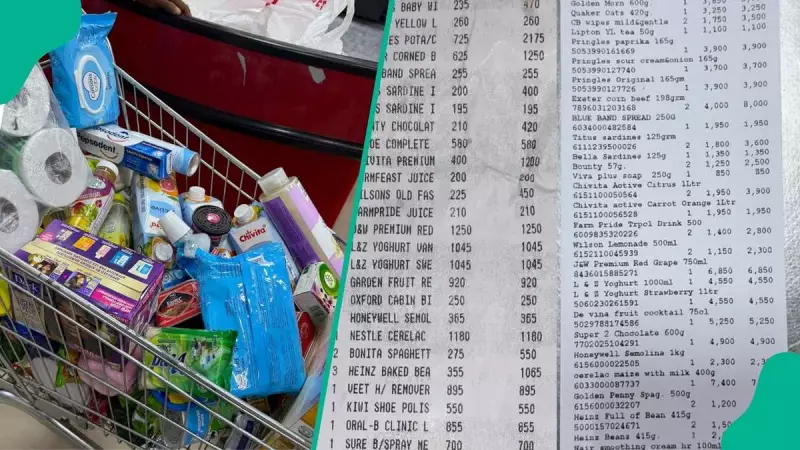
A Nigerian social media user has conducted a striking personal experiment that vividly illustrates the severe impact of Nigeria's ongoing inflation crisis on everyday household spending. Olabode Ifeanyi, a Lagos-based resident, recently went viral on X after purchasing identical grocery items from a 2020 supermarket receipt and comparing the total costs.
Staggering Price Differences in Basic Food Items
Ifeanyi's experiment revealed that items which cost N25,225 at a Lekki supermarket in 2020 now total N147,050 in 2026, representing a dramatic 582% increase over just five years. The detailed receipt comparison showed specific examples of how common household staples have become significantly more expensive.
The price analysis included:
- A 350-gram box of Nasco cornflakes rising from N575 to N3,200
- A 600-gram pack of Golden Morn increasing from N670 to N3,850
- A 420-gram container of Quaker oats jumping from N530 to N3,250
Social Media Reactions Highlight Widespread Economic Pain
The viral post sparked immediate and widespread reactions across social media platforms, with many Nigerians sharing similar experiences of rising costs outpacing income growth. Numerous users commented that even when salaries had increased modestly, the gains were completely insufficient to keep pace with inflation, resulting in significantly reduced purchasing power for average households.
One X user commented: "My salary has increased maybe 1.5 times since 2020. I used to think I was doing okay. This receipt just showed me I've effectively become poorer."
Ifeanyi explained his motivation for the experiment, stating: "Last night I decided to buy every single item on this receipt from 2020 to find out how bad things really are. If your salary in 2020 has not increased by 600 per cent, you are poorer."
Nigeria's Inflation Crisis: A Five-Year Overview
Nigeria's inflation challenges have intensified dramatically over the past five years, creating what many economists describe as a severe cost-of-living crisis. The situation began deteriorating in 2020 when the inflation rate stood at 13.25% amid the economic impact of the COVID-19 pandemic, while food inflation was recorded at 16%, driven by insecurity in farming areas and currency pressures.
The inflationary trend continued with:
- Inflation rising to 16.95% in 2021 as the naira weakened further
- Headline inflation reaching 18.76% in 2022
- A significant jump to 24.53% in 2023
- Food inflation frequently exceeding 35% in late 2024 and early 2025
Recent Inflation Trends and Regional Variations
While the inflation rate in Nigeria has shown some improvement since the beginning of 2025, with headline inflation falling to 15.15% in December according to the National Bureau of Statistics, the relief has been minimal for most households. The latest Consumer Price Index report indicates food inflation has eased to 10.84%, but these official figures often fail to reflect the actual living costs experienced by Nigerian families.
Regional data reveals significant variations across states, with December 2025 figures showing the highest food inflation rates occurring in:
- Yobe
- Ogun
- Abuja
- Lagos
- Delta
- Kano
- Kogi
- Osun
- Rivers
- Ekiti
The persistent gap between official inflation rates and actual living costs continues to strain household budgets across Nigeria, with income growth consistently lagging behind price increases for essential goods and services.




