
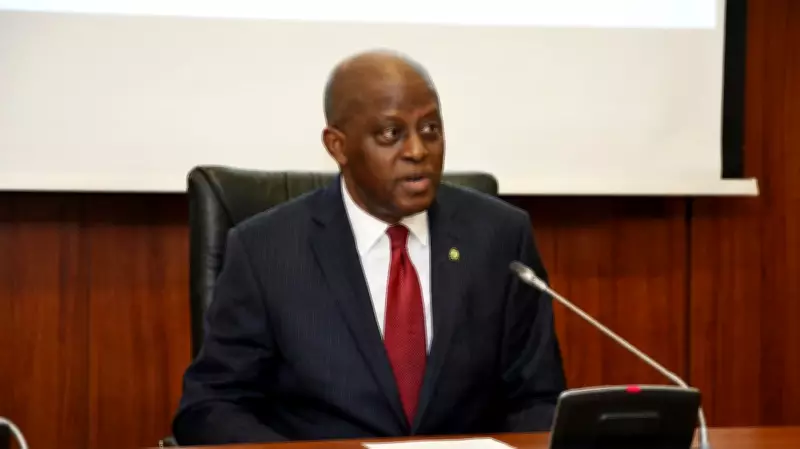
The Nigerian economy has undergone a significant transformation in recent years, driven by comprehensive reforms in the financial sector. The policies implemented by the Olayemi Cardoso-led Central Bank of Nigeria (CBN) have fortified the economy, creating buffers that enhance its resilience against challenging times.
Global and domestic business leaders acknowledge that Nigeria is now well-positioned to withstand external shocks and sustain investor confidence. The stability of the exchange rate and continued inflows into external reserves present a strong opportunity for economic resilience and sustained growth.
Key Reforms and Their Impact
Exchange rate unification, enhanced regulatory guidance, improved transparency in forex market operations, and strengthened surveillance of financial flows have all contributed to sustained growth. These reforms have brought significant benefits, including providing buffers for stability and growth.
A major milestone is that, despite headwinds from the ongoing Middle East crisis, the Nigerian economy remains sound and continues to attract global investors. Investors have been scrambling for Nigerian assets as the impact of CBN reforms spreads to key segments of the economy.
The CBN's bold reforms aim to attract more foreign capital and achieve price and exchange rate stability. Over two years ago, the CBN, led by Governor Olayemi Cardoso, liberalized the foreign exchange market, stopped central bank financing of fiscal deficits, and reformed fuel subsidies. The government also strengthened revenue collection and took strategic steps to reduce surging inflation.
Positive Outcomes
These reforms have led to an increase in international reserves and greater access to foreign exchange in the official market. Nigeria successfully returned to international capital markets in December and was recently upgraded by rating agencies. A new domestic private refinery is positioning Nigeria up the value chain in a fully deregulated market.
CBN policies, including currency reforms, have attracted investment inflows from abroad and reduced interventions in the domestic forex market. The unification of exchange rates and the clearing of over $7 billion in FX backlog raised the country's investment outlook, with multilateral organizations like the World Bank describing it as a bold intervention to improve the economy's long-term sustainability.
Nigeria's sovereign risk spread has fallen to its lowest level since January 2020, erasing the premium accumulated during the pandemic. These are deliberate efforts to woo investors and sustain capital inflows.
Collaboration and Policy Coordination
Cardoso emphasized that collaboration is key to addressing Nigeria's economic challenges: "Managing disinflation amidst persistent shocks requires not only robust policies but also coordination between fiscal and monetary authorities to anchor expectations and maintain investor confidence. Our focus must remain on price stability, the planned transition to an inflation-targeting framework, and strategies to restore purchasing power and ease economic hardship."
The CBN also focused on strengthening the banking sector by introducing new minimum capital requirements for banks, effective March 2026, to ensure resilience and position Nigeria's banking industry for a $1 trillion economy. These reforms reflect the Bank's commitment to creating an enabling environment for inclusive economic development.
However, achieving macroeconomic stability requires sustained vigilance and a proactive monetary policy stance. "As we shift from unorthodox to orthodox monetary policy, the CBN remains committed to restoring confidence, strengthening policy credibility, and staying focused on its core mandate of price stability," Cardoso stated.
Monetary Policy Easing
Monetary policy easing became necessary following a review of macroeconomic developments. The MPC's decision to lower the policy rate was based on sustained disinflation recorded over the past five months, projections of declining inflation for the rest of 2025, and the need to support economic recovery.
Cardoso recently announced that Nigeria makes roughly $600 million monthly from diaspora remittances. Nigeria's experience indicates that spillover effects have been relatively contained, reflecting positive reform outcomes including exchange rate stability, stronger reserve buffers, and an enhanced monetary policy framework.
Banking Sector Resilience
Cardoso explained that the banking sector remains robust, with key indicators reflecting a resilient system. "The non-performing loan ratio remains within the prudential benchmark of five percent, showcasing strong credit risk management. The banking sector liquidity ratio comfortably exceeds the regulatory floor of 30 percent, ensuring banks maintain adequate cash flow. Recent stress tests reaffirmed the continued strength of our banking system."
To ensure the banking system can effectively support economic growth, efforts to strengthen banks' capital buffers were announced in 2023 with a two-year implementation window. Following recapitalization, a significant number of banks have raised required capital through rights issues and public offerings well ahead of the 2026 deadline. Cardoso believes the banking sector is in a strong position to support Nigeria's economic recovery by enabling access to credit for MSMEs and supporting investment in critical sectors.
Economic Growth Forecasts
The World Bank's Global Economic Prospects report upgraded Nigeria's economic growth forecast for 2026 to 4.4 percent, from 3.7 percent projected in June 2025. The report stated: "Growth in Nigeria is forecast to strengthen to 4.4 percent in both 2026 and 2027—the fastest pace in over a decade. This further firming of growth is anticipated to be underpinned by a continued expansion in services and a rebound in agricultural output, with a modest acceleration in non-oil industry. Economic reforms, including in the tax system, along with continued prudent monetary policy, are expected to continue supporting activity, improve investor sentiment, and reduce inflation further. Higher oil output is expected to offset lower international oil prices, helping to boost fiscal revenues and strengthen the external balance."
The CBN's macroeconomic outlook for 2026, released last month, made optimistic projections: "The year 2026 presents a realistic window of opportunity for macroeconomic stabilisation. The Nigerian economy is expected to continue expanding, with growth projected at 4.49 percent in 2026. The projection is hinged on continued gains from broad-based structural reforms and a gradually easing monetary policy stance."
Regional Context
The World Bank says Sub-Saharan Africa would achieve 4.1 percent growth in 2026. Its Africa Economic Update noted that geopolitical risks, including the conflict in the Middle East, high debt service burdens, and longstanding structural constraints, continue to weigh on the region's capacity to accelerate growth and create jobs. Growth for 2026 in Sub-Saharan Africa is holding at 4.1 percent, the same pace as in 2025, but downside risks are mounting. Rising fuel, food, and fertilizer prices, alongside tighter financial conditions, are likely to push inflation higher, disrupt economic activity, and disproportionately affect vulnerable households.
Andrew Dabalen, World Bank Group Chief Economist for the Africa Region, said: "In the short term, governments should target scarce resources to protect the most vulnerable households. At the same time, maintaining macroeconomic stability—by controlling inflation and exercising prudent fiscal management—will be essential to navigate the current shock and position African countries for a faster recovery."
The bank said sub-Saharan Africa's economic recovery from a decade of global shocks is showing signs of stalling, with growth projections for 2026 revised downward by 0.3 percentage points from estimates published in October 2025.
IMF Perspective
Nigeria and other countries able to export oil and gas without hitches despite the ongoing Middle East crisis will face the smallest headwinds or risks, according to IMF Managing Director Kristalina Georgieva. A report titled "How the Middle East War Has Affected Oil Exporters and Importers" explained that countries directly hit by the conflict, including major oil and gas exporters in the Middle East, bear the brunt of the impact. The war has disrupted oil and gas flows and darkened the global economic outlook. Most countries are net oil importers, and the shock is global, but the burden is uneven.
In her Spring Meetings curtain raiser speech, Georgieva said a resilient world economy is being tested again by the war in the Middle East.




