Nigeria's Cement Price Crisis: When Protection Turns to Exploitation, Urgent Reforms Needed
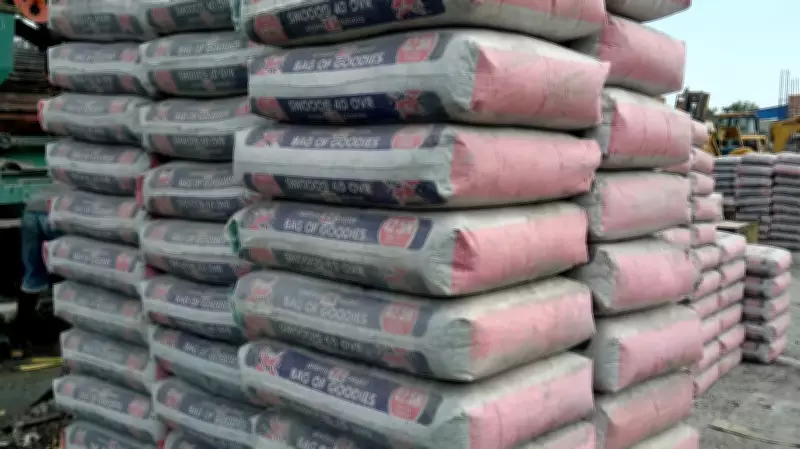
The construction ecosystem in Nigeria is experiencing severe pressure, with the relentless escalation in cement prices at the core of this mounting crisis. Cement, an essential commodity that supports infrastructure development, housing delivery, and economic expansion, has become a source of significant distress for Nigerians nationwide.
From individual home builders to large-scale contractors, citizens are grappling with a sustained and troubling surge in cement prices. This economic pain is neither speculative nor abstract; it is real, measurable, and economically suffocating for millions.
Alarming Price Increases Defy Economic Logic
Within a remarkably short timeframe—between November 2025 and March 2026—cement prices have reportedly risen by as much as 50 percent. This dramatic spike defies both logic and prevailing macroeconomic trends that show some stabilization in other sectors.
At a time when fuel prices have shown signs of stabilization and inflationary pressures are beginning to ease, cement prices have remained conspicuously rigid and continue to climb aggressively upward. This divergence raises fundamental questions about why cement remains insulated from broader economic corrections affecting other essential commodities.
Market Concentration Creates Quasi-Monopolistic Conditions
The answer points unavoidably to market structure. Nigeria's cement industry suffers from heavy concentration, with Dangote Cement occupying a dominant position that significantly influences market dynamics.
The Federal Government's earlier decision to restrict the importation of bagged cement was well-intentioned—designed to promote local production, conserve foreign exchange, and accelerate industrial self-sufficiency. However, that protective policy has, in practice, fostered a quasi-monopolistic market environment where competition is severely limited.
In such a setting, price determination risks shifting from competitive market forces to producer discretion. What was conceived as a strategic industrial safeguard has evolved into a structure that enables disproportionate pricing power, creating clear market distortion.
The result is a system where prices are no longer tightly aligned with production costs or macroeconomic realities, but instead influenced by limited competition and supply concentration.
Severe Consequences for Nigerian Economy and Citizens
For millions of Nigerians, the consequences of this cement price crisis are severe and far-reaching:
- Housing affordability is deteriorating at an alarming rate, pushing home ownership further out of reach for ordinary citizens
- Infrastructure project costs are escalating beyond projections, threatening government development plans
- Small and medium-scale builders are being pushed out of the market, reducing competition and employment opportunities
- Government capital projects face budget overruns and delivery delays, slowing national development
This is no longer merely a sector-specific concern; it has become a national economic challenge with direct implications for employment, urban development, and social stability across Nigeria.
Regulatory Inertia and the Need for Immediate Action
Equally troubling is the apparent inertia from regulatory and consumer protection institutions. Prolonged silence or delayed intervention risks being interpreted as tacit acceptance of exploitative practices, potentially emboldening further price escalation.
This trajectory is clearly unsustainable and demands urgent, targeted, and decisive policy intervention. President Bola Ahmed Tinubu has demonstrated courage in undertaking bold structural reforms across critical sectors, and similar determination is now required to address the cement pricing crisis.
Strategic Policy Options for Immediate Implementation
Several strategic options are both available and necessary to address this growing crisis:
- Immediate Regulatory Engagement: The Federal Government should urgently convene cement manufacturers to demand full transparency on pricing structures, cost drivers, and supply dynamics.
- Competition Enhancement Measures: A temporary or controlled review of the ban on bagged cement importation could introduce competitive pressure, serving as an effective corrective mechanism against excessive pricing.
- Price Moderation Framework: While rigid price controls may be counterproductive, a guided pricing benchmark can help prevent exploitative extremes without undermining market principles.
- Strengthening Consumer Protection Oversight: Consumer protection agencies must transition from passive observation to active enforcement, ensuring that market practices remain fair, transparent, and accountable.
- Incentivising New Market Entrants: Encouraging additional local and foreign investment in cement production will, over time, dilute market concentration and foster healthy competition.
Balancing Profitability with Economic Responsibility
The fundamental issue at stake is not the success of local producers—indeed, their growth represents a national asset—but the critical balance between profitability and economic responsibility. No policy designed to protect industry should inadvertently expose citizens to unchecked market dominance and exploitative pricing practices.
Nigeria stands at a delicate inflection point where decisive action can prevent further economic damage. The rising cost of cement is not merely an economic statistic; it represents a daily burden borne by millions of Nigerians struggling with construction costs and housing affordability.
Left unaddressed, this crisis risks deepening public frustration within an already pressured economic climate, making this a defining moment for responsive and people-centered governance.
Decisive action in this sector will not only restore balance to the cement market but will also reinforce public confidence in the government's commitment to protecting citizens from exploitative economic practices. The time for firm, strategic intervention in the overriding interest of Nigeria and its citizens is now.