
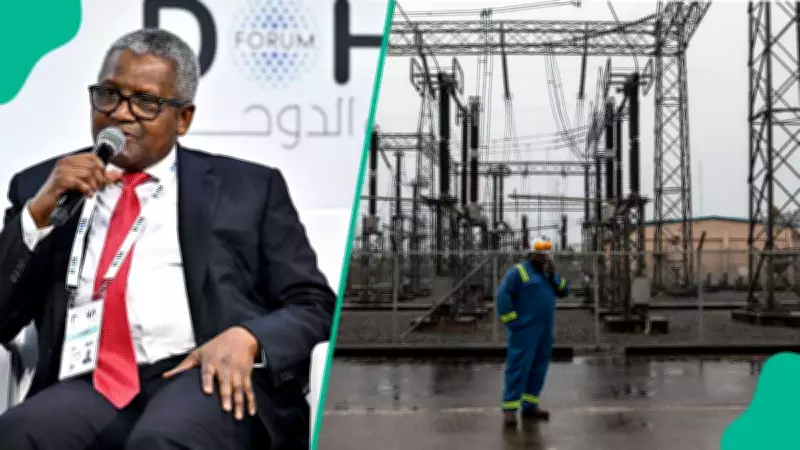
Dangote Advocates for National Forum to Tackle Nigeria's Electricity Crisis
Aliko Dangote, the president of Dangote Industries Limited, has called on the federal government to organize a national retreat aimed at resolving Nigeria's persistent electricity challenges. Speaking at the national launch of the National Industrial Policy 2025 in Abuja, Dangote warned that unstable power supply could severely hinder industrial growth and job creation across the country.
Power Supply as a Critical Constraint to Economic Expansion
During his goodwill message at the event, where President Bola Tinubu was represented by Vice President Kashim Shettima, Dangote emphasized that stable electricity remains the most critical requirement for economic expansion and industrial productivity. He stated that without reliable power, efforts to create jobs and grow the economy would face significant setbacks, describing unstable power supply as the biggest constraint to manufacturing and job creation in Nigeria.
Dangote advised the vice president to convene a one- or two-day national forum involving key stakeholders in the power sector to find lasting solutions. He stressed that no country can achieve meaningful growth without an adequate electricity supply, highlighting the urgent need for collaborative action.
Challenges Facing Local Industries and Manufacturing
While acknowledging that the government has introduced supportive policies to drive industrialization, Dangote maintained that electricity constraints continue to pose a major obstacle to manufacturing and investment. He noted that Nigeria has a large domestic market and the potential to serve other African countries, but policy incentives alone would not be sufficient without strong infrastructure and adequate protection for local industries.
According to Dangote, excessive importation threatens domestic manufacturing and employment. He argued that even with incentives such as low-interest loans, free land, or subsidized power, industries would struggle to survive without protection against unfair competition and dumping practices from abroad.
High Costs of Self-Generated Electricity and Recent Blackouts
Dangote also highlighted the high cost of self-generated electricity for manufacturers, stating that many factories now spend more on power generation than on production. He described this situation as unsustainable, noting that businesses are compelled to install independent power plants and backup systems due to erratic supply from the national grid.
His remarks come amid recent nationwide blackouts linked to gas supply constraints. Between February 12 and 15, 2026, seven power plants experienced shortages after Seplat Energy shut down a major gas facility for scheduled maintenance, leading to reduced electricity generation and load shedding across several parts of the country. This development has heightened concerns within the organized private sector, with stakeholders warning that frequent outages increase reliance on diesel and alternative energy sources, drive up production costs, and contribute to inflationary pressures.
Private Sector's Role and Call for Collaboration
Dangote further emphasized the critical role of the private sector in Nigeria's economy, revealing that it contributes nearly 90% to the country's Gross Domestic Product, compared to about 10% by the government. This underscores the need for closer collaboration between both sides to foster economic growth.
He added that businesses must also fulfil their responsibilities by paying taxes and complying with regulations, describing the relationship between government and private enterprise as a partnership. On economic reforms, Dangote expressed optimism that reducing import dependence and promoting local production could further strengthen the naira, noting that recent policy changes have improved investor confidence and enhanced currency stability.
Urgent Reforms Needed for Industrial Policy Success
Dangote urged the government to intensify efforts to protect domestic manufacturers, especially given challenges such as high interest rates, infrastructure deficits, and electricity constraints. According to him, sustained protection of local industries would help create jobs and reduce pressure on public finances.
He concluded by reiterating the urgency of reforms in the power sector, stating that constant electricity supply is essential to achieving the objectives of the National Industrial Policy 2025. This policy aims to boost local production, reduce imports, and position Nigeria as a manufacturing hub in Africa, making reliable power a cornerstone for future industrial success.




