
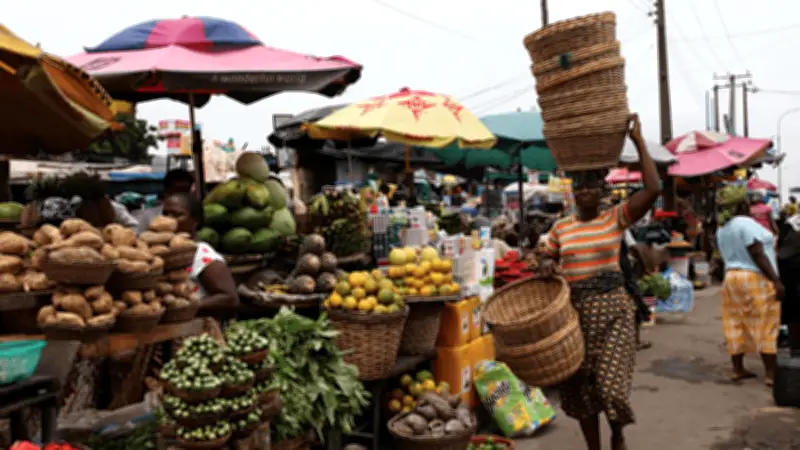
With the inflation rate surging from 15.69 per cent to 16.06 per cent in April 2026, the highest since November 2025, many Nigerian households are adopting diverse strategies to cope with dire cost-of-living conditions. Domestic structural failures and geopolitical shocks have pushed the annual inflation rate to this new high, as confirmed by the National Bureau of Statistics (NBS). The March fuel price shock, driven by the Middle East war, is a key factor.
While core inflation eased slightly to 15.86 per cent, food prices have soared beyond reach for ordinary citizens, worsened by rising farm input costs, widespread insecurity in food-producing areas, and flooding in some regions. These developments are reshaping how Nigerians eat, forcing a stark divergence from basic human welfare metrics.
According to the NBS Cost of Healthy Diet (CoHD) indicator, the daily cost for an adult to maintain a nutritious diet rose to N1,513, a 12.4 per cent year-on-year increase. Key staples such as millet, yam flour, ginger, beef, garri, tubers, and pepper have seen price increases. Additional upward pressure came from restaurants and hotels (27.9 per cent) and health (18.9 per cent). The Consumer Price Index advanced by 2.13 per cent monthly, following a 4.18 per cent jump in the prior month.
Many households have adopted survival instincts, discarding premium products for cheaper alternatives or buying goods in smaller quantities. Local grains are now more popular as maize- and wheat-based product prices soar. Home gardening has become common, with families growing vegetables in backyards to reduce reliance on expensive market produce.
Impact on Daily Diet Costs
As of February 2026, the CoHD was 12.4 per cent higher than in February 2025, rising from N1,346 to N1,513. The food groups driving this increase are animal-source foods, followed by fruits, oils and fats, and vegetables. However, starchy staples decreased year on year. Animal-source foods accounted for 39 per cent of the total CoHD, providing 13 per cent of calories. Fruits and vegetables were the most expensive per calorie, accounting for 16 per cent and 14 per cent of total CoHD while providing only seven per cent and five per cent of calories.
Legumes, nuts, and seeds were the least expensive food group, at seven per cent of total cost. The NBS noted that the CoHD has risen faster than general inflation and food inflation, though the two are not directly comparable. The policy implications call for collaboration among stakeholders focused on food security.
Despite these explanations, Nigerians insist that N1,513 is insufficient for a balanced diet. Bola Hassan, a mother of three, struggles to fill her kitchen due to high food prices. She now eats once or twice daily to ensure her children are satisfied. With a crate of eggs at N6,000, a kilo of chicken at N5,500 to N6,500, spaghetti at N900, and 25 litres of groundnut oil at N80,000, many cannot afford a healthy meal.
Expert Perspectives
Dr Ayo Teriba, CEO of Economic Associates, emphasized that the removal of petrol subsidies led to higher transportation costs and increased food and service prices. From May 29, 2023, to November 2024, inflation accelerated to 35 per cent, with key drivers being exchange rate volatility, which moved from N450 to N1,900. However, things improved from November 2024 until May 2026, except for March 2025 and March and April 2026. Teriba noted that if inflation has descended from 35 per cent to 15 per cent, things have eased, but the NBS data on monthly increments is puzzling.
Dr Muda Yusuf, CEO of the Centre for the Promotion of Private Enterprise, stressed the need to tackle insecurity to address food inflation. He called for support for agriculture with cheaper inputs, adequate financing, and encouragement of mechanized farming. The cost of transportation and import duties on inputs also contribute to inflation.
Mrs Bolanle Edwards, Convener of Strap and Safe Child Foundation, described the NBS report as alarming. Her family has adopted sustainable measures, including meal planning, prioritizing essential items, and growing herbs and vegetables. She urged policymakers to address root causes of inflation.
Impact on Businesses
Food vendors and small businesses face greater challenges. John Nwafor, who owns a small restaurant in Esa Oke, Osun State, has adjusted his menu, replacing beef with fish and chicken due to high costs. Local farmers struggle with rising fertilizer, seed, and transportation costs, forming cooperatives to reduce expenses.
Michael Ozobiara, a cosmetic store owner in Ayobo, stated that N1,513 cannot buy a nutritious meal, as he spends up to N2,000 for a single afternoon meal. David Johnson, a Lagos-based management expert, accused Nigerians of mismanaging fortunes and advised belt-tightening and rethinking priorities. He suggested alternatives to expensive items like bread and emphasized reducing the cost of living.




