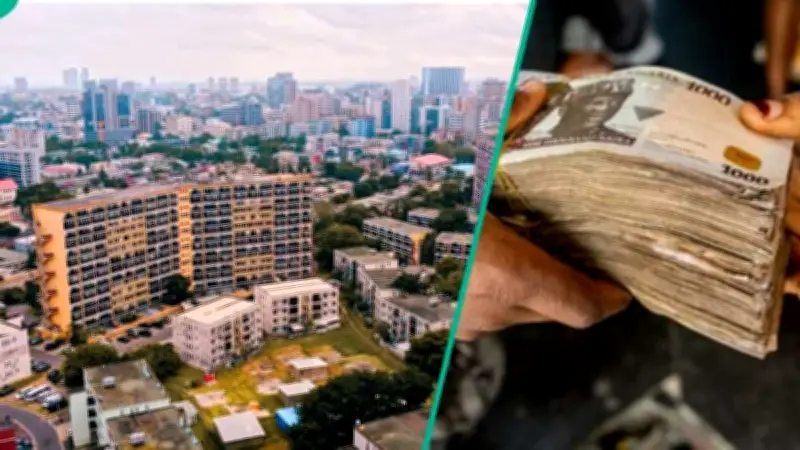
Annual rents for two-bedroom apartments in Lagos' most exclusive districts have surged to record levels, with Ikoyi now commanding an average of N17.25 million per year, while Victoria Island flats cost about N18 million annually. This steep pricing is driving many residents to relocate to cheaper communities on the city's periphery, according to a housing analysis reported by BusinessDay.
Lekki Phase 1, another high-demand area, sees two-bedroom flats renting for approximately N10 million a year. Even on the Mainland, neighbourhoods like Yaba, Surulere, and Ikeja are not far behind, with annual rents ranging between N4.75 million and N5 million for similar properties.
Rent Gap Highlights Severe Housing Deficit
The stark contrast in prices is evident when comparing these figures to outer areas. In Ikorodu, a two-bedroom flat rents for an average of about N1.08 million per year, while in Badagry, the cost drops to roughly N480,000. This price disparity reflects a broader housing shortage in Lagos, which faces an estimated deficit of 3.4 million housing units.

According to the report, about 51% of Lagos' more than 20 million residents rent their homes, while only around 31% own property. This means a significant portion of households are directly exposed to rising rental costs, making the affordability crisis particularly acute.
Residents Flock to Ogun State for Affordable Land
Some families are responding by relocating to areas such as Mowe, Ibafo, and Sagamu in neighbouring Ogun State. There, land can be purchased and developed at a fraction of the cost of years of rent in central Lagos. The appeal of ownership has led many households to build homes in these areas rather than continue renting in the city.
Nkanu Egbe of Lagos Metropolitan described this movement as a flight to the "edge of the Lagos map," where residents trade expensive rent for longer commutes and other costs. Egbe used the Oyedokun family as an illustrative example of what this shift looks like in practice.
Cheaper Rent, Longer Days: The Hidden Costs
The Oyedokun family lives in Mowe but works in Lagos, starting their day around 3:30 a.m. to beat traffic on the Lagos-Ibadan Expressway. Their main concern is crossing Kara Bridge, a major bottleneck between Ogun and Lagos States, before congestion sets in. Recent road repair work near the bridge has worsened delays on the route.
On a typical day, the family reaches their workplace by around 6 a.m., hours before a 9 a.m. start time, and may not return home until about 10 p.m. This pattern illustrates the hidden costs that come with cheaper housing. Savings on rent can be offset by higher spending on fuel and transport, as well as the time lost to long daily commutes.
As more residents leave expensive parts of Lagos in search of affordable accommodation, housing analysts say the true cost of shelter is increasingly being measured not just in rent, but in the money and hours spent getting to and from work each day. Earlier, Legit.ng reported that the Federal Mortgage Bank of Nigeria (FMBN) is offering Nigerians access to housing finance of up to N50 million under the National Housing Fund (NHF) Mortgage Loan scheme, but prospective borrowers must satisfy a set of conditions before their applications can be considered. The scheme covers housing purchases, construction, home improvement, and renovation, with loans attracting an interest rate capped at 6% per annum and repayment terms of up to 30 years.