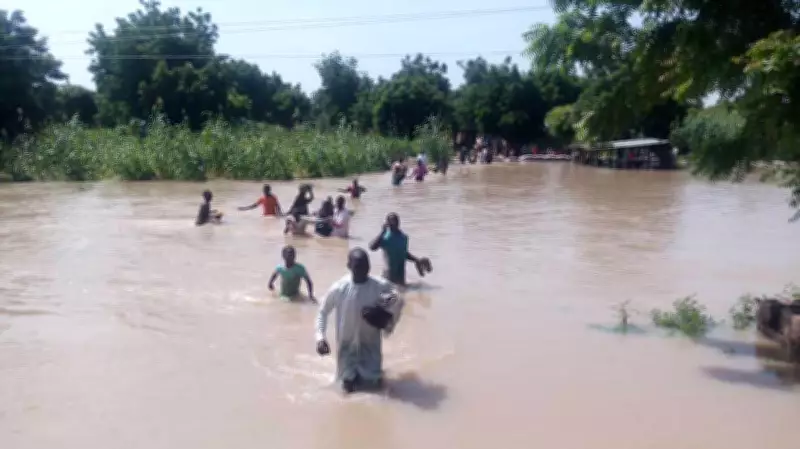
As Nigeria braces for another devastating rainy season, new estimates reveal that states are still grappling with losses totaling N13 trillion from previous flooding events. The floods of 2024 and 2025 destroyed houses, infrastructure, agriculture, and small businesses, amounting to approximately $9.5 billion or N13 trillion. Beyond the economic toll, human lives lost remain unquantifiable.
2026 Flood Predictions and Warnings
The Nigerian Meteorological Agency (NiMET) has issued early warnings indicating that 19 to 33 states nationwide are at risk of severe cloudbursts in 2026. Stakeholders commend NiMET's alerts but emphasize the need for a national emergency response and strategic interventions to mitigate recurring losses. Key areas of concern include the utilization of ecological funds, ecologically sensitive infrastructure, land-use planning, enforcement of building regulations, and flood-control infrastructure.
Last year, states such as Lagos, Adamawa, Akwa Ibom, and Benue bore the brunt of the country's slow adaptation to extreme weather. According to the National Emergency Management Agency (NEMA), as of October 2025, at least 231 people died, 607 were injured, and over 315,000 residents were affected across 86 local government areas in 25 states. The agency reported 40,493 houses and 46,304 farmlands destroyed, with nearly 113,400 persons displaced nationwide. While the 2025 rainy season's impact was less catastrophic than the 2022 floods that displaced 1.4 million people, the frequency and spread of flooding indicate underlying risks remain largely unaddressed.
Economic Impact Breakdown
An analysis by the World Bank, UNDP, and the Lagos Economic Development Update (LEDU 2025) estimated that combined direct and indirect costs of flooding between 2024 and 2025 could exceed N13 trillion. The sectoral breakdown includes:
- Housing and property: Approximately N6.2 trillion (44%) in damages from collapsed or submerged structures.
- Agriculture and food production: Losses of N4.1 trillion (29%) due to destruction of farmlands and crops across the Middle Belt and northern states.
- Infrastructure: Roads, bridges, schools, and energy facilities accounted for about N2.3 trillion (16%).
- Livelihoods and services: Informal trade, transport, and manufacturing suffered N1.4 trillion (10%) in losses.
These recurring shocks shave between 0.4% and 0.7% off Nigeria's yearly GDP growth, according to analysts.
Lagos: A Hotspot for Urban Flooding
Lagos, Africa's fastest-growing megacity with over 20 million people, faces a combination of urban flooding and coastal inundation. Last year's rainfall, projected at up to 1,900 millimeters, overwhelmed drainage systems in Ikorodu, Badagry, and Lagos Island. NEMA estimated that more than 57,000 residents were affected in Lagos alone, placing the state among the three worst-hit alongside Adamawa and Akwa Ibom.
Fresh NiMET Warning
NiMET has predicted flash floods in 19 states, including Lagos, Ogun, Oyo, Ondo, Ekiti, Edo, Delta, Rivers, Bayelsa, Akwa Ibom, Cross River, Imo, Anambra, Enugu, Ebonyi, Kwara, Nasarawa, and Zamfara. The agency warned that early heavy rainfall combined with dry, hardened soil could trigger dangerous surface runoff and sudden flooding in urban and rural communities. The Federal Government also revealed that over 14,000 communities across 33 states and the Federal Capital Territory could face severe flooding in 2026.
Humanitarian and Health Concerns
Women, children, and the elderly bear the heaviest burden. NEMA data indicates nearly 143,700 children among the 2025 victims, many living in makeshift camps with limited access to health services. Public health experts fear outbreaks of waterborne diseases like cholera and typhoid due to stagnant pools in densely populated areas. Agricultural economists warn that continued flooding could worsen food insecurity and inflation, as over 46,000 hectares of farmland, including rice paddies, maize, and cassava fields, have been destroyed.
Strategic Interventions Needed
There are concerns that states have not effectively utilized their ecological fund allocations. Between January and May 2025, 36 states received N22.90 billion from the Federation Account Allocation Committee (FAAC) for ecological purposes, but little progress is visible. In response, the Lagos State government launched a flood risk insurance policy to provide rapid financial relief to vulnerable residents. Governor Babajide Sanwo-Olu stated that about four million vulnerable residents across seven local government areas would benefit initially, with coverage of up to $7.5 million per flood event. Beneficiaries do not need to apply or pay premiums, as the scheme is state-backed.
Environmentalists urge a shift from emergency relief to resilience-building, recommending investments in retention basins, wetland restoration, and urban drainage expansion. Development partners like the World Bank are supporting the Nigeria Erosion and Watershed Management Project (NEWMAP) and the Hydro-Meteorological Resilience Project to improve forecasting and flood-control works. However, access to climate finance remains limited, and Nigeria has yet to fully operationalize its National Climate Change Fund.
Dr. Godwin Ojo, an environmentalist, emphasized that early warning signals are insufficient. He called for flood prevention, rescue, and rehabilitation efforts, noting that local communities in rural areas lack basic infrastructure for temporary evacuations. He also highlighted the problem of solid waste dumping in drainage systems and urged public enlightenment campaigns. Dr. Emmanuel Okezie of CDSC attributed recurring flood disasters to fragmented responsibilities and weak institutional coordination, advocating for a legally anchored national flood governance framework with clear roles and dedicated funding.
Prof. Chinedum Nwajiuba of NEST noted that climate change has disrupted seasons, potentially affecting planting and agricultural production in several states. He stressed the need for climate-smart cropping systems, flood-tolerant crop varieties, and improved drainage.