Nigeria's Inflation Rate Accelerates to 15.38% in March 2026
Nigeria's inflation rate continued its upward trajectory in March 2026, reaching 15.38% according to official data released by the National Bureau of Statistics (NBS). This represents a significant increase from the 15.06% recorded in February, highlighting persistent economic pressures facing Nigerian households and businesses.
Consumer Price Index Shows Substantial Increase
The Consumer Price Index (CPI), which measures changes in the price level of a basket of consumer goods and services, climbed to 135.4 in March 2026. This marks a substantial 5.4-point increase from the 130.0 recorded in February, indicating accelerating price pressures across the economy.
On a month-on-month basis, inflation surged by 4.18%, demonstrating a faster pace of price increases for goods and services compared to previous periods. This acceleration suggests that inflationary pressures are becoming more pronounced and widespread throughout the Nigerian economy.
Food Inflation Remains a Key Driver
Food inflation, which has consistently been a major contributor to overall price growth in Nigeria, also recorded an uptick during March 2026. The food inflation rate stood at 14.31%, with a month-on-month increase of 4.17%.
This persistent rise in food prices reflects ongoing cost pressures on essential food items and continues to strain consumer purchasing power. Nigerian households are facing increasing challenges in maintaining their standard of living as food costs consume a larger portion of their budgets.
Updated CPI Framework Introduced
The inflationary trend comes amid significant changes to Nigeria's CPI framework implemented by the NBS. The bureau has rebased the CPI, replacing the previous reference period of 2009 with more current benchmarks that better reflect present-day economic realities.
Under the revised framework, the weight reference period has been updated to 2023, while the price reference period (base year) is now set at 2024. This rebasing aligns price and weight reference periods with current consumption patterns, offering a more accurate measure of inflation in contemporary Nigeria.
Enhanced Data Collection and Analysis
The updated CPI basket now includes 934 product varieties, grouped into 13 divisions based on the COICOP 2018 classification system. This expansion provides a more comprehensive view of consumer spending patterns and price movements across different sectors of the economy.
The new methodology also introduces a broader set of indices to enhance economic analysis, including:
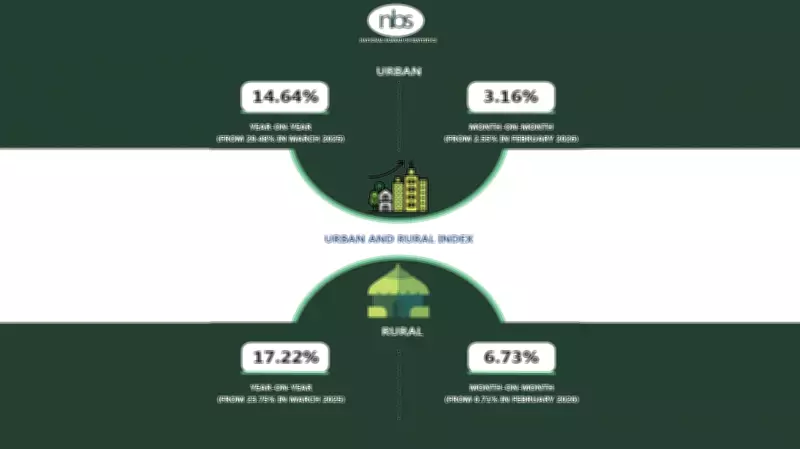
- Urban and Rural National Indices
- Headline Index
- Food Index
- Core Index
- Imported Food Index
- Goods Index
- Services Index
- Energy Index
- All Items Less Farm Produce Index
- Farm Produce Index
Economic Implications and Outlook
Economic analysts emphasize that the updated CPI framework, combined with the rising inflation figures, will play a critical role in shaping Nigeria's economic outlook in the coming months. The data will influence key economic decisions in areas such as:
- Monetary policy and interest rate adjustments
- Consumer spending patterns and behavior
- Overall cost of living assessments
- Business investment decisions
- Government economic planning and interventions
The sustained inflationary pressure, particularly in essential categories like food, continues to challenge Nigerian policymakers and households alike. As the NBS implements its improved data collection methodology, stakeholders will gain clearer insights into the true extent of price pressures across different segments of the economy.