
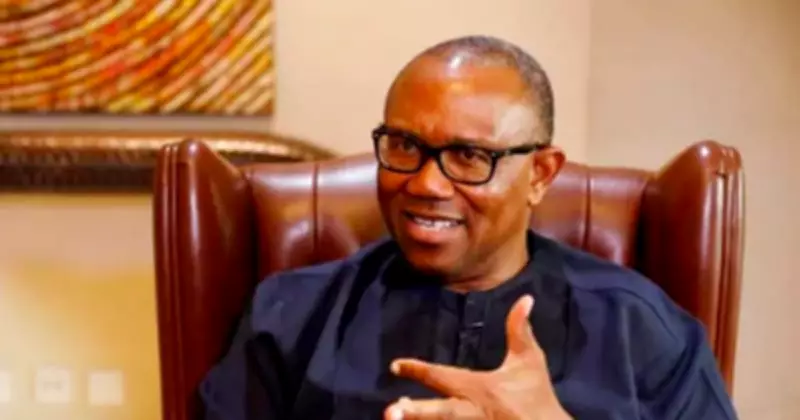
Former Anambra State governor and presidential candidate Peter Obi has pledged to raise Nigeria's electricity generation and distribution capacity to at least 10,000 megawatts within four years if elected president in 2027. He made this commitment while outlining his agenda after securing the presidential ticket of the Nigeria Democratic Congress (NDC). Obi described the country's electricity crisis as a major barrier to economic growth and development.
According to Obi, Nigeria currently generates and distributes only about 4,000 megawatts of electricity for a population exceeding 200 million people. He called this situation unacceptable, noting that unreliable power continues to disrupt businesses, industries, hospitals, schools, and millions of households nationwide.
Under his administration, Obi said the focus would be on expanding both power generation and distribution. He stated, "Over the next four years, I commit to ensuring a minimum of 10,000MW power increase generation and distribution." He argued that improved electricity supply would lower production costs for businesses, attract investments, create jobs, and strengthen the economy.
Nigeria has faced chronic power instability for decades despite numerous reforms and investments. Although the country's installed generation capacity exceeds 13,000 megawatts, actual supply to consumers remains far lower due to challenges in generation, transmission, and distribution infrastructure. As a result, millions of Nigerians depend on generators for electricity, leading to high energy costs and fuel dependency.
To illustrate the scale of the problem, Obi compared Nigeria with other African nations. He pointed out that South Africa and Egypt generate and distribute over 40,000 megawatts of electricity despite having smaller populations. He emphasized that no country can achieve meaningful industrialization without reliable power.
This promise is part of Obi's broader plans for the 2027 presidential election, where candidates are expected to address issues such as insecurity, unemployment, inflation, healthcare, and education. His remarks have sparked discussions among Nigerians, with supporters viewing the target as essential for economic growth, while critics question the feasibility of achieving such a significant increase within a single four-year term.




