Presidency Accuses Economist Utomi of Hypocrisy Over 'Ponzi Scheme' Reform Critique
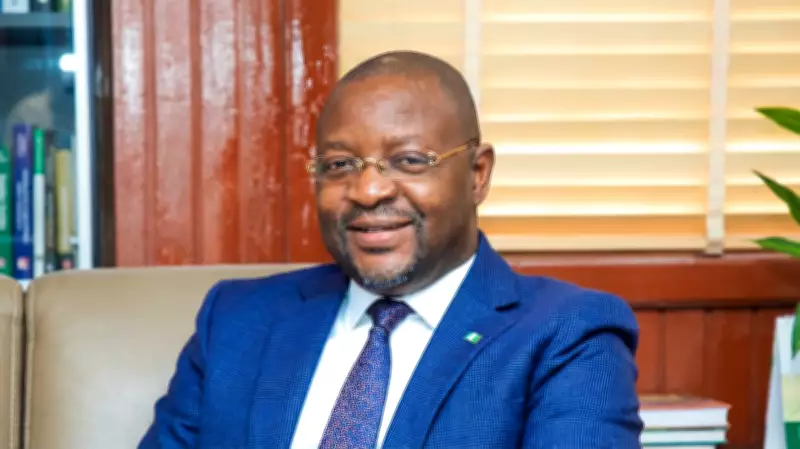
The Presidency has launched a sharp rebuke against prominent economist Professor Pat Utomi, accusing him of hypocrisy for labeling President Bola Tinubu's economic reforms as a "Ponzi scheme." In a pointed response, Sunday Dare, spokesperson for President Tinubu, highlighted Utomi's previous leadership positions at Volkswagen Nigeria and BankPHB, both of which ended in collapse, questioning the credibility of his critiques.
Dare's Rebuttal to Utomi's Claims
Sunday Dare, in a statement released on Wednesday, described Utomi's comments as grandstanding and exaggerated. "Professor Pat Utomi has once again chosen to dance naked in the public square, playing to the gallery with a familiar cocktail of grandstanding and gloom," Dare said. He emphasized that Utomi's interventions often fail under scrutiny, pointing to the ruins of Volkswagen Automobile Ltd and BankPHB as evidence of his lack of tangible results in the civic space.
Dare argued that Utomi's public persona relies heavily on alarmist rhetoric as a "political economist," but when stripped of titles and panels, there is little evidence to support his posturings. He noted that Nigeria's economic distortions were sustained over decades by a class of commentators, including Utomi, who theorized dysfunction rather than dismantling it.
Defense of Tinubu's Economic Reforms
The spokesperson defended President Tinubu's policies, including the fuel subsidy removal in May 2023 and the unification of the foreign exchange (FX) window. Dare stated that these measures eliminated multi-trillion-naira fiscal drains, boosted allocations to states through the Federation Account Allocation Committee (FAAC), and ended arbitrage opportunities that benefited insiders.
He contrasted these reforms with what he called the actual "Ponzi scheme" of the past, where a few individuals profited from privileged access through arbitrage. Dare highlighted measurable shifts under the current reform cycle, such as improved oil revenue remittances, strengthened external reserves stability, and easing debt service-to-revenue pressures as fiscal leakages are curtailed.
Pattern of Criticism Amid Structural Changes
Dare framed Utomi's critique as part of a broader pattern where long-time commentators, who benefited from policy opacity, now oppose structural changes aimed at enhancing transparency and reducing economic leakages. "There is a pattern here that is too glaring to ignore," he said, suggesting that those who thrived in the old economic order are rebranding as critics out of displacement rather than principle.
He asserted that the reforms prioritize structural correction over commentary, leading to increased outrage from those displaced by the changes. Dare concluded by dismissing Utomi's "Ponzi scheme" claim as intellectually hollow, arguing that the reforms aim to eliminate fiscal leakages, restore price discovery in the FX market, and rebuild macroeconomic credibility, unlike the previous regime that masked structural weaknesses with artificial stability.