Presidency Accuses Pat Utomi of Hypocrisy Over 'Ponzi Scheme' Economic Reform Remark
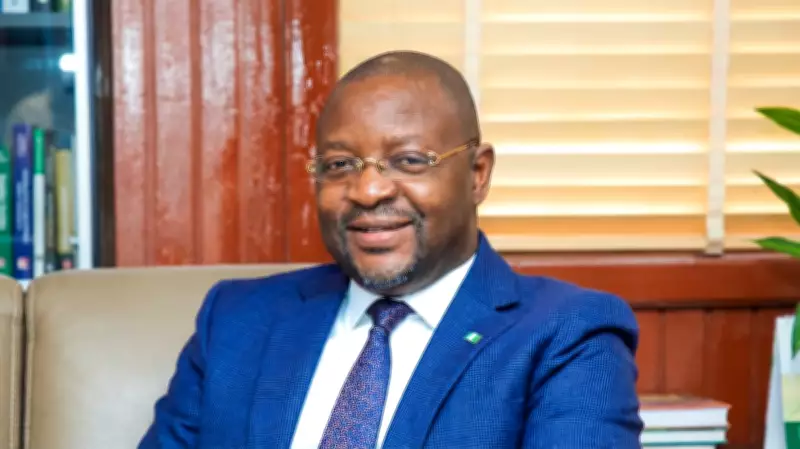
The Presidency has launched a scathing attack on prominent economist Professor Pat Utomi, accusing him of hypocrisy for describing President Bola Tinubu's economic reforms as a "Ponzi scheme." In a pointed rebuttal published on Wednesday, Sunday Dare, spokesperson to President Tinubu, criticized Utomi's remarks while highlighting the professor's previous leadership roles at Volkswagen Nigeria and BankPHB, both of which ended in collapse.
Presidency Questions Utomi's Credibility
Sunday Dare, who previously served as Sports Minister, stated that Professor Pat Utomi has once again chosen to "dance naked in the public square" by dismissing the reform program of President Bola Ahmed Tinubu as "ridiculous," "poorly structured," and a "Ponzi scheme." Dare emphasized that the issue is no longer what Utomi is saying but why his interventions consistently collapse under scrutiny.
"Any reflective — indeed, discerning — mind would note that, after all these long years of sophistry and vacuous pontifications, all Utomi can possibly point to as his bonafides or bragging rights in the civic space today are the ruins of Volkswagen Automobile Ltd and BankPHB where his much touted 'academic wizardry' was exposed as 'Ponzi scheme,'" Dare declared.
Defending Tinubu's Economic Reforms
The presidential spokesperson argued that Nigeria's economic distortions did not emerge in a vacuum but were sustained over decades by a rotating class of commentators and advisers who theorized dysfunction instead of dismantling it. He stressed that Utomi was part of this ecosystem, despite the professor's recent criticism of Tinubu's policies.
Dare defended the administration's key economic measures, including:
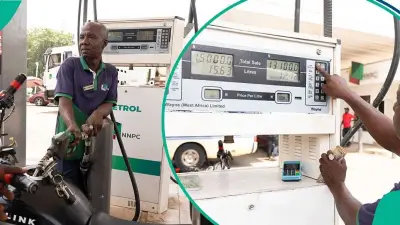
- Fuel subsidy removal (May 2023): Eliminated a multi-trillion-naira fiscal drain, freeing up revenues for subnational allocations and deficit reduction
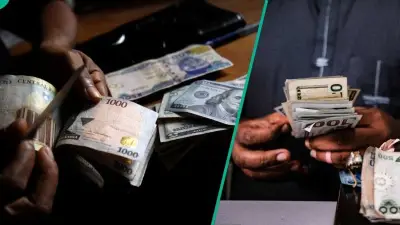
- Exchange rate unification: Collapsed multiple FX windows into a single market-reflective rate—a step long recommended by the World Bank and International Monetary Fund
- Improved FAAC disbursements: State-level fiscal liquidity has increased materially post-subsidy removal
Pattern of Opposition to Structural Changes
Tinubu's spokesperson framed Utomi's critique as part of a broader pattern where long-time commentators who benefited from policy opacity now oppose structural changes aimed at price discovery, reduced leakages, and improved oil revenue remittances.
"There is a pattern here that is too glaring to ignore. For years, the rent-seeking architecture of Nigeria's economy—subsidy leakages, FX arbitrage, policy opacity—created space for a certain kind of 'expert': visible, vocal, and perpetually adjacent to power, yet rarely accountable for outcomes," Dare explained.
He added that now that this architecture is being disrupted, the volume of outrage has increased, suggesting this is not coincidence but reaction. According to Dare, when a system that once rewarded commentary begins to prioritize structural correction, those who thrived in the old order often rebrand themselves as its fiercest critics—not out of principle but out of displacement.
Early Macroeconomic Signals and Rebuttal
Meanwhile, Dare pointed to early macroeconomic adjustments resulting from the reforms:
- Oil revenue remittances have improved post-subsidy removal and reforms in NNPCL transparency frameworks
- External reserves stability has strengthened relative to pre-reform volatility cycles
- Debt service-to-revenue pressure has begun easing marginally as fiscal leakages are curtailed
The presidential spokesperson stated that Utomi's "Ponzi Scheme" claim represents a collapse of serious thinking. "Let's be blunt. Calling a national reform programme a 'Ponzi scheme' is not provocative—it is intellectually hollow," he asserted.
Dare clarified that a Ponzi scheme is built on deception and zero value creation, while Nigeria's reforms—however painful—are attempting to eliminate fiscal leakages, restore price discovery in the FX market, and rebuild macroeconomic credibility. He suggested that if anything resembled a Ponzi structure, it was the previous regime of borrowing to sustain consumption, subsidizing inefficiency at scale, and masking structural weakness with artificial stability.