
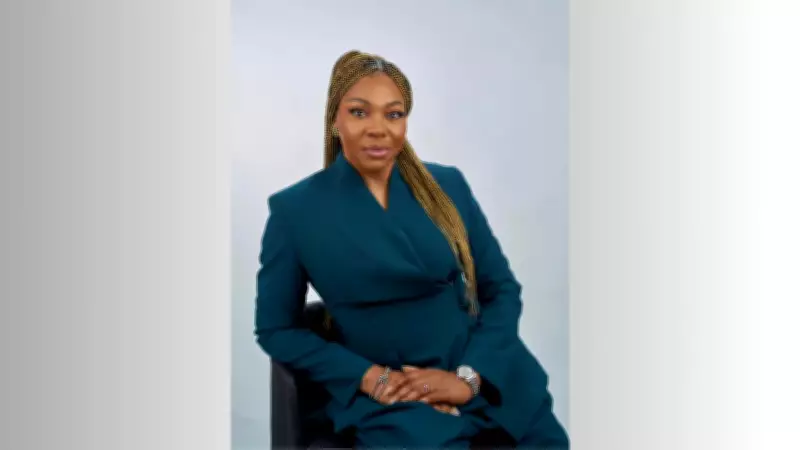
Rachel Moré-Oshodi, Chief Executive Officer of ARM Harith Infrastructure Fund Managers, has built a career spanning over two decades in infrastructure, energy, project development, project finance, and investment, with a strong focus on emerging markets and Africa. Her portfolio includes complex transactions, public-private partnerships, energy projects, and investment platforms designed to meet development priorities while upholding global commercial standards.
Leadership and Vision
As CEO of ARM-Harith Infrastructure Investment Limited, she leads a pan-African investment platform dedicated to sustainable infrastructure, energy transition, and climate-aligned investments. Central to her leadership is the question of how to mobilise long-term capital into the assets and systems required for Africa’s growth. Throughout her career, she has been instrumental in pioneering transactions across the region, particularly in energy and infrastructure, helping to define new pathways for private capital participation in Africa’s development. Her involvement spans deals with a cumulative value exceeding US$7 billion.
Beyond ARM-Harith, Moré-Oshodi is the founder of Ruwah, a financial literacy initiative for children aimed at building early understanding of money, ownership, confidence, and long-term planning. For her, infrastructure and financial literacy are two sides of the same goal: one provides the physical and economic systems for national progress, while the other equips future generations with the mindset to sustain and benefit from that progress.
Driving Commitment to Positive Change
When asked what drives her commitment to leadership and positive change in Nigeria, Moré-Oshodi stated: "My commitment comes from both experience and conviction. I have seen enough of Africa’s potential to know that our challenge is not a lack of talent, ambition or ideas. Very often, the challenge is the absence of systems strong enough to convert that potential into lasting prosperity. Nigeria is full of brilliant people, resilient entrepreneurs, ambitious young people and enormous pools of untapped capital. But too many people still live below their potential because the infrastructure is weak, access to finance is uneven, institutions are fragile, and opportunity is not always distributed fairly."
She added: "Leadership, for me, is not about title or visibility. It is about responsibility. It is about asking what I am building that will outlive me. It is about using whatever influence I have to strengthen systems, open doors, create opportunity and help build institutions that can carry the next generation further. I believe deeply in Nigeria. I also believe that belief must be matched with discipline, structure and execution. Positive change does not happen because we hope for it. It happens because people commit themselves to building it, even when the work is difficult, and the results take time."
Company Mission and Vision
Discussing ARM Harith’s mission and vision, she explained: "At ARM-Harith, our mission is to mobilise long-term capital into sustainable infrastructure that supports economic growth, improves lives and strengthens African economies. Infrastructure is sometimes spoken about in technical terms: power plants, transport systems, digital infrastructure, logistics platforms, water systems and social infrastructure. But behind every infrastructure asset is a human story. A business that can operate more efficiently. A hospital that can function better. A farmer who can move goods to market. A young person who can access digital opportunities."
"Our vision is to help build one of Africa’s most trusted infrastructure investment platforms: an institution capable of mobilising domestic and international capital at scale, and deploying that capital into assets that are commercially sound and developmentally meaningful. A major part of our work is proving that African capital must not sit on the sidelines of African development. The future of African infrastructure cannot depend only on external funding. Local pension funds, institutional investors, development finance institutions and private capital all have a role to play. And we must build the structures that allow African savings to help finance African growth. For me, that is the real work."
Empowering Women Leaders
On how ARM Harith supports and empowers the next generation of women leaders, Moré-Oshodi said: "We support women leaders by ensuring that women are part of the core business conversation. At ARM-Harith, women are encouraged to build technical depth, participate in meaningful work, and develop the confidence to contribute in serious investment, governance, legal, finance, investor relations and portfolio conversations. That matters because leadership is built through exposure, responsibility, feedback, sponsorship and trust."
"We also align our approach with the principles of the 2X Challenge, which is focused on mobilising capital in ways that advance women as entrepreneurs, employees, leaders, consumers and economic participants. I believe strongly in mentorship, but mentorship alone is not enough. Women also need access to decision-making rooms. They need to be trusted with complex assignments. They need to see how capital is raised, how investment committees think, how boards operate, how risk is assessed, and how value is created."
Strategies for Gender Equality
When asked about essential strategies to accelerate gender equality in Nigeria, she highlighted three areas: "We need to move from talking about it to intentionally designing it. For me, three areas are essential: access to capital, leadership in the boardroom, and financial literacy and education. First, women need better access to capital. Too many women build with less funding, weaker networks and higher levels of scrutiny. That is not a talent problem. It is a capital allocation problem. If women are underfunded, the economy loses businesses, jobs, innovation and productivity that could have been created."
"Second, women must be present where decisions are made. It is not enough to say the pipeline of women is improving if women do not sit on boards, investment committees, executive teams and policy platforms where real power is exercised. Representation matters, but authority matters even more. Third, financial literacy and education must begin early. Girls should grow up understanding money, ownership, investment, negotiation and value creation. Confidence is shaped early, and so is exclusion. If we want more women to build businesses, lead institutions and influence capital, we must prepare them long before they enter the workplace."
"Nigeria cannot build at full capacity while women remain underfunded, underrepresented and under-protected. Gender equality is an economic design. It is one of the ways we unlock the full productivity of the nation."
Recognition as an Inspiring Amazon
On being recognized as one of Nigeria’s 100 Inspiring and Award-Winning Amazons, she expressed: "I receive the recognition with gratitude, but also with responsibility. Awards are meaningful, but they are not the destination. For me, this recognition is valuable because of what it can help amplify: the importance of infrastructure, energy access, women’s leadership, financial literacy, and building African institutions that can stand the test of time."
"The word 'Amazon' carries an image of strength, but I think real strength is not always loud. Sometimes it is the discipline to keep building when the work is difficult. Sometimes it is the courage to enter rooms where people do not expect you. Sometimes it is the humility to learn, the conviction to speak, and the consistency to execute. I want to use this recognition to encourage younger women not to wait for permission to lead. Leadership often begins before the title comes. It begins in the way we take ownership, solve problems, build competence and refuse to make ourselves smaller than the work we are called to do."
Strengthening Child Protection
Addressing how awareness of sexual assault and child protection can be strengthened in Nigeria, she emphasized: "We must begin by breaking the silence. Too many cases of sexual assault and child abuse are hidden because of shame, stigma, family pressure, fear of retaliation, or lack of trust in the system. That silence protects perpetrators and leaves victims unsupported. Awareness must begin in homes, schools, religious institutions, workplaces, communities and the media. Children should be taught body safety in age-appropriate ways. Parents and guardians must know how to listen, believe and act. Schools must have clear safeguarding policies, trained personnel and safe reporting channels."
"But awareness alone is not enough. We need enforcement, support and accountability. Survivors need access to medical care, psychosocial support, legal protection and justice processes that do not retraumatise them. Communities must stop treating abuse as a private matter to be quietly managed. The scale of the issue is serious. UNICEF Nigeria states that six out of every ten Nigerian children experience some form of violence, while one in four girls and 10% of boys have experienced sexual violence. UNICEF also notes that only a small fraction of children who report violence receive any form of support. Child protection must become a national priority. Every child deserves to be safe, believed, protected and heard. That should be non-negotiable."
Advice for Emerging Women Leaders
Finally, she offered advice to emerging women leaders: "Start where you are, but do not think small. Impact does not always begin with a large platform. Sometimes it begins with one problem you refuse to ignore, one person you mentor, one business you build properly, one community you organise, or one institution you help improve. My advice is to build competence. Be excellent at what you do. Learn the numbers. Understand the system. Speak with substance. Do the work well enough that your contribution cannot be dismissed easily."
"Do not wait until you feel completely ready. Many women hold themselves to a standard of perfection that the world does not require from everyone else. Prepare well, but step forward. Do not confuse humility with shrinking. You can be humble and still be bold. You can be respectful and still be clear. You can be gracious and still ask for the opportunity, the capital, the promotion, the board seat, or the platform. Also, build with others. No meaningful change is created alone. Find your community. Support other women. Mentor younger people. Keep your values close, especially as your influence grows. Real change often starts in small ways. But when those small actions are consistent, courageous and connected to a larger vision, they can transform families, institutions and eventually nations."




