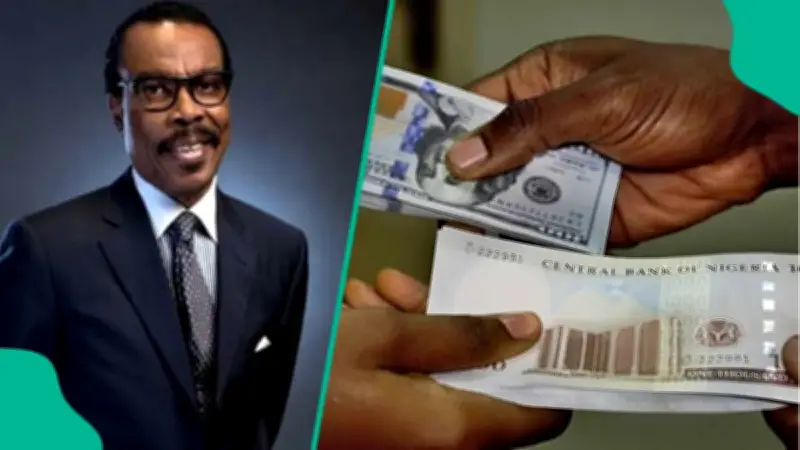
Economist Bismarck Rewane has projected that the naira will depreciate following the Central Bank of Nigeria's (CBN) decision to cut its benchmark interest rate to 23%, but the decline will be less severe than many fear.
Rewane, the Chief Executive Officer of Financial Derivatives Company (FDC), made this projection while speaking on Channels Television's Business Morning programme on Wednesday, September 22, 2026.
Naira Fair Value and Real Interest Rate
According to Rewane, the naira's estimated fair value of about N1,150 to $1 and Nigeria's positive real interest rate will cushion the impact of the rate cut on the currency.
"The naira will depreciate, but not as much as fear, because the naira fair value is about N1,150 to $1," Rewane said.
The economist explained that the latest rate cut has reduced Nigeria's real rate of return from approximately 11.1% to 7.61%. Despite this decline, he noted that the return remains attractive compared with some advanced economies and could continue to encourage foreign investors to participate in carry trades.
Impact on Foreign Investments and Remittances
Rewane said the interest-rate gap between Nigeria and major global economies remains an important factor that could help attract foreign capital, even after the CBN's decision to lower borrowing costs.
However, he warned that the reduction could have implications for foreign portfolio investment (FPI), as investors may become less attracted to Nigerian assets if returns decline. He suggested that remittances from Nigerians living abroad could increasingly help fill any gap created by weaker portfolio inflows.
"You either save or you consume, but the national savings is very low. So when you do this, it falls further," Rewane said, raising concerns about the impact of lower interest rates on domestic savings.
Shift to Alternative Assets Like Dollars and Bitcoin
Rewane warned that weaker returns on naira-denominated savings could push some investors towards alternative assets, including foreign currencies and cryptocurrencies.
"The danger is that you may then begin to start to buy alternative assets, which includes dollars, Bitcoin," he said.
He put Nigeria's national savings at about N97 trillion, compared with an estimated gross domestic product (GDP) of N442 trillion. According to him, the country needs to increase its savings base because savings provide the capital needed for investment, which in turn supports productivity and broader economic inclusion.
Rewane stressed that lower interest rates would need to be accompanied by stronger fiscal consolidation and measures to reduce leakages in government finances. Such steps, he said, would be important to ensure that monetary easing translates into sustainable economic growth rather than creating additional pressure on the naira and the wider economy.