
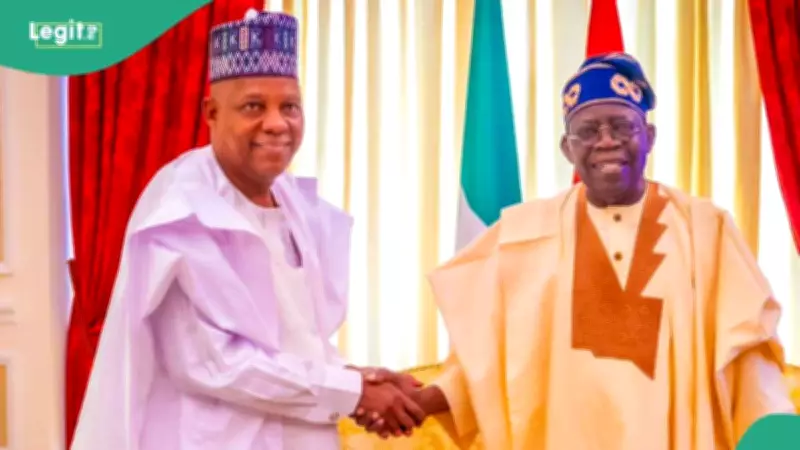
Shettima Explains Why Naira Has Not Hit N1,000 per Dollar Under Tinubu's Government
Vice-President Kashim Shettima has provided a detailed explanation for why the Nigerian naira has not depreciated to N1,000 per US dollar under President Bola Ahmed Tinubu's administration. Speaking at the Progressive Governors’ Forum Renewed Hope Ambassadors Strategic Summit in Abuja on Tuesday, February 24, Shettima attributed this to timely interventions by the Central Bank of Nigeria (CBN) in the foreign exchange market.
CBN Intervention Prevented Rapid Depreciation
Shettima stated that without the CBN's market interventions, the naira would have reached N1,000 per dollar within weeks, not months. He emphasized that the CBN acted to ensure market stability, preventing such a sharp decline. This intervention came as part of broader efforts to manage the currency's value amid economic challenges.
"In fact, if not for the interventions by the Central Bank of Nigeria yesterday, the 1,000 naira to a dollar we are going to attain in weeks, not in months. But for the purpose of market stability, the CBN generously intervened yesterday," Shettima said during the event, which was organized by the ruling All Progressives Congress (APC).
Nigeria's Economic Appeal and Investment Inflows
Shettima highlighted Nigeria's economic resilience, noting that in 2025, the country attracted five out of seven major investment decisions made in Africa. This, he argued, demonstrates the strength, viability, and promise of the Nigerian economy. He expressed confidence that as the nation moves into 2026, the focus will shift from stabilization to acceleration of economic growth.
"Our economy is picking up. Of the seven major investment decisions made last year (2025) in Africa, five were done in Nigeria. That goes to show the strength, viability, and the promise of the Nigerian economy. And as we advance into 2026, our focus shifts from stabilization to acceleration," Shettima added.
Predictions from Business Leaders and Current Exchange Rates
Business magnates have also weighed in on the naira's prospects. Femi Otedola, chairman of First HoldCo, predicted on February 12 that the naira would strengthen significantly and trade below N1,000 per dollar by year-end as domestic refining progresses. Similarly, Aliko Dangote, chairman of the Dangote Group, forecasted that the naira would reach N1,100 per dollar in 2026.
Recent data shows fluctuations in the naira's value. On February 20, the naira appreciated to N1,340 per dollar on the parallel foreign exchange market. However, on the first trading day of the following week, it weakened slightly, with the Nigerian Foreign Exchange Market (NAFEM) recording a rate of N1,349.24 per dollar on Monday, February 23, down from N1,346.32 per dollar the previous Friday.
Tinubu's Economic Reset and Policy Measures
President Bola Tinubu inherited an economy marked by anaemic growth, record debt, and shrinking oil output. Upon taking office, he promised to reset the Nigerian economy through decisive actions. Key measures included removing the popular petrol subsidy and unifying the exchange rate, tasks he accomplished within the first two weeks of his presidency in 2023.
Tinubu acknowledged that these decisions would impose additional burdens on citizens but argued they were necessary to free up resources for infrastructure and education. These moves have been well-received by many economists and investors, who see them as steps toward long-term economic stability and growth.
Market Dynamics and Future Outlook
The foreign exchange market remains a critical focus for the government. Shettima's comments serve as a wake-up call, particularly to those who stockpile dollars, urging them to recognize the improving economic landscape. With continued CBN interventions and policy support, the administration aims to stabilize and eventually strengthen the naira, aligning with predictions from business leaders and economic indicators.
As Nigeria navigates these economic challenges, the combined efforts of the government, CBN, and private sector are seen as vital to achieving sustainable growth and currency stability in the coming years.




