
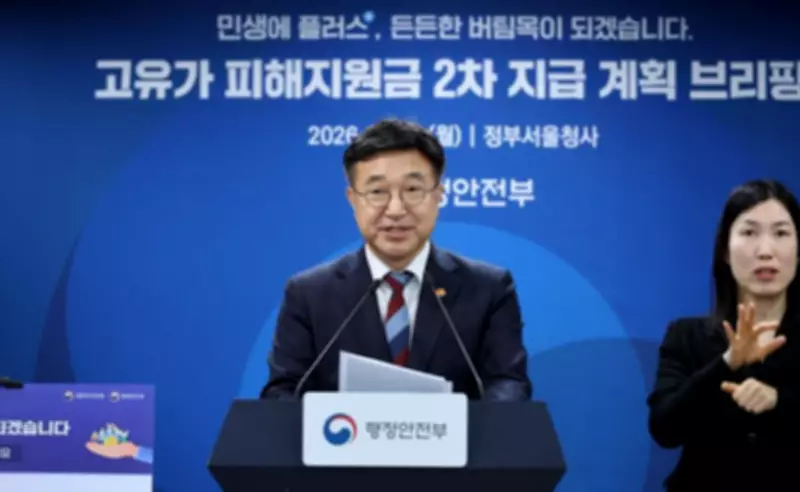
The South Korean government is preparing to distribute a second round of financial aid to the bottom 70 percent of income earners, covering approximately 36 million people, to alleviate economic pressures caused by rising fuel prices linked to the ongoing conflict in the Middle East.
Budget Approval and First Phase
Last month, the National Assembly passed an extra budget bill worth 26.2 trillion won (about $17.8 billion) to counter the economic effects of the Middle East crisis. This bill includes the cash assistance initiative. The first phase, launched in April, provided up to 600,000 won to recipients of basic livelihood security and other vulnerable groups.
Second Phase Details
According to officials, applications for the second phase will open next Monday. Eligible residents in the greater Seoul area will receive 100,000 won each, while those in regions experiencing population decline could get up to 250,000 won per person.
Eligibility will be determined based on a household's national health insurance payment recorded in March of this year. For single-person households, those who paid 130,000 won or less qualify. In terms of annual income, a single-person household earning 43.4 million won or less per year is expected to be eligible. However, a welfare ministry official clarified that the primary criterion is the health insurance payment.
Approximately 930,000 households with assets exceeding 1.2 billion won as of last year or financial income over 20 million won in 2024 will be excluded from the program.
Application Process and Usage
The government will accept applications through July 3. Recipients can receive the aid via credit or debit cards, prepaid cards, or local currency vouchers. The funds must be used by August 31 and are restricted to small local businesses with annual sales of 3 billion won or less.
Interior Minister Yun Ho-jung stated during a briefing: "The high-oil price support fund is expected to reduce the people's burdens stemming from the prolonged war in the Middle East and revive dampened consumption."




