
US Supreme Court Strikes Down Trump's Global Tariffs in Landmark Ruling
The United States Supreme Court has delivered a significant blow to former President Donald Trump's trade agenda by striking down his sweeping global tariffs. In a 6-3 decision announced on Friday, the court affirmed a lower court's finding that Trump's reliance on the 1977 International Emergency Economic Powers Act (IEEPA) to impose these tariffs was unlawful.
A Rare Setback for the Trump Administration
This ruling represents a rare judicial setback for the Trump administration, coming from a Supreme Court with a 6-3 conservative majority that has frequently supported the former president on various contentious issues since he took office. Chief Justice John Roberts authored the majority opinion, joined by conservative Justices Neil Gorsuch and Amy Coney Barrett, along with the court's three liberal justices.
Conservative Justices Samuel Alito, Clarence Thomas, and Brett Kavanaugh dissented from the decision. In his dissent, Justice Kavanaugh argued that while the tariffs might be debated as policy, they were legally sound based on text, history, and precedent.
Constitutional and Legal Foundations Challenged
The core legal question centered on whether the 1977 IEEPA, which allows the president to regulate imports during a national emergency, extended to imposing broad, indefinite global tariffs. The Constitution explicitly assigns tariff-setting authority to Congress, not the executive branch.
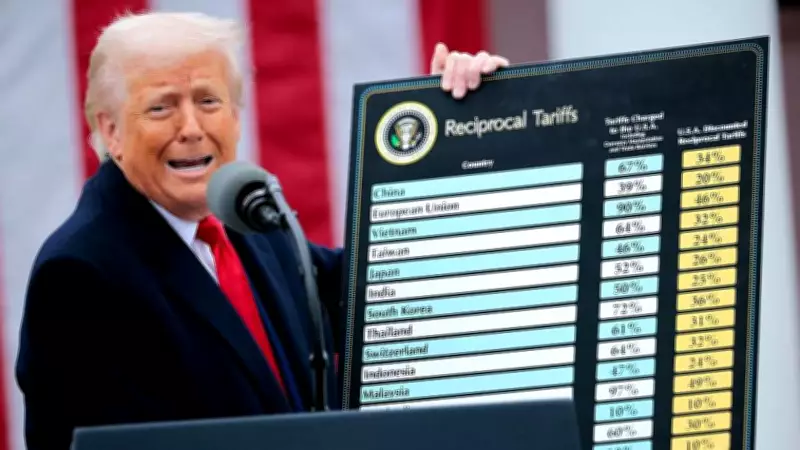
Chief Justice Roberts emphasized this constitutional division in his opinion, stating, "The Framers did not vest any part of the taxing power in the Executive Branch." Trump had invoked the IEEPA to impose so-called "reciprocal" tariffs on goods from nearly all foreign trading partners, claiming a national emergency related to U.S. trade deficits.
Economic Impact and Corporate Response
The economic ramifications of Trump's tariffs are substantial. According to the Congressional Budget Office, as reported by The Associated Press, the tariffs could have an estimated impact of approximately $3 trillion over the next decade. Federal data from December indicates that the Treasury has already collected more than $133 billion from these import taxes.
Many companies, including major retailers like Costco, have initiated legal proceedings to seek refunds for tariffs paid. However, the Supreme Court's majority did not address whether such refunds would be granted, leaving that question unresolved.
Scope of the Ruling and Future Implications
It is important to note that this decision does not invalidate all of Trump's tariff measures. Tariffs imposed on steel and aluminum using different legal authorities remain in effect. The ruling specifically targets Trump's country-by-country or "reciprocal" tariffs, which included rates such as 34% for China, a 10% baseline for many other nations, and a 25% tariff on certain goods from Canada, China, and Mexico related to fentanyl concerns.
As NBC News reported, Trump could potentially attempt to reimpose similar tariffs using alternative legal mechanisms. The ruling underscores ongoing tensions between executive authority and congressional power in trade policy, setting a precedent for future administrations.




