
Vulnerable economies across the globe are facing a steep rise in energy costs, with their combined oil import bills projected to increase by about $20 billion yearly, as global crude prices surge amid tensions in the Middle East, the United Nations (UN) has said.
Relatedly, the International Energy Agency (IEA) warned that global oil markets could enter a "red zone" in July and August as rapidly depleting crude inventories coincide with the onset of peak summer fuel demand.
UNCTAD Warns of Economic Impact
In its latest assessment, the United Nations Conference on Trade and Development (UNCTAD) warned that a 50 per cent rise in oil prices could significantly worsen the economic outlook of oil-importing developing countries, many of which are already grappling with fragile fiscal conditions.
Although Nigeria is sourcing its petroleum products locally, the development comes as Nigeria, Africa's largest oil producer, continues to witness sharp increases in domestic fuel prices.
Nigeria's Petrol Price Surge
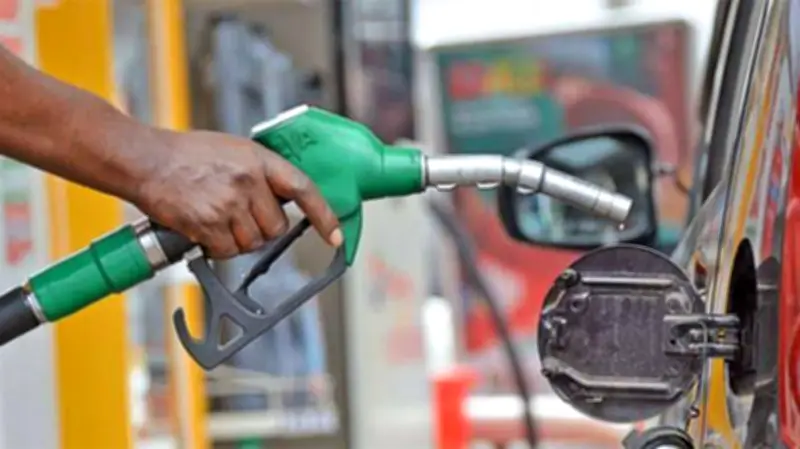
Checks across major fuel stations showed that the pump price of Premium Motor Spirit (PMS), also known as petrol, surged from about N815 per litre before the recent Middle East crisis to an average of N1,360 per litre, representing nearly a 70 per cent increase.
The situation, amid implications for businesses, already pushed transportation costs across Nigeria to record high as National Bureau of Statistics (NBS), in its April 2026 data, said average intercity bus fare increasing to N9,607.41 per passenger.
The Transport Fare Watch report showed widespread increases across major transport modes, driven by persistent inflation, high fuel prices and rising operational costs. Intra-city bus fares rose to N1,397.27 per trip, up 39.83 per cent year-on-year, while airfares climbed to N157,355.87. Motorcycle transport recorded a sharp 56.20 per cent yearly increase to N1,035.69, and water transport fares surged by 30.85 per cent to N2,222.99, reflecting sustained pressure on commuters.
Vulnerable Economies Hit Hard
UNCTAD noted that the spike in oil prices was translating into higher import bills for vulnerable economies, particularly Small Island Developing States (SIDS) and Least Developed Countries (LDCs), which rely heavily on imported fuel to power their economies.
According to the report, 65 out of 75 vulnerable economies are net importers of oil, including 86 per cent of least developed countries and 87 per cent of small island developing states. These countries are therefore highly exposed to external price shocks, with limited buffers to absorb rising costs.
Summer Demand and Inventory Drain
The Northern Hemisphere is also entering its highest seasonal period for fuel consumption, with the situation compounded by severe global heatwaves that are straining power grids. According to the energy watchdog, global oil inventories fell by over 250 million barrels between March and May, with on-land commercial and strategic stockpiles draining at a record pace.
Yesterday, Toril Bosoni said stock draws were continuing into the summer, with the possibility of reaching historical low levels just ahead of peak summer demand. Fuel demand typically peaks during the Northern Hemisphere summer when people drive and fly on holiday.
Speaking at the S&P Global Energy Middle East Petroleum and Gas Conference in London, Bosoni said it could take six to eight months in the best-case scenario to reopen the Strait of Hormuz if an agreement was reached today. A further IEA-coordinated emergency stock release remains a possibility, but is not under discussion. Around half of the initial 400-million-barrel coordinated release from March has yet to reach the market, she added.
Global Economic Resilience at Risk
The IEA, along with the International Monetary Fund (IMF) and the World Bank, recently issued a joint statement warning that a prolonged inventory squeeze threatens global economic resilience. They pointed out that the combination of high fuel prices, soaring freight rates and rising fertiliser costs could trigger persistent global inflation and severe fuel scarcity if shipping flows are not restored in the near future.




