
Across many developing regions, state capitals often function as mere administrative enclaves—glorified villages hosting government houses without evolving into productive urban engines. Yenagoa, in the heart of Nigeria's Niger Delta, illustrates this paradox. Established on October 1, 1996, during the Abacha era, Yenagoa was intended to consolidate Ijaw aspirations and serve as a developmental anchor for an oil-rich territory. Nearly three decades later, that ambition remains largely unrealized. Unlocking Bayelsa's full economic potential requires moving beyond the "one-road city" narrative and re-embracing the original logic of Yenagoa's creation.
The Strategic Vision of Yenagoa's Founders
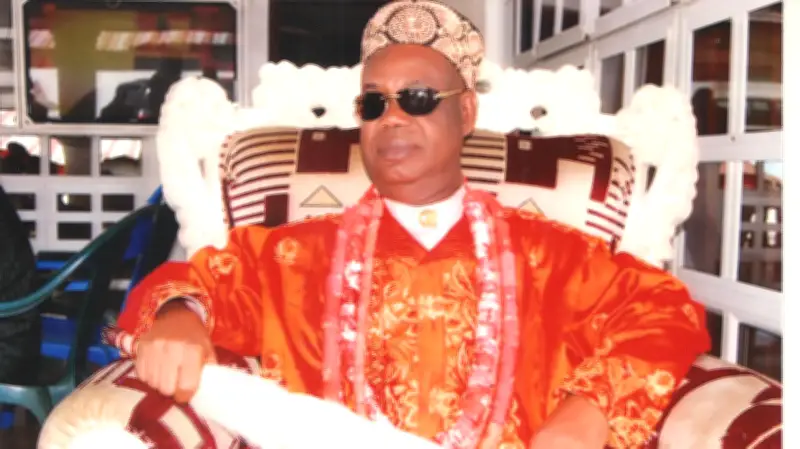
The creation of Bayelsa State was a corrective measure addressing decades of ethnic agitation and demands for resource control. The Committee for the Creation of Bayelsa State, comprising distinguished leaders like HRM King Malla Sasime, Professor Steve Azaiki, and Senator Emmanuel Paulker, saw Yenagoa not as a rural settlement but as a strategic urban nucleus. They recognized the pre-existing administrative skeleton from the old Yenagoa Local Government Area, which provided a foundation for immediate governance centralization. This foresight reduced risks associated with state formation in the challenging swampy terrain, allowing rapid construction of government buildings.
From Administrative Skeleton to Urban System
The committee's blueprint envisioned Yenagoa as a city-system capable of integrating diverse Delta nationalities into a coherent economic whole. Professor Azaiki's establishment of the Azaiki Public Library and Museum reflects a vision of Yenagoa as a knowledge center. Traditional leadership under King Malla Sasime provided social stability, transforming Epie and Atissa kingdoms into a unified urban entity. Senator Paulker's focus on lands, housing, and ICT centers illustrates ongoing efforts to flesh out the skeleton with modern systems. This consensus-driven approach was the "X factor" external critics missed.
Urban Advantage and Economic Transformation
To move Yenagoa from administrative headquarters to economic engine, we must apply Jeb Brugmann's concept of urban advantage—the superior efficiency from clustering people, businesses, and institutions. Yenagoa's current "linear" development pattern creates bottlenecks. Transitioning to a complex, integrated unit requires optimizing three densities: spatial density (economic activity per acre), colocation density (clustering researchers and traders), and network density (maximizing transit and utility grids).
Phases of Urban Development
Economic historian Norman Gras theorized that successful metropolises progress through commerce, industry, transport, and finance. Most Nigerian capitals are stuck between phases 1 and 2. Yenagoa is a natural phase 3 candidate—a geographical center connecting riverine Ijaw territories. The current administration's Glory Drive Phase II and III, connecting the city center to the airport, build the system density needed. Multi-billion naira investments in New Yenagoa City with CCECC represent a generational opportunity to complete the work started in 1996.
The Spirit of Yenagoa and Political Dimensions
Yenagoa's spirit—"home" from its name—is intertwined with the Ijaw struggle for self-determination. The Epie-Atissa people historically mastered riverine-hinterland trade corridors, making them natural synthesizers of regional interests. Yet, none of the capital's architects have occupied the governorship since 1999. This absence is consequential: leadership that views Yenagoa as a cost center rather than an engine undermines its potential. Urban scholar Mario Polèse notes that state leadership matters in shaping cities. Leaders with an instinctive grasp of Yenagoa's strategic role approach governance differently, treating the city as a living balance sheet.
Identity-Driven Planning for Long-Term Wealth
Identity-driven planning does not imply ethnic exclusion but a deeply internalized understanding of place. Such leadership recognizes that every road, institution, and investment either compounds or erodes long-term urban wealth. This shifts policy from short-term fiscal management toward intergenerational asset creation. Urban land is treated as scarce and valuable; infrastructure catalyzes private investment; institutions anchor human capital. This produces a moral economy of urban development where stewardship, continuity, and legacy matter.
Yenagoa as a Crucible for Bayelsa's Future
Yenagoa, like all great cities, is a crucible where society's contradictions are contested—oil wealth alongside multidimensional poverty and environmental degradation. Robert Beauregard argues the city is the ground on which these dilemmas are fought. Clustering high-skilled workers and institutions can create knowledge spillovers, moving the population from informal to formal sectors. Christopher Kennedy distinguishes between economic growth (income) and wealth (tangible assets). Yenagoa's wealth lies in real estate, businesses, and financial holdings, substantially underpinned by physical infrastructure.
Overcoming Ecological Imbalance
Kennedy's ecological parallel suggests cities pass through development stages. Yenagoa's reliance on the informal economy and erratic electricity supply indicate an imbalance requiring infrastructure-led interventions. The informal economy dominates due to low system density; sprawl raises the cost of formalizing business. Densifying the city makes prosperity accessible. The 1996 skeleton provided the start; decades of administrative growth provided musculature. But persistent multidimensional poverty shows the original purpose has been deferred.
A Call for Visionary Leadership
Today's policymakers face a defining challenge: continue ad hoc expansion or reclaim the strategic foresight of Agama, Azaiki, and Sasime. The path to prosperity lies in deliberate urbanism—optimizing density, investing in asset-rich infrastructure, and cultivating civicism. As Yenagoa transitions into a burgeoning metropolis, the question remains: can a city built in the Delta swamps become the financial and cultural capital of the Ijaw nation? The administrative skeleton of 1996 was a resilient start, but true wealth will be unlocked only when Yenagoa fulfills its promise as an integrated city-system. The question now is not if it can become a center of prosperity, but who has the vision to build it.




