
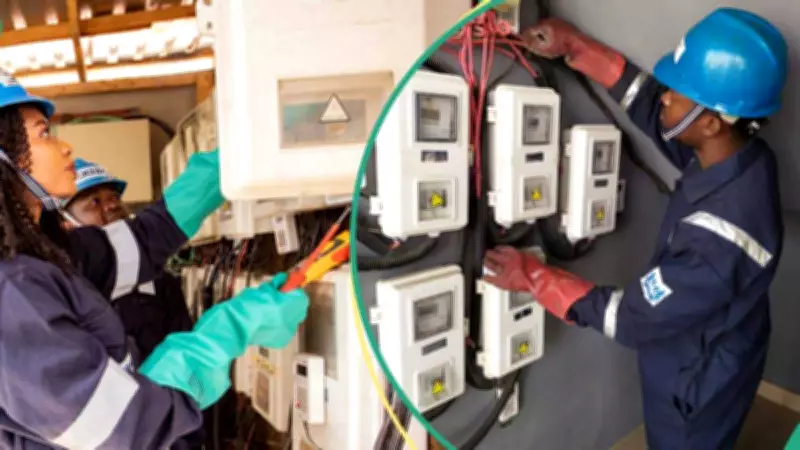
NERC Discloses Number of Nigerian Households with Prepaid Meters
Nigeria recorded 6,966,584 metered electricity customers by December 2025, according to data released by the Nigerian Electricity Regulatory Commission (NERC). This figure represents a significant increase from previous years, yet about 5.19 million electricity users remain unmetered and are still billed through estimates. Experts caution that Nigeria may need several years to eliminate the metering deficit unless meter deployment accelerates substantially.
National Metering Rate Rises to 57.27%
The national metering rate improved to 57.27% in 2025, up from 46.57% in 2024. The latest figures show that the power sector ended December 2025 with 6,966,584 metered electricity users out of 12,163,412 active customers nationwide. Data from the commission indicate that 109,556 customers received new meters in December alone, up from 88,592 installations recorded in November, suggesting a late push by electricity distribution companies to improve meter coverage before the end of the year.
According to the regulator’s data, the total number of metered electricity consumers in the country increased from 6,288,642 in December 2024 to 6,966,584 by December 2025. This represents an increase of 677,942 meters within one year, translating to a 10.78% growth in the number of metered customers. During the same period, the national metering rate improved by 10.7 percentage points.
Meter deployment also increased year-on-year. Distribution companies installed 677,942 meters in 2025, compared to 572,055 meters deployed in 2024, indicating an 18.51% rise in annual installations.
Customer Base Declines Despite Metering Growth
Despite improvements in meter installations, the total number of active electricity customers declined. The data show that the number of active users in the Nigerian Electricity Supply Industry fell from 13,503,342 in December 2024 to 12,163,412 by December 2025, representing a reduction of 1,339,930 customers, or 9.92%. As a result, about 5.19 million electricity users remained unmetered as of the end of 2025, meaning more than four out of every 10 customers were still billed based on estimates.
Meter Installations Rise Month-on-Month
A month-by-month analysis shows a steady improvement toward the end of the year. In November 2025, Nigeria had 6,857,028 metered customers, representing a 56.54% metering rate out of 12,128,611 active users. By December, metered customers rose to 6,966,584, pushing the national metering rate to 57.27%. The active customer base also increased slightly by 34,801 customers within the month, while meter installations outpaced the growth in new customers, resulting in a 0.73 percentage-point improvement in the metering rate.
Top-Performing Distribution Companies
The data show that some electricity distribution companies recorded stronger metering performance than others. In the Federal Capital Territory, Abuja Electricity Distribution Company had 1,044,014 metered customers out of 1,341,807 active users, representing a 77.81% metering rate after installing 19,953 meters in December. Similarly, Eko Electricity Distribution Company recorded 550,764 metered customers out of 641,411, achieving 85.87% coverage. Ikeja Electric posted the strongest performance overall, with 1,130,213 of its 1,308,042 customers metered, translating to an 86.40% metering rate, after installing 7,748 new meters in December.
Mid-Tier and Low-Performing DisCos
Other distribution companies recorded moderate progress. Port Harcourt Electricity Distribution Company achieved a 64.13% metering rate, with 678,446 metered customers and 17,471 new meters installed. Benin Electricity Distribution Company recorded 564,500 metered users out of 1,056,069 customers, representing a 53.45% metering rate, after deploying 17,928 meters during the month. Meanwhile, Ibadan Electricity Distribution Company (IBEDC) and Enugu Electricity Distribution Company recorded similar metering coverage, slightly above 51 per cent.
However, some distribution companies continued to lag behind the national average. For instance, Jos Electricity Distribution Company recorded a metering rate of 31.43%, while Kaduna Electricity Distribution Company posted 34.42% coverage. Likewise, Kano Electricity Distribution Company recorded 35.35%, while Yola Electricity Distribution Company had one of the lowest rates at 30.80%, despite installing 4,763 meters in December.
Experts Call for Faster Meter Rollout
Commenting on the figures, the Executive Director of PowerUp Nigeria, Adetayo Adegbemle, said the progress recorded so far remains insufficient to eliminate the country’s large metering gap. He noted that although the sector has made improvements, the pace of meter deployment remains slow. Adegbemle pointed to the Distribution Sector Recovery Programme (DISREP), which aims to deliver about five million meters, as a major intervention that could accelerate progress if properly monitored. According to him, transparency and effective oversight will be essential since the programme is funded through a World Bank facility that Nigeria must repay.
Analysts say that at the current installation rate of about 100,000 meters per month, it could take several years to eliminate Nigeria’s metering deficit unless deployment efforts are significantly expanded. They also note that improving metering coverage remains critical for reducing estimated billing, improving consumer trust, and strengthening the financial stability of the electricity market.
In related news, NERC has ordered DisCos to refund N20.33 billion owed to customers who paid for prepaid meters under the MAP meter scheme. The commission directed that the outstanding sum be repaid within 12 months, starting March 1, 2026, with DisCos prohibited from offsetting meter reimbursement credits against customers’ legacy debts.




