Japan's centenarian population has crossed 100,000 for the first time, reaching 107,677 people aged 100 and above, according to figures released by Japan's health ministry. Women make up about 88% of this group, with the oldest woman being Kishimoto Fuyo, a 114-year-old resident of Kyoto City, and the oldest man being Kato Hikaru, 112, who lives in Kumamoto.
The milestone comes as Japan faces a demographic crisis, with its fertility rate dropping to a record low of 1.14 last year. The country's population, which peaked at about 128 million in 2008, is expected to fall to around 87 million by 2070, a decline of about 30%.
Why Japanese people are living longer
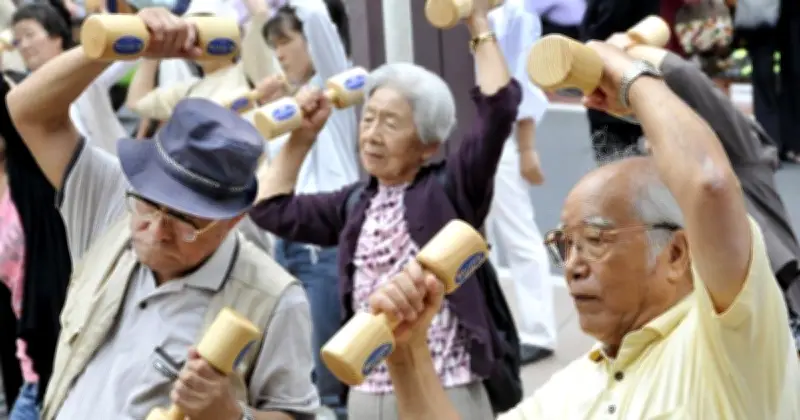
Japan's Health Minister Kenichiro Ueno said he was "delighted that so many people are living long, healthy and active lives," adding that improvements in medicine and technology have contributed to the country's increasing life expectancy. Experts attribute Japan's long lifespan to lifestyle factors, including traditional meals that often include fish, vegetables, rice, and foods containing less saturated fat compared with many Western diets. Many elderly Japanese remain physically active by walking regularly, using public transport, cycling, and doing simple exercises like stretching.

Companies in Japan have also developed products to support older citizens, including powered exoskeletons that help people move parts of their bodies and smart eyewear that automatically adjusts focus.
The challenge of a falling birth rate
While Japan's elderly population grows, the number of young people is declining. For a population to naturally replace itself, each woman needs an average of 2.1 children, but Japan's fertility rate dropped to 1.14 last year. Currently, people aged 65 and above make up roughly 30% of Japan's population, a figure expected to rise to nearly 40% by 2070.
Japanese authorities have described the population decline as an "existential crisis," with Prime Minister Sanae Takichi calling it a "quiet emergency." Despite government programmes and financial incentives to encourage young people to have more children, birth rates continue to fall. Experts cite fewer marriages, rising costs of raising children, and more women joining the workforce as reasons. Although Japan has increased immigration in recent years, foreigners still make up only about 3% of the population, and opposition to accepting more immigrants remains strong.
Growth of centenarian population over decades
Japan's centenarian population has grown dramatically. When the government began tracking people aged 100 and above in 1963, there were only 153 centenarians. That number crossed 1,000 in 1981 and reached 10,000 by 1998. The latest figures were released ahead of Japan's annual "Respect for the Aged" holiday, where the government honours people turning 100 with a personal letter and a traditional sake cup.
However, some studies have questioned the accuracy of global centenarian records, citing possible errors in public records and missing birth certificates. A government audit in Japan in 2010 found that more than 230,000 people listed as aged 100 or older could not be accounted for, with some having died decades earlier. Officials said poor record-keeping and possible attempts by families to continue receiving pension payments contributed to the inaccurate figures.
For Japan, living longer remains a major achievement, but keeping the country financially stable with fewer young people presents its biggest challenge.