
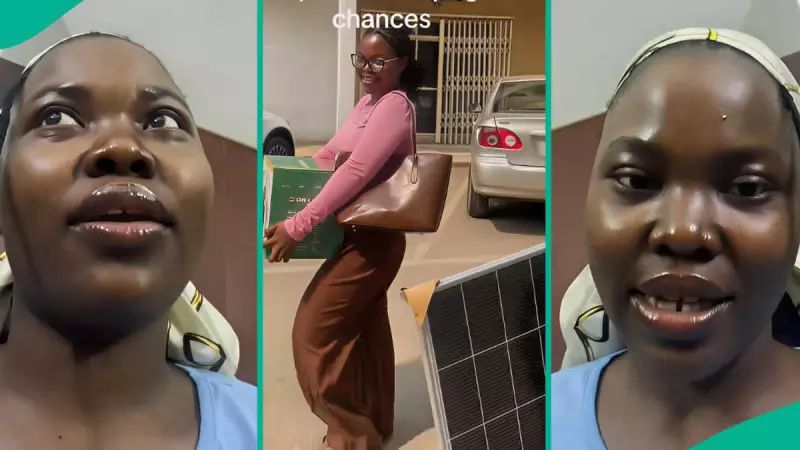
A young Nigerian woman has shared a painful career setback after losing a well-paying remote job on the global freelancing platform, Upwork, due to the country's persistent electricity problems. The incident, which she narrated in a viral video, highlights a major hurdle for digital workers in Nigeria.
How Power Failure Cost a Lucrative Remote Job
The freelancer, who goes by the TikTok handle @workingremotelywithoma, secured a customer support role on Upwork that paid $10 per hour. A key requirement for the job was to remain online and active for her scheduled work hours. However, she faced a crippling challenge: a complete lack of electricity from the national grid, popularly known as NEPA or PHCN, for an entire week.
In a bid to cope, she resorted to going out to charge her laptop. Unfortunately, this stopgap measure proved insufficient. "No matter how much she charged, her laptop battery never lasted more than three hours," she explained. Her client on Upwork eventually terminated her contract, citing her inability to complete the required work hours due to her inconsistent online presence.
The Solar Solution for Future Job Security
Determined not to let unreliable power ruin future opportunities, the lady took a decisive step. She invested in a solar power system to guarantee a steady electricity supply for her work. She acquired an all-in-one solar generator that combines a lithium battery, an inverter, and a charge controller. She also purchased a solar panel to charge the unit, though she did not disclose the specific wattage or capacity of her setup.
Her move to solar echoes a growing trend among Nigerians seeking energy independence. In a related case, Legit.ng previously reported a woman who spent over N600,000 to install solar power in her home for reliability.
Public Reactions and Shared Frustrations
The lady's video sparked a flood of reactions from Nigerians who have faced similar struggles. Many empathized, while others offered critiques or sought advice.
Stanley Worgu questioned her strategy, asking why she didn't lodge in a hotel with 24-hour power to save the job. Another user, Shinebright, inquired about how to successfully find gigs on Upwork, a common challenge for many.
The remote worker herself replied to a comment about praying during blackouts, stating: "Omo, prayers couldn’t solve mine. My login time was 11pm. When my laptop dies, there’s no place to go get charged at that time. I was crying almost everyday, I knew I needed to get an alternative power."
Other commenters shared their own losses. Bright Robin revealed losing a $1000 gig on Upwork because of power issues, while Zadok2u connected the struggle to broader economic pressures like taxation.
Many were interested in the cost of her solar solution. Users like Teacha Cynthia, L’damBeauty|Executive Ops VA, and Faves|TheCreative directly asked about the price and where to buy similar systems, underscoring the high demand for backup power among remote professionals.
The story, originally published on January 16, 2026, by journalist Joseph Omotayo, remains a stark reminder of the infrastructure gaps that Nigerian freelancers must overcome to compete and thrive in the global digital economy.




