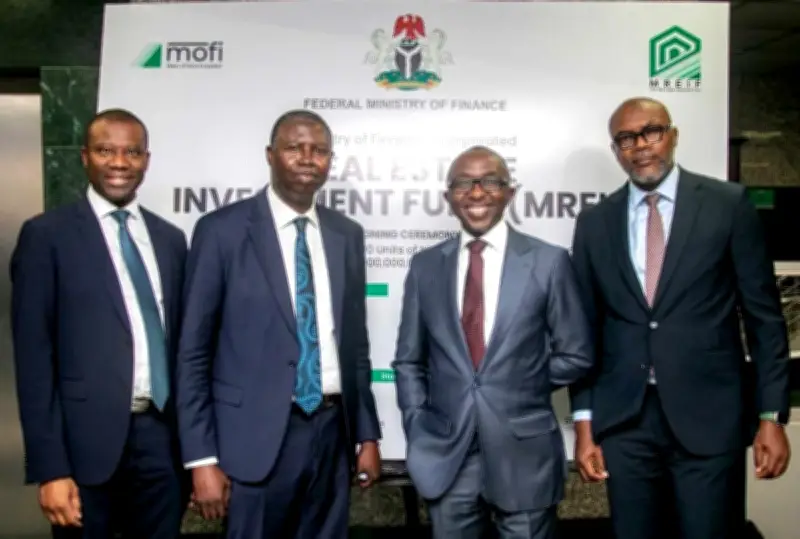
The MOFI Real Estate Investment Fund (MREIF), managed by ARM Investment Managers on behalf of the Ministry of Finance Incorporated, reported a total income of N17.48 billion for the six months ending June 30, 2026, driven primarily by interest from mortgage loans and cash holdings. This performance underscores the fund's progress in addressing Nigeria's housing deficit through affordable mortgage financing, with a profit before tax of N14.49 billion and profit after tax of N14.24 billion.
Financial Performance and Asset Growth
MREIF's income is derived from interest on loans and financial assets, not speculative trading, reflecting its focus on long-term mortgage lending. The fund's assets reached N269.9 billion by the end of June, with N131.67 billion disbursed as mortgage loans. These loans have financed 1,909 completed housing units for homeowners across all six geopolitical zones of Nigeria, spanning 27 states. This geographic spread is significant because mortgage financing in Nigeria has historically been concentrated in major cities, leaving many regions underserved.
The fund's mortgage beneficiaries include 87.2% salaried employees and 12.8% self-employed individuals, a distribution enabled by single-digit interest rates offered through a network of 22 partner banks and mortgage institutions. This pricing model has made homeownership accessible to regular salary earners who would not qualify for market-rate mortgages.
Offtake Guarantees and Supply-Side Support
Beyond mortgages, MREIF has extended offtake guarantees to three developer projects, supporting 475 housing units under construction. These guarantees allow developers to secure construction financing that banks might otherwise be reluctant to provide, addressing the supply side of housing, which is often more challenging than financing demand. This aspect of the fund's work receives less attention than mortgage numbers but is crucial for increasing housing stock.
The fund's lending is funded by investor capital, and mid-year results show how that capital was rewarded. On July 15, 2026, MREIF paid an interim dividend for the first half of 2026. Commercial investors holding 1 billion units received N8.61 per unit, an annualised yield of 17.37%, totaling N8.61 billion. Government-held units, totaling 1.5 billion units, received N2.80 per unit, a yield of 5.65%, totaling N4.20 billion. Combined, the fund returned N12.82 billion to investors across 2.5 billion outstanding units.
Blended Finance Model and Long-Term Viability
The difference in yields between commercial and government investors is intentional, reflecting a blended finance model. Government capital accepts lower returns to fund affordable mortgages, while commercial investors receive closer to market rates to maintain their participation. This structure combines public and private capital at different price points to fund affordable housing.
MREIF's balance sheet as of June 30, 2026, shows total assets of N269.88 billion, equity of N266.78 billion, and a net asset value of N106.71 per unit, indicating a steady growth trajectory. The half-year figures demonstrate that the fund's earnings and housing impact are moving in the same direction, a consistency that is vital for a programme designed to outlast housing policy cycles. This performance positions MREIF as a key vehicle in Nigeria's efforts to reduce its housing deficit through sustainable, patient capital.