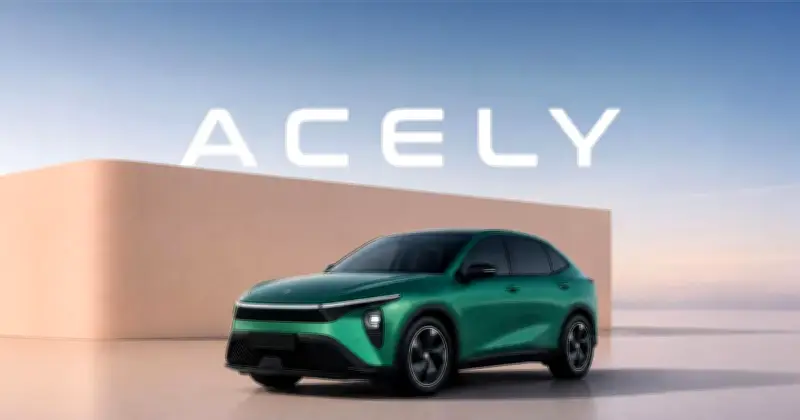
Hybrid Motors Nigeria is making a bold move to transform the country's electric vehicle (EV) landscape with a $95 million investment plan that includes local manufacturing, charging infrastructure, and a homegrown EV brand called ACELY. The company aims to build a complete ecosystem, from assembly plants in Lagos and Abuja to financing and training programs, marking one of the most ambitious private-sector EV initiatives in Nigeria.
A comprehensive strategy for electric mobility
Hybrid Motors is not just selling imported EVs; it is building the industrial backbone for Nigeria's EV economy. The strategy integrates vehicle assembly and manufacturing, charging infrastructure, affordable financing, commercial driver access, engineering talent development, and research and development. At the heart is ACELY, a planned Nigerian EV brand designed for African conditions, including road quality, weather, and urban transport needs.
The company has secured approximately $95 million in investment commitments tied to EV manufacturing and charging infrastructure, with partnerships signed in China to support production and network rollout. The first phase focuses on developing assembly and manufacturing plants in Lagos and Abuja, with Lagos as the primary hub.
Manufacturing capacity: Lagos and Abuja plants
Hybrid Motors is developing EV assembly and manufacturing facilities with significant production scale. The Lagos plant is projected to have a capacity of 50,000 units annually, while the Abuja facility is expected to add another 30,000 units. This industrial push aims to reduce Nigeria's dependence on imported vehicles, deepen local value chains, and retain economic value within the country.
Local production aligns with the National Automotive Industry Development Plan, which seeks to grow domestic vehicle production. For the private sector, the opportunity is clear: a large, underpenetrated mobility market with rising fuel costs and a transport economy needing lower operating-cost alternatives.
Charging infrastructure: solving the adoption barrier
One of the biggest barriers to EV adoption in Nigeria is the lack of charging infrastructure. Hybrid Motors plans to build mega EV charging stations, starting with Lagos and Abuja, as part of the same investment program. This is critical because EV adoption is driven by confidence—confidence that charging stations exist, are functional, and that charging times are manageable.
Infrastructure is not just support; it is market creation. A visible charging network in high-demand corridors, especially in cities with concentrated commercial transport activity, would address the psychological and operational barriers that keep many Nigerians from considering EVs.
Financing: making EVs affordable
Even with local manufacturing and charging, affordability remains a key challenge. Hybrid Motors plans to launch a single-digit EV finance platform to make vehicle ownership more accessible. In Nigeria, automotive financing is underdeveloped, and high interest rates often push ownership out of reach for middle-income households and small businesses.
For EVs, which may have higher upfront costs but lower running costs, financing is critical. A workable financing platform could unlock demand and shift the conversation from sticker price to total cost of ownership, a more useful lens in a country where fuel prices and maintenance costs shape consumer decisions.
Drive-to-Own: targeting commercial drivers
Commercial drivers could be Nigeria's real EV growth engine. Hybrid Motors' Drive-to-Own programme, developed with DriveMe, targets commercial drivers—ride-hailing drivers, logistics fleets, and urban transport operators—who face thin margins due to fuel prices and maintenance costs. If EVs cut fuel spend and reduce downtime, the proposition becomes compelling.
This model links electrification to livelihoods, treating commercial drivers as a strong demand pool for early EV adoption. It may be a smarter route to scale than waiting for mass private consumer uptake.
Training 10,000 young Nigerians
Industrial policy often overlooks the people who will build and maintain the industry. Hybrid Motors plans to train 10,000 young Nigerians for the EV ecosystem, covering vehicle maintenance, charging infrastructure operations, engineering, and software systems. This addresses youth unemployment and underemployment while creating a skilled workforce.
The company also envisions a School of EV Engineering to formalize technical learning and create a domestic pipeline of engineers and technicians. In a market where advanced automotive expertise sits offshore, such an institution is strategically valuable.
Data, software, and R&D: the hidden competitive edge
Hybrid Motors' strategy extends beyond physical infrastructure to include a data centre, an R&D centre, and software layers for charging and ecosystem management. EV ecosystems generate data on usage, fleet operations, and battery health, which can inform maintenance and financing. Software and data may become as important to profitability as vehicle sales.
The R&D centre will focus on African conditions—heat resilience, road stress, and charging patterns—to localize the product and the economics of ownership. Battery strategy is also key, with a focus on optimization and lifecycle performance to reduce dependence on imported know-how.
Showrooms and distribution: building trust
Physical market presence is crucial for building trust in new technology. Hybrid Motors plans a nationwide showroom and distribution network to let customers see, touch, and test vehicles, and to provide after-sales service. In Nigeria, distribution is strategy; a strong footprint reduces consumer hesitation and builds market familiarity.
This network will reach fleet buyers, middle-income consumers, and corporate customers across multiple cities, ensuring the business is not just a Lagos-centric pilot but a truly national operation.
Why this matters now
Nigeria may be closer to an EV inflection point than many assume. Fuel costs have risen sharply, commercial drivers face tighter margins, and there is growing pressure for cleaner transport and industrial diversification. However, the EV future will be determined by solving real local problems: affordability, charging access, maintenance confidence, and financing.
Hybrid Motors is presenting EVs as part of a broader economic proposition—build locally, finance affordably, support commercial drivers, train young talent, and develop the technical ecosystem. This approach aligns with Nigerian realities better than a simple import-and-sell strategy.
The bigger test: execution
Ambition is not execution. Nigeria has seen many industrial announcements struggle due to financing gaps, policy inconsistency, and operational complexity. The EV sector adds challenges like battery economics, charging uptime, and foreign exchange exposure.
Hybrid Motors will be judged by its ability to deliver: plant construction, vehicle rollout, charging deployment, financing uptake, and training. Still, the scope of the vision signals where Nigeria's EV conversation is heading. The future of electric mobility in Nigeria will be built by companies willing to tackle manufacturing, power, credit, skills, and trust all at once—that is the challenge Hybrid Motors has set for itself with ACELY.